Love this? Save it for later!
Share the inspiration with your friends
“You know that moment when you stumble upon something totally unexpected and it just changes your kitchen game forever? That happened to me last spring. I was wandering through a local farmer’s market on a drizzly Saturday morning, nursing a cold and trying to find something green and fresh to perk me up. I overheard this elderly gentleman chatting with a vendor about foraging wild greens, and he casually mentioned dandelion greens as a secret ingredient for a killer pesto. Honestly, I was skeptical. Dandelions? Really?
But curiosity got the better of me. I picked up a bunch, a bit wary but intrigued, and decided to play around in the kitchen. The result? This vibrant, fresh dandelion green pesto pasta with toasted pine nuts and a generous sprinkle of Pecorino that honestly blew me away. Maybe it was the unexpected bitterness of the greens balanced by the creamy cheese and nutty crunch, or the way the sauce clung to every strand of pasta—whatever it was, it felt like a little spring miracle in a bowl.
Now, I keep a bunch of dandelion greens on hand whenever I spot them at the market or even in my own backyard (yes, those pesky “weeds”!). This recipe stuck with me because it’s simple, fast, and absolutely packed with flavor. Plus, it’s a great way to turn something you might overlook into a star ingredient. So if you’ve been on the hunt for a fresh take on pesto pasta that’s easy but impressive, let me tell you—this one won’t disappoint.
Why You’ll Love This Recipe
From my many kitchen tests and happy dinners with friends, this fresh dandelion green pesto pasta has become a favorite for good reasons. Here’s what makes it stand out:
- Quick & Easy: You can have this ready in about 25 minutes, perfect for when you’re short on time but want a wholesome meal.
- Simple Ingredients: No need for fancy specialty stores—dandelion greens, pine nuts, garlic, and Pecorino are all accessible and pantry-friendly.
- Perfect for Spring & Summer: Especially when dandelions are in their prime, this feels fresh and seasonal.
- Crowd-Pleaser: Even those who think they don’t like “bitter greens” tend to crave seconds.
- Unbelievably Delicious: The balance of earthy, nutty, and sharp flavors makes it a comforting yet bright meal.
This isn’t just your run-of-the-mill basil pesto pasta. The slightly bitter edge of dandelion greens adds complexity, while the creamy Pecorino and pine nuts bring a rich, satisfying texture. The recipe came from a bit of a happy accident, and honestly, it’s the kind of dish that makes you close your eyes after the first bite and sigh happily. Whether you’re feeding family or just treating yourself, it’s a recipe I keep coming back to.
What Ingredients You Will Need
This recipe uses simple, wholesome ingredients to deliver bold flavor and a satisfying texture without any fuss. Most of these are pantry staples or easy to find at your local market, and if you’re lucky, you can forage the dandelion greens yourself!
- Dandelion Greens, about 4 cups (washed and tough stems removed) – fresh and slightly bitter, the star of this pesto
- Fresh Basil Leaves, 1 cup – to mellow the bitterness and add classic pesto aroma
- Garlic Cloves, 2 large (peeled and roughly chopped) – for that punch of flavor
- Pine Nuts, ½ cup, toasted – I recommend Fattoria L’Antica pine nuts for their buttery flavor
- Pecorino Romano Cheese, ½ cup finely grated – sharp and salty, but you can swap for Parmesan if needed
- Extra Virgin Olive Oil, about ⅓ to ½ cup – use a good quality, fruity olive oil for best taste
- Fresh Lemon Juice, 1 tablespoon – brightens the pesto and balances bitterness
- Salt and Freshly Ground Black Pepper, to taste
- Pasta, 12 ounces (340 grams) – I like using spaghetti or linguine, but fusilli or penne works too
If dandelion greens aren’t available, you can substitute with a mix of kale and arugula (about 3 cups combined) for a similar green punch. For a dairy-free version, swap Pecorino with nutritional yeast or omit cheese altogether. And if you want a gluten-free pasta version, plenty of rice or chickpea-based options pair wonderfully with this pesto.
Equipment Needed
- Food Processor or Blender: Essential for quickly turning the dandelion greens and other ingredients into a smooth pesto. I use a Cuisinart food processor, but a strong blender works too.
- Large Pot: For boiling the pasta. Make sure it’s big enough to give the pasta plenty of room to cook evenly.
- Colander: To drain the pasta without losing any precious sauce.
- Toaster or Skillet: For toasting pine nuts—watch them closely as they can burn fast!
- Measuring Cups and Spoons: For accuracy, especially with olive oil and lemon juice.
If you don’t have a food processor, you can finely chop the greens and garlic by hand, but it’s more work and the texture won’t be quite as creamy. For pine nuts, toasting them in a dry skillet over medium heat gives a better flavor than the microwave method in my experience. Also, I learned the hard way that letting pasta water boil over is no fun—keep an eye or use a wooden spoon across the pot to prevent spills.
Preparation Method
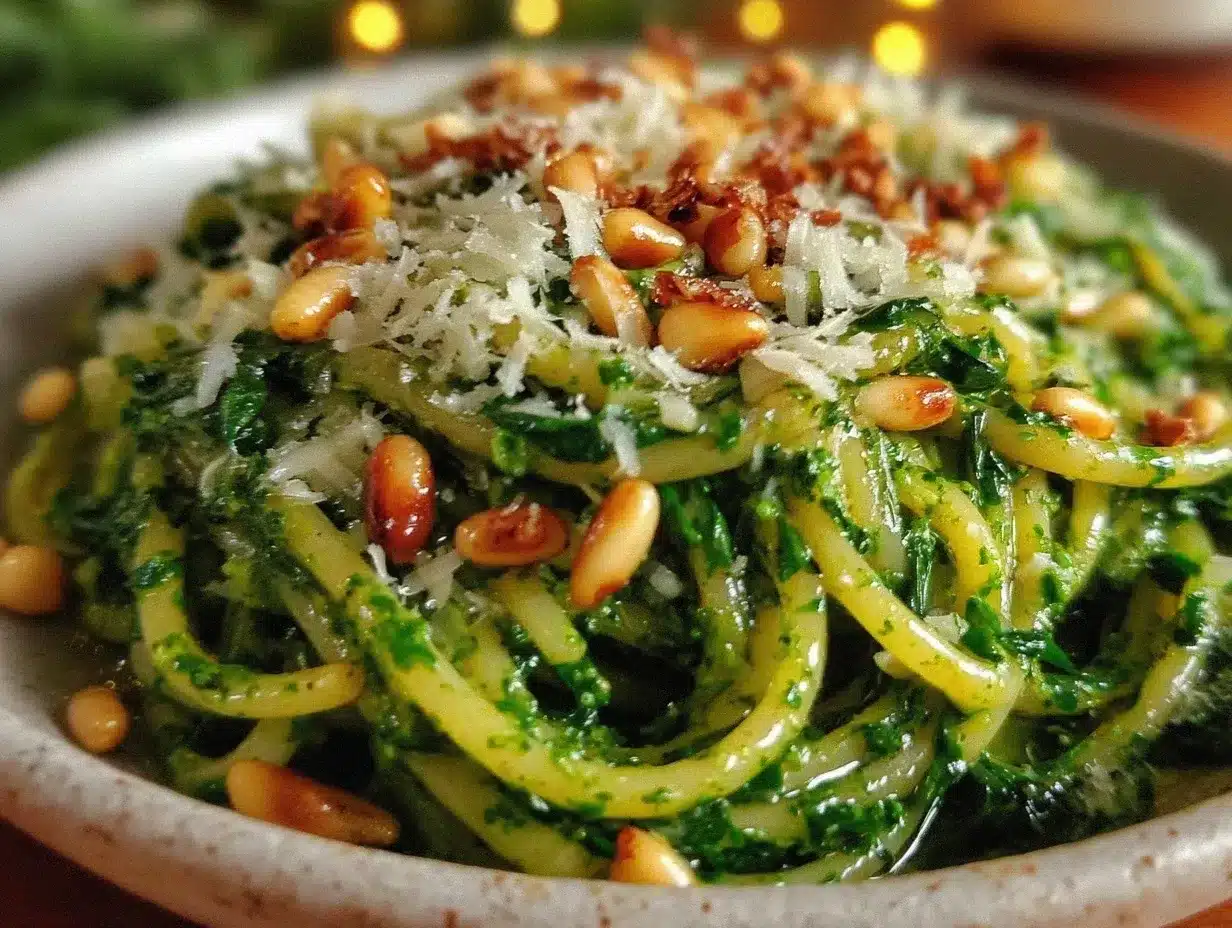
- Prepare the greens: Rinse the dandelion greens thoroughly to remove any grit. Remove the thick stems and roughly chop the leaves. Roughly chop the basil leaves as well. (About 5 minutes)
- Toast the pine nuts: Heat a dry skillet over medium heat. Add the pine nuts and toast, shaking the pan frequently, until golden and fragrant—about 3-4 minutes. Remove from heat and set aside to cool.
- Cook the pasta: Bring a large pot of salted water to a boil. Add your pasta of choice and cook according to package instructions until al dente (usually 8-10 minutes). Reserve about ½ cup (120 ml) of pasta water before draining.
- Make the pesto: In a food processor, combine the dandelion greens, basil, garlic, toasted pine nuts, and grated Pecorino. Pulse a few times to start breaking everything down.
- Stream in olive oil: With the processor running, slowly drizzle in the olive oil until the mixture reaches a creamy, spreadable consistency. You might want to scrape down the sides once or twice. Add lemon juice, salt, and pepper to taste. (If the pesto is too thick, add a tablespoon of reserved pasta water to loosen it.)
- Toss pasta and pesto: Return the drained pasta to the pot or a large bowl. Add the pesto and toss well to coat all the noodles evenly. If needed, add a little more pasta water to help the sauce cling.
- Serve immediately: Plate the pasta and garnish with extra toasted pine nuts and a sprinkle of Pecorino. Freshly cracked black pepper on top is a nice touch. (Enjoy hot for the best flavor and texture!)
Pro tip: Don’t add too much salt early on because Pecorino is pretty salty. Taste as you go! And keep an eye on your pesto’s texture—it should be creamy but still have a little bite from the nuts. If it feels too oily, a splash of lemon juice or pasta water fixes it right up.
Cooking Tips & Techniques
Making pesto might seem straightforward, but there are some tips that really make a difference. First off, always toast pine nuts lightly—raw pine nuts taste flat, but over-toasting turns them bitter. I learned that the hard way when I left them unattended one afternoon!
When blending your pesto, pulse rather than run the processor continuously to avoid overheating and dulling the vibrant green color. Also, start with less olive oil; you can always add more to get the right texture. Too much oil can weigh the pesto down.
Don’t forget to reserve pasta water—it’s liquid gold for adjusting sauce thickness and helps the pesto coat the pasta evenly. This is especially handy if your pesto feels dry or clumpy.
Multitasking tip: While pasta cooks, toast pine nuts and blitz the pesto ingredients so you’re not waiting around. It makes the whole process flow smoother.
Finally, if you want to keep pesto bright for later, store it in an airtight container with a thin layer of olive oil on top to prevent browning. It’s great for next-day lunches or quick dinners.
Variations & Adaptations
One of the best things about this fresh dandelion green pesto pasta is how easy it is to tailor to your tastes or dietary needs.
- Vegan Version: Skip the Pecorino and add 2 tablespoons of nutritional yeast for cheesy notes. Use a bit more lemon juice to brighten it up.
- Seasonal Twist: In autumn, swap dandelion greens for fresh spinach or chard and add roasted butternut squash cubes for a hearty flair.
- Nut-Free Option: Replace pine nuts with toasted pumpkin seeds or sunflower seeds. The texture changes a bit, but it’s delicious and allergy-friendly.
- Different Herbs: Try adding fresh parsley or mint to the pesto for a fresh herbal twist. Mint adds a surprising coolness that livens up the dish.
- Cooking Method: If you prefer, toss the pasta and pesto in a warm skillet over low heat for 1-2 minutes to meld flavors slightly before serving.
Personally, I once added a handful of sautéed wild mushrooms on top for an earthy upgrade that made it feel like a cozy fall dinner. It’s fun to experiment, and this recipe holds up well to tweaks.
Serving & Storage Suggestions
This fresh dandelion green pesto pasta is best served immediately while it’s warm and vibrant. A drizzle of extra virgin olive oil just before plating adds a lovely sheen. For presentation, sprinkle extra toasted pine nuts and Pecorino on top to keep that irresistible crunch and salty pop.
Pair it with a crisp white wine or a light, citrusy sparkling water to complement the bright flavors. A simple side salad with lemon vinaigrette or a rustic crusty bread also rounds out the meal beautifully.
Leftovers can be stored in an airtight container in the fridge for up to 2 days. The pesto will darken slightly but still tastes great. Reheat gently in a skillet with a splash of water or olive oil to bring it back to life without drying out.
Flavors meld even more after sitting, so if you have time, make the pesto a few hours ahead and toss with the freshly cooked pasta just before serving. This also makes it a smart option for easy entertaining.
Nutritional Information & Benefits
This fresh dandelion green pesto pasta is packed with nutrients and offers a good balance of healthy fats, vitamins, and minerals. Dandelion greens are a fantastic source of vitamins A, C, and K, plus antioxidants that support digestion and inflammation reduction. Pine nuts provide heart-healthy monounsaturated fats and minerals like magnesium and zinc.
Pecorino adds calcium and protein, making the dish satisfying and nourishing. Olive oil contributes healthy fats that promote brain and heart health. Overall, this recipe is a wholesome choice for a balanced, plant-forward meal.
It’s naturally gluten-friendly if you choose gluten-free pasta, and can easily be adapted for vegan or nut-free diets. I appreciate how this dish feels indulgent but doesn’t weigh me down—perfect for a light, energizing lunch or dinner.
Conclusion
If you’re looking for a fresh, flavorful pasta recipe that’s a little different from the usual basil pesto, this fresh dandelion green pesto pasta with pine nuts and Pecorino is a must-try. It’s quick, easy, and packed with personality—and honestly, it’s one of those recipes that makes you excited to cook.
Feel free to tweak it based on what you have or your taste preferences. The balance of bitter, nutty, and cheesy works beautifully, but a little customization is part of the fun. I keep coming back to this dish not only for its taste but because it reminds me of that rainy Saturday morning and the unexpected joy of trying something new.
If you give this recipe a go, I’d love to hear how it turns out for you or what variations you tried. Share your thoughts in the comments or tag me if you post it online—I always enjoy seeing your kitchen creations!
Happy cooking, and here’s to finding magic in the little things, even dandelion greens.
Frequently Asked Questions (FAQs)
Can I use other greens instead of dandelion greens?
Yes! Spinach, kale, or arugula work well as substitutes. Mixing basil with these greens keeps the pesto fresh and flavorful.
How do I store leftover pesto?
Store in an airtight container with a thin layer of olive oil on top in the fridge for up to 3 days. You can also freeze pesto in ice cube trays for longer storage.
Is this pesto vegan?
The traditional recipe includes Pecorino cheese, which is not vegan. To make it vegan, replace cheese with nutritional yeast or omit it.
Can I use walnuts or almonds instead of pine nuts?
Absolutely! Walnuts or almonds can be toasted and used in place of pine nuts. Each nut gives the pesto a slightly different flavor and texture.
What type of pasta pairs best with this pesto?
Long pasta like spaghetti, linguine, or fettuccine works beautifully, but short pasta like penne or fusilli can also hold the sauce well.
For a cozy twist on green pasta dishes, you might enjoy my recipe for creamy spinach and artichoke pasta or the vibrant and zesty lemon basil pesto pasta—both great companions to this fresh dandelion pesto.
Pin This Recipe!
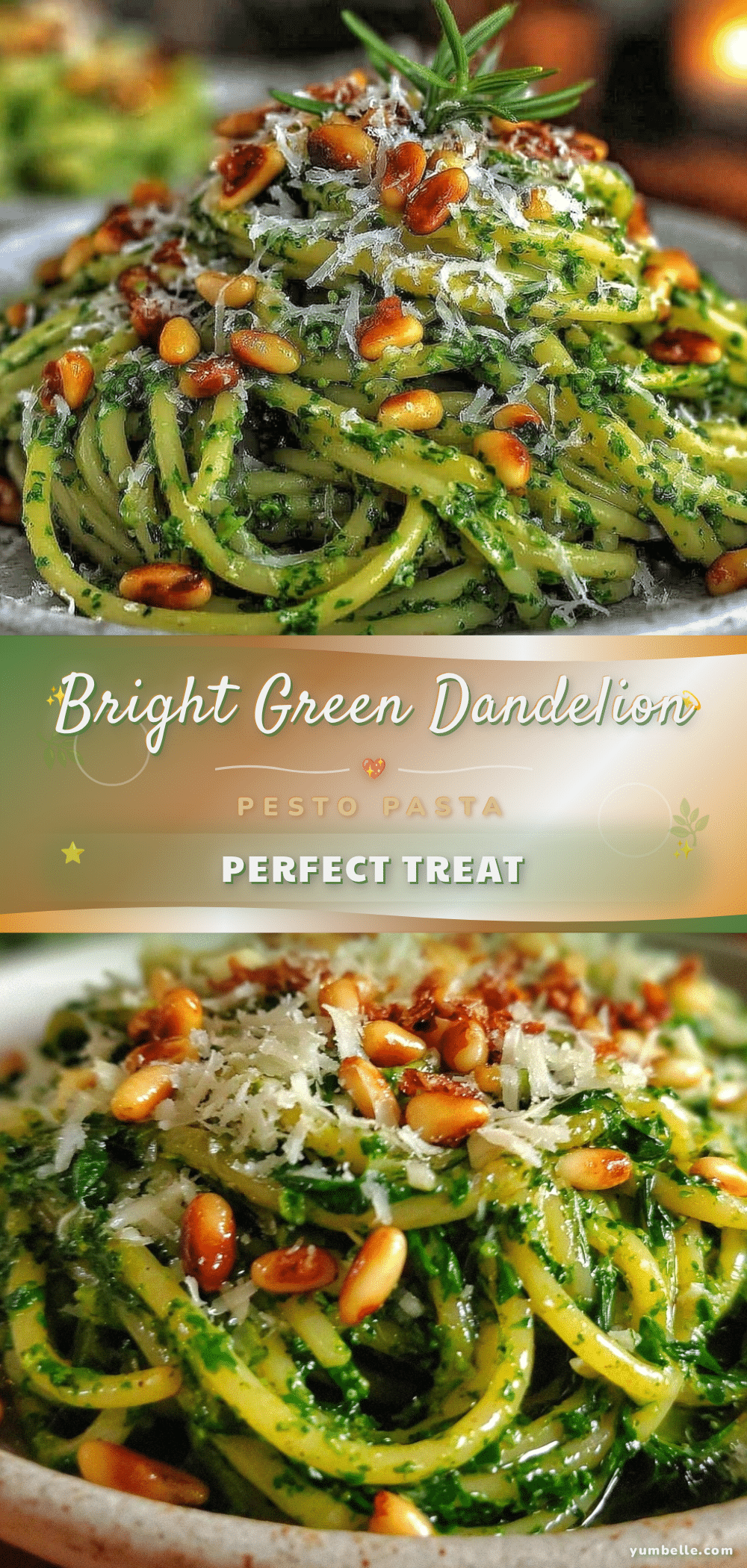
Fresh Dandelion Green Pesto Pasta Recipe Easy Homemade Pine Nut Pecorino Delight
A vibrant and fresh pesto pasta made with foraged dandelion greens, toasted pine nuts, and Pecorino Romano cheese, delivering a unique balance of bitter, nutty, and creamy flavors. Quick and easy to prepare, perfect for spring and summer meals.
- Prep Time: 10 minutes
- Cook Time: 15 minutes
- Total Time: 25 minutes
- Yield: 4 servings 1x
- Category: Main Course
- Cuisine: Italian
Ingredients
- 4 cups dandelion greens, washed and tough stems removed
- 1 cup fresh basil leaves
- 2 large garlic cloves, peeled and roughly chopped
- ½ cup pine nuts, toasted
- ½ cup Pecorino Romano cheese, finely grated
- ⅓ to ½ cup extra virgin olive oil
- 1 tablespoon fresh lemon juice
- Salt and freshly ground black pepper, to taste
- 12 ounces pasta (spaghetti, linguine, fusilli, or penne)
Instructions
- Rinse the dandelion greens thoroughly to remove any grit. Remove the thick stems and roughly chop the leaves. Roughly chop the basil leaves as well.
- Heat a dry skillet over medium heat. Add the pine nuts and toast, shaking the pan frequently, until golden and fragrant—about 3-4 minutes. Remove from heat and set aside to cool.
- Bring a large pot of salted water to a boil. Add your pasta of choice and cook according to package instructions until al dente (usually 8-10 minutes). Reserve about ½ cup (120 ml) of pasta water before draining.
- In a food processor, combine the dandelion greens, basil, garlic, toasted pine nuts, and grated Pecorino. Pulse a few times to start breaking everything down.
- With the processor running, slowly drizzle in the olive oil until the mixture reaches a creamy, spreadable consistency. Scrape down the sides once or twice if needed. Add lemon juice, salt, and pepper to taste. If the pesto is too thick, add a tablespoon of reserved pasta water to loosen it.
- Return the drained pasta to the pot or a large bowl. Add the pesto and toss well to coat all the noodles evenly. Add more pasta water if needed to help the sauce cling.
- Plate the pasta and garnish with extra toasted pine nuts and a sprinkle of Pecorino. Add freshly cracked black pepper on top. Serve immediately while hot.
Notes
Toast pine nuts lightly to avoid bitterness. Pulse the food processor rather than running continuously to preserve vibrant green color. Reserve pasta water to adjust pesto consistency. For vegan version, omit Pecorino and add nutritional yeast. Use gluten-free pasta for gluten-free diet. Store leftover pesto in airtight container with olive oil on top for up to 3 days.
Nutrition
- Serving Size: 1 serving (about 1/4
- Calories: 450
- Sugar: 2
- Sodium: 450
- Fat: 28
- Saturated Fat: 5
- Carbohydrates: 38
- Fiber: 4
- Protein: 12
Keywords: dandelion greens, pesto pasta, pine nuts, Pecorino, homemade pesto, easy pasta recipe, spring recipe, fresh greens, vegetarian pasta