Love this? Save it for later!
Share the inspiration with your friends
“I wasn’t expecting much when I grabbed a handful of pecorino and black pepper on a random Tuesday night,” my friend Marco confessed over a quick video call last week. He was trying out this Delicious Cacio e Pepe with Silkiest No-Clump Sauce in 15 Minutes recipe I’d sent him. Honestly, I get that—cacio e pepe seems like the simplest thing, just pasta, cheese, and pepper, right? But let me tell you, the magic happens in the sauce. I remember the moment I finally nailed that perfectly smooth, no-clump sauce. It was late, my kitchen was a mess, and I’d forgotten to stir the pasta water before adding the cheese. The sauce almost broke, and I thought I’d ruined dinner. But with a quick stir and a little patience, it came together silky and luscious like I’d been chasing in every recipe book. Maybe you’ve been there—trying to get that creamy, dreamy sauce without the gritty cheese bits or gluey texture.
What makes this recipe stick with me, beyond the quick 15-minute prep, is how it turns a handful of humble ingredients into something that feels special. The pepper’s fragrance fills your kitchen, the cheese melts like velvet, and the pasta swirls in that glossy sauce that clings just right. It’s the kind of meal you can whip up after a hectic day, with no fuss but all the soul. So, if you’re ready to make cacio e pepe that’s truly silky smooth and downright delicious, let me walk you through every step, every ingredient, and all the little tricks I’ve picked up along the way.
Why You’ll Love This Recipe
This cacio e pepe recipe isn’t just another pasta dish. It’s been tested repeatedly in my kitchen, with friends dropping by and family happily sneaking extra servings. Here’s why it stands out:
- Quick & Easy: Ready in under 15 minutes, it’s perfect for those nights when you want something satisfying but don’t have a lot of time.
- Simple Ingredients: No exotic items here—just good quality pecorino, freshly cracked black pepper, pasta, and basic pantry staples.
- Perfect for Weeknights or Casual Dinners: Whether you’re cooking solo or feeding a small crowd, this dish hits the spot every time.
- Crowd-Pleaser: It’s amazing how kids and adults alike love this peppery, cheesy comfort food.
- Unbelievably Delicious Texture: The silky, no-clump sauce feels luxurious without being heavy or greasy.
What makes this recipe different? The technique of gradually combining the cheese with just the right amount of pasta water, plus using finely grated pecorino, creates a creamy sauce that doesn’t clump or seize. No weird gluey mess here—just pure, smooth decadence. I mean, let’s face it: cacio e pepe is comfort food at its simplest, but this version makes you close your eyes and savor every bite like you’re at a trattoria in Rome.
What Ingredients You Will Need
This recipe uses simple, wholesome ingredients to deliver bold flavor and that satisfying silky texture without fuss. Most are pantry staples, but a couple deserve a bit of attention to get the best results.
- Spaghetti: 8 ounces (225 grams) of good-quality dried spaghetti. I prefer De Cecco for its firm bite and texture.
- Pecorino Romano cheese: 1 cup (100 grams), finely grated. Freshly grated is key to avoid clumps—look for a firm, small-curd cheese.
- Freshly cracked black pepper: 2 teaspoons, plus more to taste. Use a pepper mill for maximum aroma.
- Salt: For pasta water—about 1 tablespoon (15 grams). Makes a big difference in flavor.
- Water: For boiling pasta and adjusting sauce consistency.
Optional:
- Unsalted butter: 1 tablespoon (15 grams) to add richness if desired.
- Extra virgin olive oil: a splash to finish for a silky sheen.
Substitution tips: Use gluten-free spaghetti if needed, and swap pecorino with finely grated Parmesan for a milder flavor. If you prefer a dairy-free twist, this recipe can be adapted, but the classic cheese flavor is hard to beat.
Equipment Needed
- Large pot: For boiling the pasta. Bigger is better to give the spaghetti room to cook evenly.
- Large skillet or sauté pan: To combine pasta and make the sauce. A wide pan helps with mixing and tossing.
- Fine grater or microplane: For grating pecorino finely—this prevents clumping and helps the cheese melt smoothly.
- Ladle or measuring cup: To scoop reserved pasta water precisely.
- Wooden spoon or tongs: For stirring pasta and sauce without scratching your pan.
If you don’t have a microplane, a box grater with the finest holes works well. I’ve used both, and I find the microplane gives a lighter, fluffier cheese texture. Keep your tools clean and dry before grating to avoid clumping.
Preparation Method
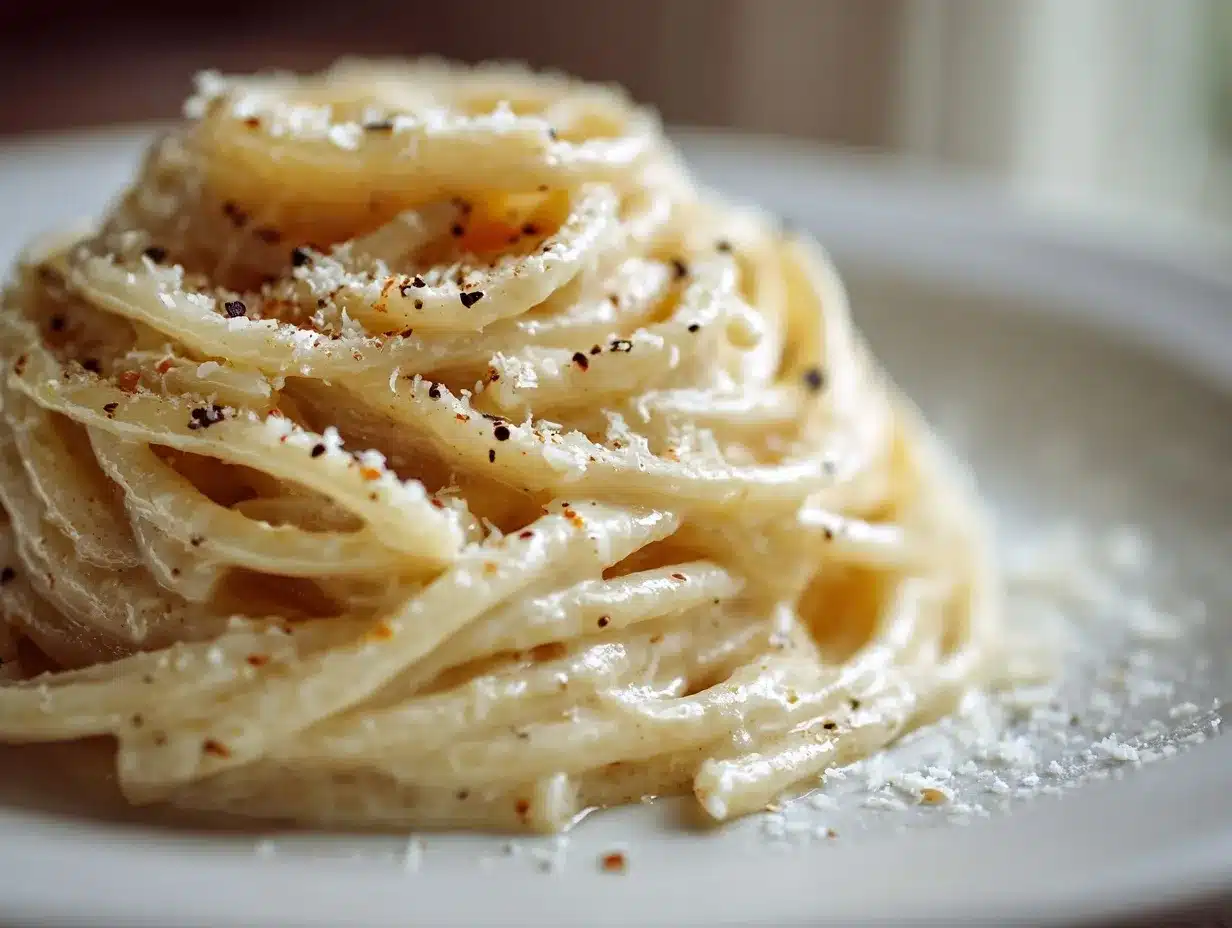
- Bring a large pot of salted water to a boil: Use about 4 quarts (3.8 liters) of water and 1 tablespoon (15 grams) salt. It should taste like the sea. This step takes about 5-7 minutes depending on your stove.
- Add spaghetti and cook until al dente: Usually about 8-9 minutes. Stir occasionally to prevent sticking. Taste a strand near the end to check texture—it should be firm but cooked through.
- Reserve pasta water: Before draining, scoop out 1 1/2 cups (360 ml) of the starchy pasta water and set aside. This water is magic for your sauce consistency.
- Drain pasta: Quickly, but do not rinse. The starch on the pasta helps the sauce cling.
- Toast black pepper: While pasta cooks, heat your large skillet over medium heat. Add the cracked black pepper and toast for about 1 minute until fragrant but not burnt. This releases essential oils and flavor.
- Add pasta and reserved water to the skillet: Toss spaghetti in the pepper, then add about 1 cup (240 ml) of reserved pasta water. Stir briskly to combine. Heat should be medium-low now.
- Gradually add grated pecorino: Off the heat or with very low heat, sprinkle in half the cheese while stirring constantly. This prevents clumping. Add more pasta water if the sauce feels too thick or dry.
- Continue adding cheese and stirring: Add the remaining pecorino in small batches, mixing until silky and smooth. The sauce should coat the pasta evenly without any cheesy lumps—if it looks grainy, add a splash more pasta water and stir vigorously.
- Finish with butter or olive oil (optional): Stir in 1 tablespoon butter or a drizzle of olive oil for extra silkiness and richness.
- Serve immediately: Plate your cacio e pepe and add a fresh crack of black pepper on top. Enjoy while hot and creamy!
Pro tip: If sauce starts to seize or clump, stop adding cheese and add a little more hot pasta water off the heat while stirring fast to smooth it out. Patience here really pays off.
Cooking Tips & Techniques
The secret to this cacio e pepe recipe is all in the sauce technique. Here’s what I’ve learned after many trials:
- Grate cheese finely: Larger chunks are harder to melt and cause clumps. A microplane is your best friend here.
- Control your heat: Too hot and the cheese’ll seize or become grainy. Off-heat mixing or low heat is best.
- Use pasta water wisely: It’s your emulsifier—adding it slowly while stirring creates a glossy sauce.
- Don’t rinse pasta: The starch on the noodles is essential for sauce adhesion.
- Toast pepper gently: This step wakes up the pepper’s flavor, making the dish pop.
- Multitasking tip: While pasta boils, toast pepper and grate cheese—timing is key to get everything ready simultaneously.
Early on, I used to dump all the cheese at once—big mistake. The sauce turned clumpy and gritty. Now, I slowly add cheese in batches while stirring and adding pasta water. This simple step changed everything. Also, stirring quickly but gently is an art. Too hard and pasta breaks; too soft and sauce won’t bind.
Variations & Adaptations
Want to tweak this classic? Here are a few ways to make this cacio e pepe recipe your own:
- Gluten-free version: Swap spaghetti for gluten-free pasta. Just watch cooking times as they vary.
- Vegan adaptation: Use nutritional yeast or vegan parmesan and a splash of almond milk instead of cheese. Toasted black pepper remains the star.
- Extra creamy: Stir in a dollop of mascarpone or cream at the end for a richer sauce.
- Spicy kick: Add a pinch of red pepper flakes when toasting the black pepper for heat.
- Herb twist: Toss in fresh chopped parsley or basil for freshness and color.
I once tried stirring in a spoonful of browned butter instead of regular butter—wow, it added a nutty depth that made this humble dish feel fancy without fuss.
Serving & Storage Suggestions
This cacio e pepe is best served fresh and hot. The sauce thickens as it cools, so plate it immediately for that luscious, glossy coat. Pair it with a simple green salad or roasted vegetables to balance the richness. A crisp white wine or sparkling water with lemon pairs nicely, cutting through the cheese.
Leftovers can be refrigerated in an airtight container for up to 2 days. To reheat, sprinkle a little water or broth over the pasta and warm gently in a skillet over low heat, stirring to restore silkiness. Avoid microwaving without moisture—it dries out the sauce.
Flavors mellow and deepen slightly after resting, but the sauce is at its best right off the stove.
Nutritional Information & Benefits
Per serving (based on 4 servings): Approximately 450 calories, 15g fat, 60g carbohydrates, and 18g protein. Pecorino cheese brings a good dose of calcium and protein, while black pepper adds digestive benefits and antioxidants. Using whole-grain or gluten-free pasta can adjust fiber content and suit dietary needs.
This dish is naturally vegetarian and can be modified for various diets. While cheese is a source of saturated fat, using it in moderation in a balanced meal is a treat that satisfies without guilt.
Conclusion
So, there you have it—the secret to delicious cacio e pepe with the silkiest no-clump sauce in just 15 minutes. This recipe is proof that simple ingredients combined with the right technique can create something truly special. I encourage you to make it your own, play with the pepper levels, or add your favorite twists. Honestly, it’s become one of my go-to comfort dishes, especially when I want something quick but impressive.
Give it a try, and let me know how your sauce turns out. Seriously, I love hearing your adaptations and stories—drop a comment or share your photos! Remember, cooking should be fun and a little messy sometimes (yes, I still spill pasta water now and then). Enjoy every silky bite!
FAQs
What type of cheese is best for cacio e pepe?
Pecorino Romano is traditional and gives a sharp, tangy flavor. Make sure it’s finely grated to avoid clumps.
How do I prevent the cheese from clumping in the sauce?
Gradually add cheese off the heat or on very low heat, stirring constantly, and add reserved pasta water slowly to help it melt smoothly.
Can I use other pasta shapes besides spaghetti?
Yes! Bucatini, tonnarelli, or even fettuccine work well since they hold sauce nicely.
Is it okay to use pre-grated cheese?
Freshly grated cheese is best because pre-grated often contains anti-caking agents that prevent smooth melting.
How can I make the dish spicier?
Add a pinch of red pepper flakes when toasting the black pepper or sprinkle some on top before serving.
Pin This Recipe!
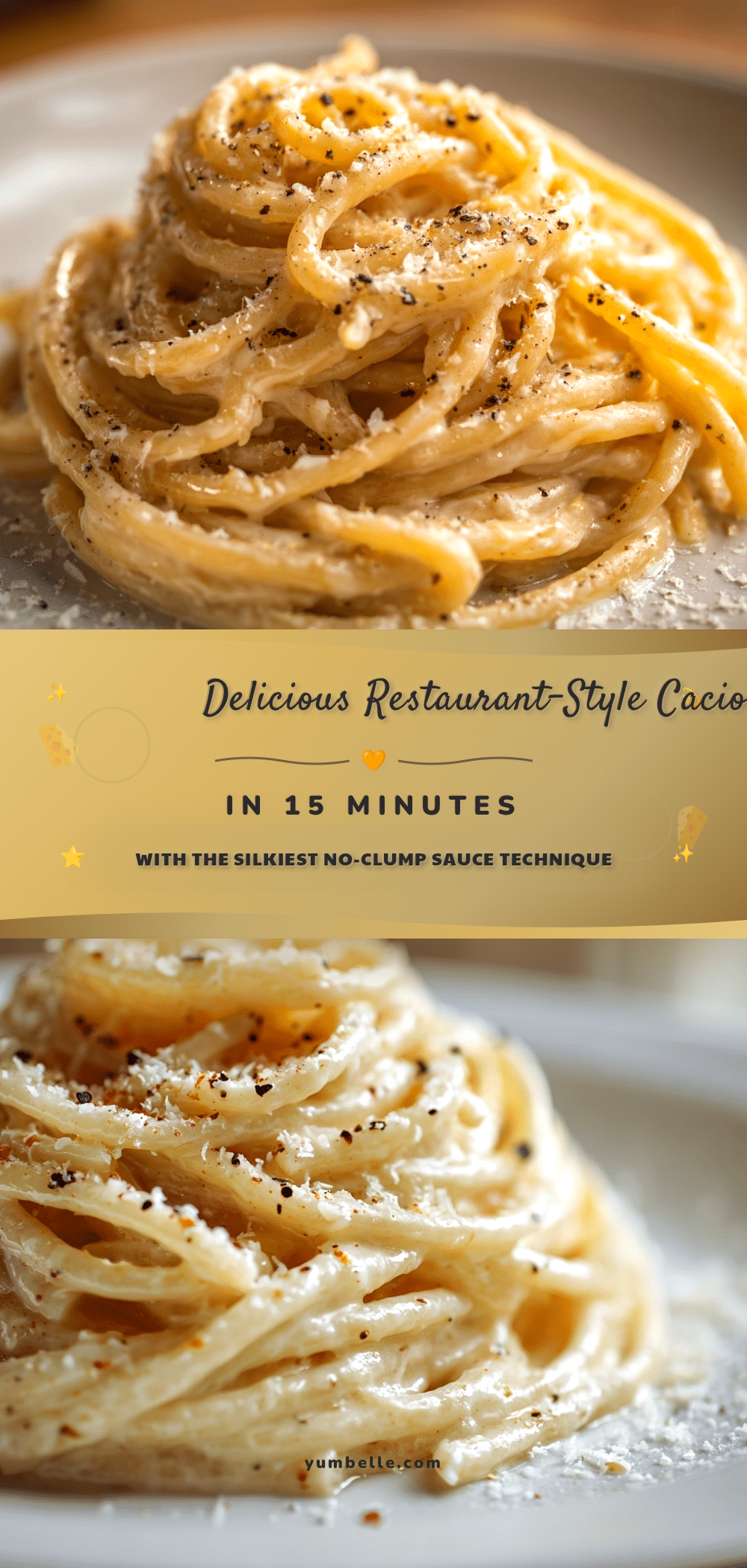
Cacio e Pepe Recipe Easy Silky No-Clump Sauce in 15 Minutes

A quick and easy cacio e pepe recipe that delivers a silky, no-clump sauce in just 15 minutes using simple ingredients like pecorino cheese, black pepper, and spaghetti.
- Prep Time: 5 minutes
- Cook Time: 10 minutes
- Total Time: 15 minutes
- Yield: 4 servings 1x
- Category: Main Course
- Cuisine: Italian
Ingredients
- 8 ounces (225 grams) dried spaghetti
- 1 cup (100 grams) finely grated Pecorino Romano cheese
- 2 teaspoons freshly cracked black pepper, plus more to taste
- 1 tablespoon (15 grams) salt for pasta water
- Water for boiling pasta and adjusting sauce consistency
- Optional: 1 tablespoon (15 grams) unsalted butter
- Optional: splash of extra virgin olive oil
Instructions
- Bring a large pot of salted water (about 4 quarts or 3.8 liters) to a boil; salt should taste like the sea.
- Add spaghetti and cook until al dente, about 8-9 minutes, stirring occasionally.
- Reserve 1 1/2 cups (360 ml) of starchy pasta water before draining.
- Drain pasta quickly without rinsing to keep starch on noodles.
- While pasta cooks, toast cracked black pepper in a large skillet over medium heat for about 1 minute until fragrant.
- Add drained pasta and about 1 cup (240 ml) reserved pasta water to the skillet; toss and stir over medium-low heat.
- Off the heat or on very low heat, gradually add half the grated pecorino cheese while stirring constantly to prevent clumping; add more pasta water if sauce is too thick.
- Continue adding remaining cheese in small batches, stirring until sauce is silky and smooth without lumps; add more pasta water if needed.
- Optionally stir in 1 tablespoon butter or a drizzle of olive oil for extra richness.
- Serve immediately with a fresh crack of black pepper on top.
Notes
Grate cheese finely to avoid clumps. Add cheese gradually off heat or on very low heat while stirring constantly. Use reserved pasta water slowly to create a smooth sauce. Do not rinse pasta after draining to keep starch for sauce adhesion. Toast black pepper gently to release flavor. If sauce clumps, add more hot pasta water off heat and stir vigorously.
Nutrition
- Serving Size: 1 serving (about 1/4
- Calories: 450
- Fat: 15
- Carbohydrates: 60
- Protein: 18
Keywords: cacio e pepe, pasta, pecorino romano, black pepper, easy pasta recipe, Italian comfort food, quick dinner