Love this? Save it for later!
Share the inspiration with your friends
“You won’t believe how simple this is,” my florist friend whispered as she handed me a tiny bag of crystallised rose petals one breezy spring afternoon. We were sitting on her sunlit porch, surrounded by blooming rhubarb stalks that she’d grown in her backyard patch. Honestly, I wasn’t expecting a dessert lesson that day—especially not one involving flowers and rhubarb, which I usually associate with grandma’s tart pies.
But there I was, scribbling down a recipe that felt as delicate as the petals themselves. The combination of rhubarb’s sharp tang with the fragrant, floral notes of rose was like a quiet little secret whispered between two unexpected friends. I mean, panna cotta is already a charming dessert—silky, creamy, and light as a cloud—but adding those crystallised petals gave it an elegant, almost magical touch that made me pause.
Maybe you’ve felt that way too: caught somewhere between wanting to impress at a dinner party and craving something that doesn’t require hours fiddling in the kitchen. This Rhubarb and Rose Panna Cotta with Crystallised Petals is that rare treat that delivers on both counts. It’s a dessert that looks like a masterpiece but is honestly easier than you think—though I’ll admit, I did forget to soak the gelatin once and had to improvise with a quick blender fix (don’t ask!).
What stuck with me was how this recipe brought a sense of calm elegance to a hectic week, even on a Wednesday night with no special occasion in sight. It’s the kind of dessert that feels like a celebration, even if you’re just sitting at your kitchen table with a cup of tea. So let me tell you how to make this little slice of springtime charm yourself—because once you try it, I have a feeling you’ll find yourself making it again and again.
Why You’ll Love This Recipe
This Elegant Rhubarb and Rose Panna Cotta recipe is not just a pretty face—it’s a dessert that’s been thoroughly tested and loved in my kitchen (and by every guest who’s tried it). Here’s what makes it stand out:
- Quick & Easy: You can have this panna cotta ready in about 30 minutes, with chill time aside. Perfect when you want to impress without fuss.
- Simple Ingredients: Uses pantry staples and fresh rhubarb that’s easy to find in season, plus rose water that adds a subtle floral note.
- Perfect for Special Occasions: Whether it’s a bridal shower, a romantic dinner, or a spring brunch, this dessert feels fancy but isn’t intimidating.
- Crowd-Pleaser: The smooth creaminess paired with the tang of rhubarb and delicate rose flavor always gets compliments—even from those who say they “don’t do floral desserts.”
- Unbelievably Delicious: The texture is silky with a gentle wobble, the rhubarb adds a fresh brightness, and the crystallised petals give a charming crunch and visual wow factor.
What sets this panna cotta apart is the balance of flavors and the attention to detail—like simmering the rhubarb just long enough to keep its freshness or gently folding in whipped cream for that perfect silkiness. The crystallised petals aren’t just decoration; they add a playful texture and a hint of sweetness that feels like a little secret shared with every bite. Honestly, this is not your run-of-the-mill panna cotta. It’s the version I keep coming back to when I want to make something that looks like a work of art but tastes like comfort on a plate.
What Ingredients You Will Need
This recipe leans on simple, fresh ingredients that combine to create a sophisticated flavor profile without any fuss. Most of these are pantry staples, and the fresh rhubarb and rose water are the stars that bring it all together.
- For the Rhubarb Compote:
- Fresh rhubarb stalks, chopped into 1-inch pieces (about 2 cups / 300g) – look for firm, bright stalks
- Granulated sugar (1/3 cup / 65g) – balances the tartness
- Water (1/4 cup / 60ml) – to help soften the rhubarb gently
- For the Panna Cotta Base:
- Heavy cream (2 cups / 480ml) – I prefer a brand like Horizon Organic for richness
- Whole milk (1 cup / 240ml) – adds lightness and smooth texture
- Granulated sugar (1/2 cup / 100g) – sweetens the cream gently
- Rose water (1 tsp) – use a good quality, food-grade rose water (like Cortas brand) for true floral notes
- Gelatin powder (2 1/2 tsp / about 7g) – for that signature wobble (substitute agar agar for vegetarian option)
- Cold water (3 tbsp / 45ml) – to bloom the gelatin
- For the Crystallised Petals:
- Edible rose petals (about 1/2 cup loosely packed) – choose organic or pesticide-free petals
- Egg white (1, lightly beaten) – helps the sugar stick
- Granulated sugar (1/3 cup / 65g) – for that sparkling, crunchy coating
If you can’t find fresh rhubarb, frozen will work in a pinch, just thaw and drain excess liquid. For a dairy-free version, swap cream and milk with full-fat coconut milk and almond milk, but the texture will be a bit different. The rose water is subtle, so don’t overdo it—too much can overpower the delicate balance.
Equipment Needed
- Medium saucepan – for gently cooking the rhubarb compote and warming the cream mixture
- Mixing bowls – one for gelatin blooming, one for folding cream
- Whisk – to blend sugar and gelatin smoothly
- Fine mesh sieve – to strain the rhubarb compote for a smoother texture (optional but recommended)
- Small brush – handy for coating rose petals with egg white evenly
- Cooling glasses or ramekins – to set the panna cotta (4 to 6 depending on size)
- Refrigerator space – essential for chilling the panna cotta for at least 4 hours
If you don’t have a fine mesh sieve, you can use a clean kitchen towel for straining. For crystallising petals, a small pastry brush works best, but a clean finger or spoon edge can do in a pinch. I usually use simple glass tumblers for serving, but elegant ramekins add a restaurant feel. Just make sure your containers are stable when chilling!
Preparation Method
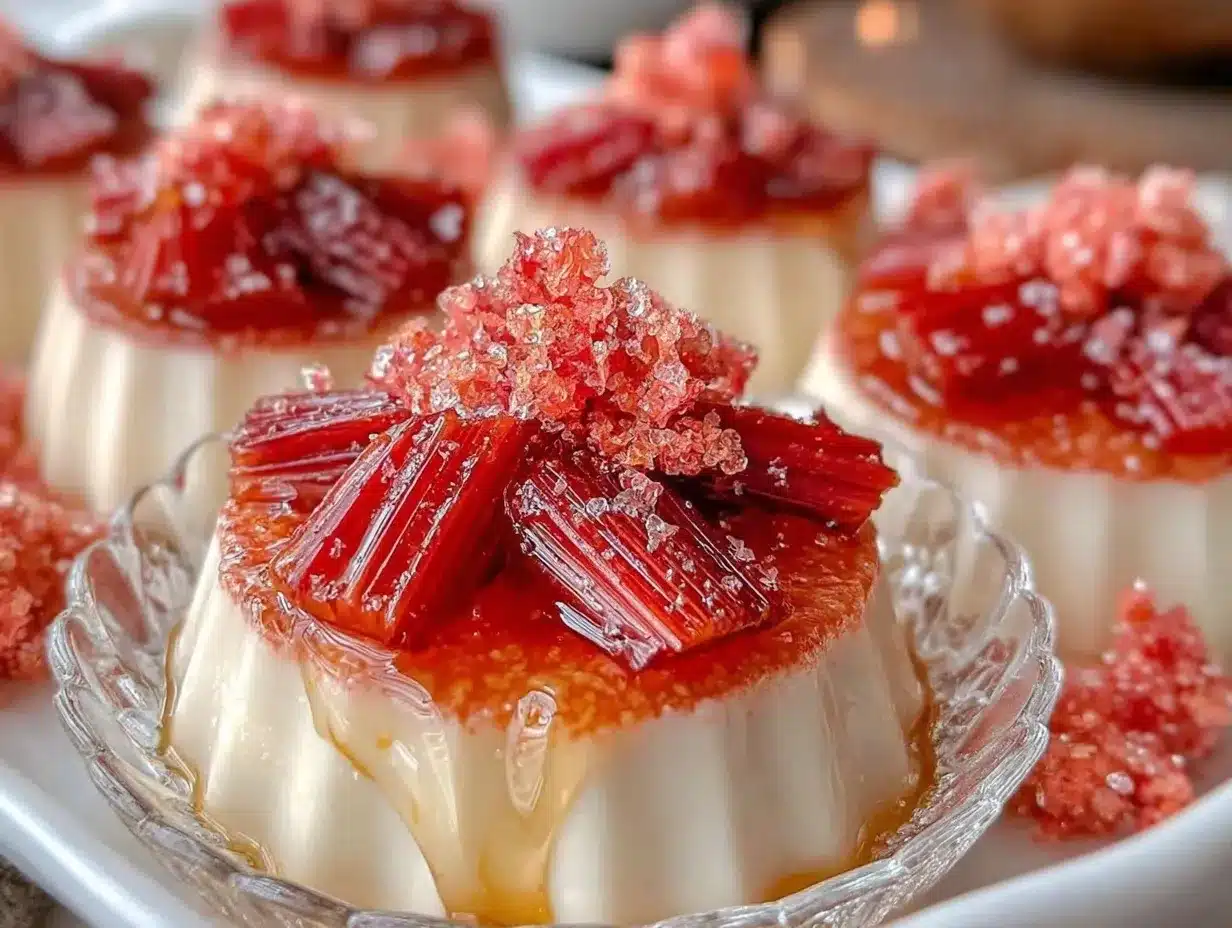
- Prepare the Rhubarb Compote (15 minutes): In a medium saucepan, combine chopped rhubarb, sugar, and water. Cook over medium heat, stirring occasionally, until the rhubarb breaks down but still holds some shape—about 10 minutes. Remove from heat and let cool slightly. If you prefer a smoother texture, strain the compote through a fine mesh sieve into a bowl, pressing gently to extract the liquid. Set aside.
- Bloom the Gelatin (5 minutes): In a small bowl, sprinkle gelatin powder over 3 tablespoons of cold water. Let it sit for 5 minutes to soften. This blooming step is crucial because skipping it can lead to clumpy panna cotta.
- Make the Panna Cotta Base (10 minutes): In the same saucepan, combine heavy cream, whole milk, and sugar. Warm over medium heat, stirring until sugar dissolves and the mixture is hot but not boiling (around 170°F / 77°C). Remove from heat and stir in the bloomed gelatin until fully dissolved. Add the rose water and mix gently.
- Combine Panna Cotta and Rhubarb (5 minutes): Pour about two-thirds of the panna cotta base into your serving glasses or ramekins. Spoon a thin layer of rhubarb compote over the top, then gently pour the remaining panna cotta base to create a marbled effect or a layered look—whichever you prefer.
- Chill (at least 4 hours): Refrigerate the panna cotta until set, ideally overnight. You want it to have a gentle wobble but hold its shape when you move the glass.
- Make Crystallised Rose Petals (20 minutes + drying time): While panna cotta chills, prepare the petals. Using a small brush, lightly coat each rose petal with beaten egg white. Sprinkle granulated sugar on both sides, ensuring a thin, even layer. Place petals on parchment paper and let them dry at room temperature for at least an hour or until crisp.
- Serve and Garnish: Just before serving, top each panna cotta with a few crystallised rose petals. The petals add a delightful crunch and a beautiful contrast to the creamy dessert.
If your gelatin doesn’t dissolve smoothly, you can gently reheat the cream mixture off the heat to blend it better, but don’t boil. And if you forget to bloom the gelatin (been there!), whisking the powder directly into warm cream and straining quickly can save the day.
Cooking Tips & Techniques
Making panna cotta might seem fancy, but it’s one of those desserts where a few small tricks make all the difference. Here’s what I’ve learned through trial and error:
- Gelatin blooming is key: Always sprinkle gelatin over cold water and let it sit for at least 5 minutes. Skipping this leads to lumps or a panna cotta that won’t set properly.
- Gentle heat is your friend: Heat the cream mixture slowly and avoid boiling. Boiling can change the texture and cause the gelatin not to set well.
- Fresh rhubarb matters: Using fresh, firm rhubarb gives you that perfect balance of tartness and texture. Overcooking rhubarb makes it mushy and dull.
- Straining rhubarb for smoothness: If you want a silky panna cotta, strain the compote. If you prefer a rustic, chunky topping, skip this step.
- Crystallised petals require patience: Don’t rush drying your petals; they need to become crisp to add that wonderful crunch. A humid day might delay drying time.
- Time management: Start the crystallised petals first since they take the longest to dry, then prep the panna cotta while they’re drying.
- Texture balance: Folding a small amount of lightly whipped cream into the panna cotta base before setting can add a luxurious, airy texture—but it’s optional.
I once tried to rush the drying of petals in the oven, and they curled up and lost their delicate beauty. Lesson learned: slow and steady wins with edible flowers.
Variations & Adaptations
This recipe is flexible enough to suit different tastes and dietary needs. Here are some ideas I’ve tried or considered:
- Vegan version: Replace gelatin with agar agar powder (about 1 tsp, adjust as per package instructions). Use coconut cream and almond milk instead of dairy. The texture shifts slightly but stays creamy and delicious.
- Seasonal fruit swaps: In warmer months, swap rhubarb for fresh strawberries or raspberries for a summery twist. You can make a similar compote with these berries.
- Flavored rose water alternatives: Try orange blossom water or lavender extract for subtly different floral notes. Just reduce the amount to avoid overpowering.
- Alcohol infusion: Add a tablespoon of rose liqueur or elderflower cordial to the panna cotta base for grown-up sophistication.
- Personal twist: I sometimes sprinkle crushed pistachios on top for extra texture and color contrast, which makes the dessert even more festive.
For those with nut allergies or sensitivities, simply omit the nuts or use toasted coconut flakes instead. The key is keeping the cream and floral balance intact.
Serving & Storage Suggestions
This rhubarb and rose panna cotta is best served chilled straight from the fridge. The cool creaminess against the tangy rhubarb is a delight, especially on a warm day or after a rich meal.
For presentation, the crystallised petals add that wow factor, but you can also garnish with a sprig of fresh mint or a few fresh rose petals. Pair it with a light, floral tea like jasmine or a crisp glass of prosecco for a truly elegant experience.
Store leftover panna cotta covered in the fridge for up to 3 days. The texture will remain silky, though the crystallised petals should be stored separately to keep their crunch. Reheat gently by letting it sit at room temperature for 10 minutes if desired, but avoid microwaving as it can affect the texture.
Over time, the rhubarb’s flavor may deepen, making the dessert even more interesting if eaten the next day. Just add the petals right before serving to keep everything fresh and pretty.
Nutritional Information & Benefits
Each serving of this panna cotta (about 1/2 cup / 125ml) contains approximately:
| Nutrient | Amount |
|---|---|
| Calories | 280 kcal |
| Fat | 18g (mostly from cream) |
| Carbohydrates | 20g (includes natural sugars from rhubarb and added sugar) |
| Protein | 4g |
| Fiber | 1g |
Rhubarb is a good source of vitamin K and antioxidants, while the rose water adds a fragrant, calming touch believed to have mild anti-inflammatory properties. This dessert is gluten-free naturally but contains dairy and gelatin (unless adapted). If you’re watching calories or dairy, consider the vegan version with coconut milk and agar agar, which lowers fat content.
Conclusion
Honestly, this Elegant Rhubarb and Rose Panna Cotta with Crystallised Petals is one of those recipes that’s both special and approachable. It’s a dessert you can whip up without stress but still impress with its delicate flavors and stunning presentation. Whether you’re celebrating a milestone or just want to treat yourself midweek, this panna cotta feels like a little luxury that’s worth every bite.
Give it a try, and don’t be afraid to make it your own—add a personal flourish or tweak the florals to your liking. I love how this recipe brings a touch of springtime charm indoors, and I hope it becomes a favorite in your kitchen too.
If you make it, I’d love to hear how it turned out or what variations you tried. Sharing our kitchen stories is part of the fun, right? So go ahead, make this panna cotta, and treat yourself to something truly elegant and delicious!
FAQs
Can I make the panna cotta ahead of time?
Yes! In fact, it’s best to prepare it at least 4 hours ahead or overnight to allow it to fully set. Just keep the crystallised petals separate until serving.
What if I don’t have rose water?
You can omit rose water or substitute with a small amount of vanilla extract or orange blossom water for a different but lovely floral note.
How do I know when the gelatin is fully dissolved?
The gelatin melts quickly in hot cream. Stir until you see no grains or lumps. If unsure, gently reheat off the heat while stirring, but never boil.
Are crystallised rose petals safe to eat?
Yes, as long as you use edible, organic rose petals that haven’t been treated with pesticides. Always use petals specifically sold for culinary use.
Can I use agar agar instead of gelatin?
Absolutely! Agar agar works for vegetarians and vegans. Use about 1 teaspoon and follow package instructions carefully—it sets differently and faster than gelatin.
For a stunning dessert experience, this panna cotta pairs beautifully with my honey lavender shortbread cookies, which complement the floral notes perfectly. And if you’re curious about other creamy treats, my classic vanilla bean panna cotta recipe offers a simple, elegant alternative that’s always a hit.
Pin This Recipe!
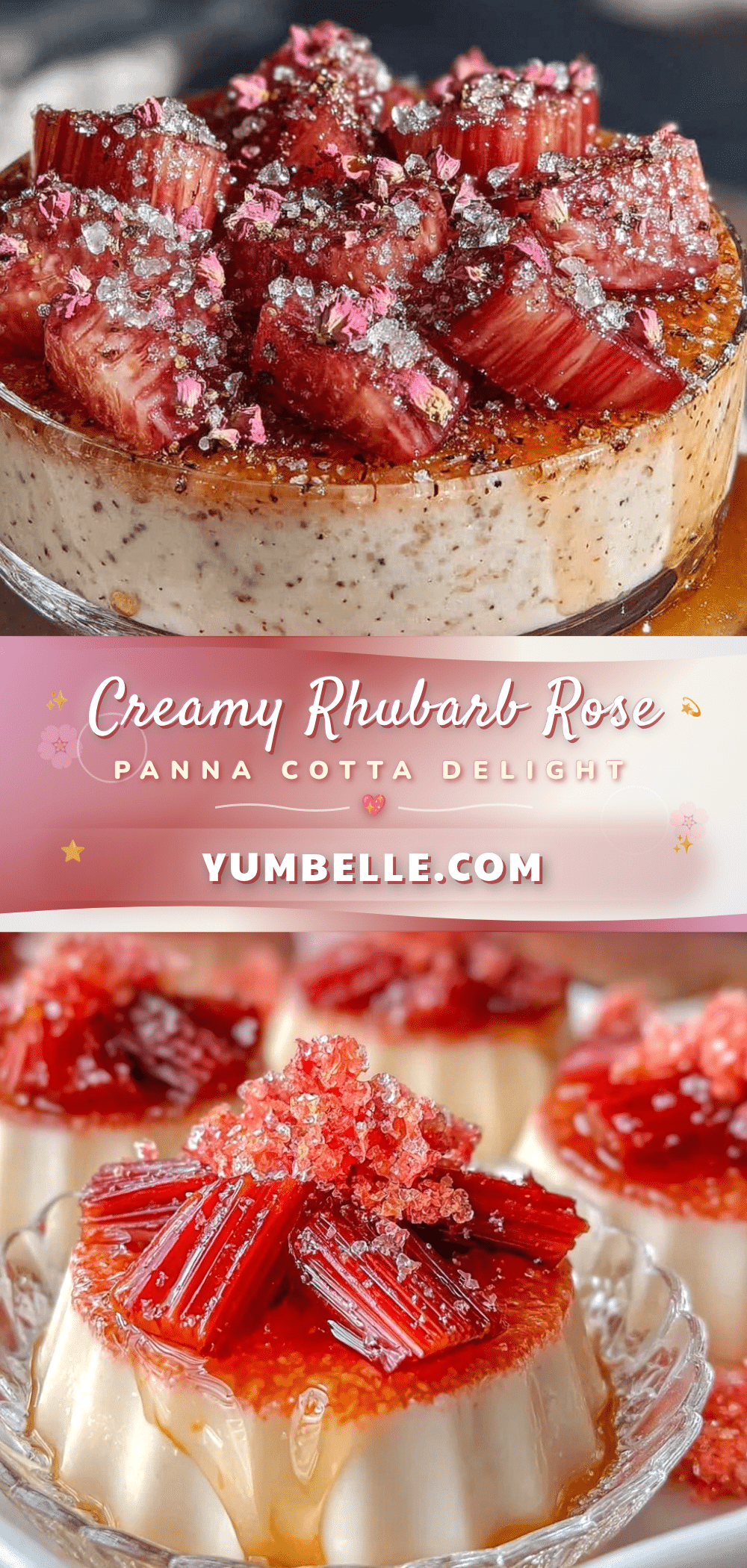
Elegant Rhubarb and Rose Panna Cotta with Crystallised Petals
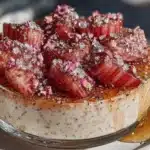
A delicate and elegant panna cotta dessert combining the tartness of rhubarb with the floral notes of rose, topped with crunchy crystallised rose petals. Perfect for special occasions or a refined everyday treat.
- Prep Time: 15 minutes
- Cook Time: 15 minutes
- Total Time: 4 hours 30 minutes
- Yield: 4 to 6 servings 1x
- Category: Dessert
- Cuisine: European
Ingredients
- 2 cups fresh rhubarb stalks, chopped into 1-inch pieces (about 300g)
- 1/3 cup granulated sugar (65g) for rhubarb compote
- 1/4 cup water (60ml) for rhubarb compote
- 2 cups heavy cream (480ml)
- 1 cup whole milk (240ml)
- 1/2 cup granulated sugar (100g) for panna cotta base
- 1 teaspoon rose water
- 2 1/2 teaspoons gelatin powder (about 7g)
- 3 tablespoons cold water (45ml) for gelatin blooming
- 1/2 cup edible rose petals (loosely packed)
- 1 egg white, lightly beaten
- 1/3 cup granulated sugar (65g) for crystallising petals
Instructions
- Prepare the Rhubarb Compote: In a medium saucepan, combine chopped rhubarb, 1/3 cup sugar, and 1/4 cup water. Cook over medium heat, stirring occasionally, until rhubarb breaks down but retains some shape, about 10 minutes. Remove from heat and cool slightly. Strain through a fine mesh sieve if a smooth texture is desired. Set aside.
- Bloom the Gelatin: Sprinkle gelatin powder over 3 tablespoons cold water in a small bowl. Let sit for 5 minutes to soften.
- Make the Panna Cotta Base: In the same saucepan, combine heavy cream, whole milk, and 1/2 cup sugar. Warm over medium heat until sugar dissolves and mixture is hot but not boiling (around 170°F / 77°C). Remove from heat and stir in bloomed gelatin until fully dissolved. Add rose water and mix gently.
- Combine Panna Cotta and Rhubarb: Pour about two-thirds of the panna cotta base into serving glasses or ramekins. Spoon a thin layer of rhubarb compote over the top, then gently pour the remaining panna cotta base to create a marbled or layered effect.
- Chill: Refrigerate panna cotta for at least 4 hours or overnight until set with a gentle wobble.
- Make Crystallised Rose Petals: Using a small brush, coat each rose petal lightly with beaten egg white. Sprinkle granulated sugar on both sides evenly. Place petals on parchment paper and let dry at room temperature for at least 1 hour or until crisp.
- Serve and Garnish: Just before serving, top each panna cotta with a few crystallised rose petals.
Notes
Bloom gelatin properly to avoid lumps. Heat cream mixture gently without boiling. Strain rhubarb compote for smooth texture or skip for rustic style. Dry crystallised petals slowly for best texture. Vegan version available using agar agar and coconut/almond milk.
Nutrition
- Serving Size: About 1/2 cup (125ml
- Calories: 280
- Fat: 18
- Carbohydrates: 20
- Fiber: 1
- Protein: 4
Keywords: panna cotta, rhubarb dessert, rose water, crystallised rose petals, elegant dessert, spring dessert, easy panna cotta, floral dessert