Love this? Save it for later!
Share the inspiration with your friends
“You really don’t need to turn on the stove for a meal to feel special,” my old college roommate, Marco, once told me as we sat on his balcony overlooking the city. It was late summer, and he had just pulled together this effortless spread of Italian antipasto that looked like it belonged in a rustic trattoria, not a tiny apartment kitchen. Honestly, I thought he had spent hours preparing it, but nope—no cooking at all. Just fresh prosciutto, creamy burrata, olives, and some crusty bread from the local bakery down the street.
That evening stuck with me because it changed how I think about entertaining. You know that feeling when you want to impress guests but can’t be bothered to slave over a hot stove? This Easy No-Cook Italian Antipasto Plate with Prosciutto & Burrata is exactly that kind of recipe. It’s quick, elegant, and downright delicious. Plus, it’s flexible enough that, once you’ve got the basics down, you can swap things out based on what’s fresh or what’s in your pantry.
One time, I even forgot to pick up fresh bread and improvised with crispy grissini sticks instead—worked like a charm, although I might have made a mess with the olive oil drizzle. Maybe you’ve been there, juggling last-minute details but still wanting to serve something that feels thoughtfully prepared. That’s why this antipasto plate has stayed in my rotation: it’s simple, beautiful, and makes everyone feel like they’re enjoying a little Italian escape without the fuss.
Why You’ll Love This Recipe
This Easy No-Cook Italian Antipasto Plate with Prosciutto & Burrata is a game-changer for anyone who loves to entertain without sweating over the stove. Let me share a few reasons why I keep coming back to it:
- Quick & Easy: Takes just 10-15 minutes to assemble, perfect for unexpected guests or lazy weekends.
- Simple Ingredients: No need for specialty shops—just fresh, quality basics you can find at your local market.
- Perfect for Entertaining: Whether it’s a casual wine night or a fancy gathering, this antipasto plate fits the bill.
- Crowd-Pleaser: The creamy burrata and salty prosciutto combo always gets rave reviews, even from picky eaters.
- Unbelievably Delicious: The textures and flavors balance beautifully—creamy, salty, tangy, crunchy—every bite is a little celebration.
What sets this recipe apart? Well, it’s all about the effortless elegance. I like to drizzle the burrata with a high-quality extra virgin olive oil and sprinkle it with flaky sea salt. That little touch makes all the difference, trust me. Plus, pairing prosciutto with fresh seasonal fruit—like ripe figs or juicy melon—adds a subtle sweetness that feels like a secret Italian trick.
If you’re looking for a no-fuss recipe that still wows, this is it. It’s the kind of dish you’ll want to bring out every time you want to feel a little fancy but keep things chill.
What Ingredients You Will Need
This antipasto plate uses simple, wholesome ingredients to deliver bold flavor and satisfying texture without the fuss. Most of these are pantry staples or fresh finds from your local market, and substitutions are easy depending on what you have on hand.
- Prosciutto: Thinly sliced, ideally from a trusted brand like Fiorucci for the best melt-in-your-mouth texture.
- Burrata Cheese: Fresh and creamy, look for small balls wrapped in mozzarella and cream—whole milk burrata adds richness.
- Olives: A mix of kalamata and Castelvetrano olives adds salty briny notes.
- Marinated Artichoke Hearts: Quartered, these bring a tangy bite that complements the cheese and meat.
- Roasted Red Peppers: Jarred or fresh, sliced thin for sweetness and color.
- Fresh Seasonal Fruit: Think ripe figs, melon slices, or grapes—adds a sweet contrast (optional but highly recommended).
- Cherry Tomatoes: Halved, for freshness and acidity.
- Crusty Bread or Grissini Sticks: For scooping and crunch (I like a rustic baguette or ciabatta).
- Extra Virgin Olive Oil: A good quality one like Colavita, drizzled over the burrata and vegetables.
- Fresh Basil Leaves: Adds a fragrant herbal note, torn or whole.
- Flaky Sea Salt & Freshly Ground Black Pepper: To season and bring everything together.
For substitutions: If you can’t find burrata, fresh mozzarella works fine, though you’ll miss that creamy center. Swap prosciutto with thinly sliced serrano ham or speck for a slightly different flavor profile. If olives aren’t your thing, capers or pickled peppers make excellent alternatives.
Equipment Needed
- Large Serving Platter or Wooden Board: A beautiful presentation makes all the difference. I personally love using a large marble slab or rustic wooden board for an authentic feel.
- Sharp Knife: For slicing the bread, tomatoes, and any fresh fruit neatly.
- Small Bowls: To separate olives, artichokes, and roasted peppers—keeps the antipasto plate tidy and attractive.
- Spoons or Small Tongs: For easy serving of marinated vegetables and cheese.
If you don’t have a fancy board, a clean cutting board or even a large plate works just fine. I once assembled the whole antipasto on a baking sheet lined with parchment paper when I was in a pinch—no one noticed, promise! Keeping your knife sharp also makes slicing prosciutto and tomatoes easier and neater.
Preparation Method
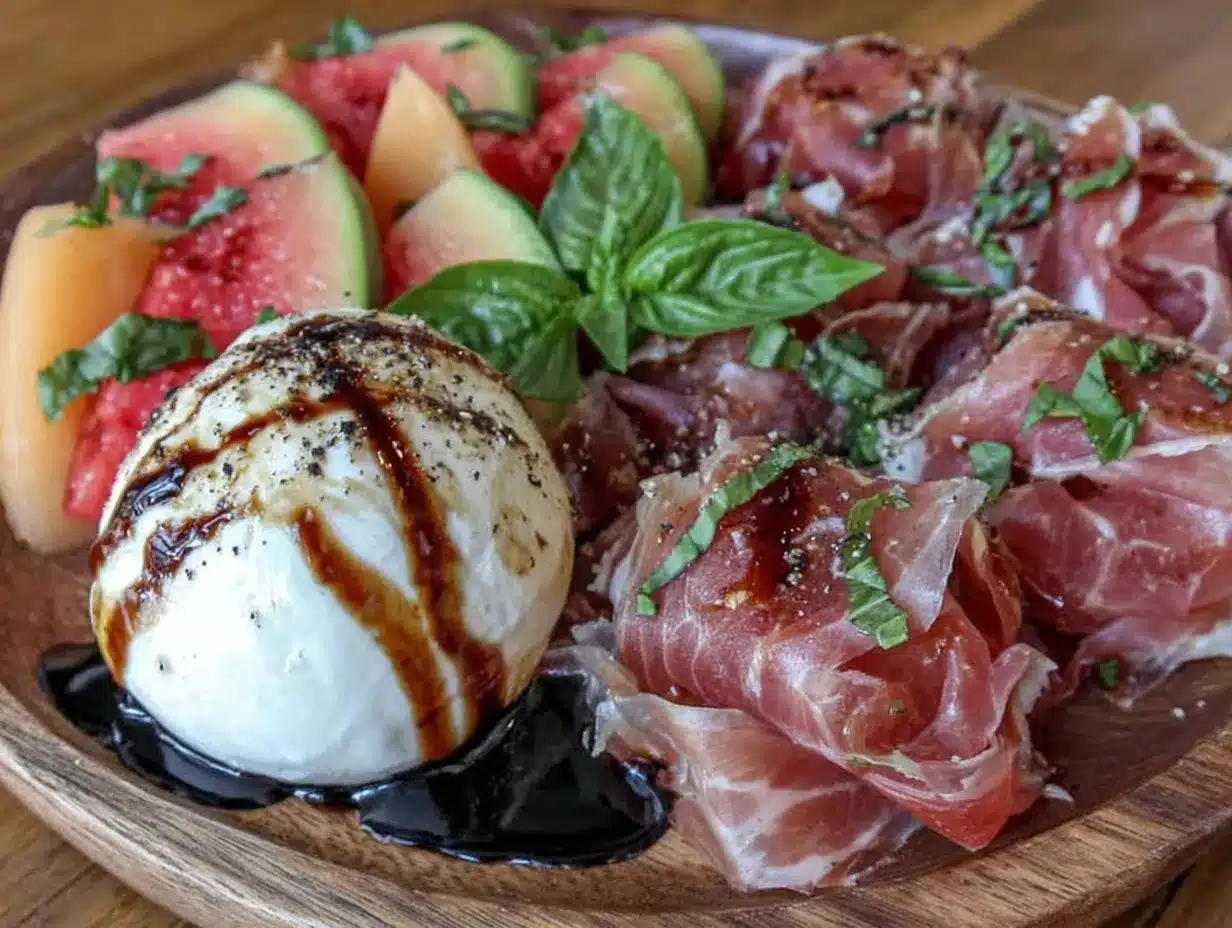
- Gather and Prep Ingredients (5-10 minutes): Rinse cherry tomatoes and fresh basil leaves. Slice tomatoes in half and tear basil leaves into bite-sized pieces. If using fresh fruit like figs or melon, slice into wedges or bite-sized pieces.
- Arrange Cheese (2 minutes): Gently place whole balls of burrata in the center of your serving platter. Drizzle with about 1 tablespoon (15 ml) of extra virgin olive oil per ball and sprinkle lightly with flaky sea salt and freshly ground black pepper. Let it sit while you prepare the rest so flavors marry.
- Place Prosciutto (3-5 minutes): Fan out the prosciutto slices around the burrata. You want them to look airy and inviting—not too stacked. If slices are large, fold them loosely.
- Add Marinated Vegetables (5 minutes): Distribute the marinated artichoke hearts and roasted red peppers evenly around the board, separating them in small bowls or piles to keep flavors distinct.
- Scatter Olives and Tomatoes (3 minutes): Place olives in small bowls or piles; scatter halved cherry tomatoes near the burrata for pops of color and freshness.
- Include Fresh Fruit (Optional, 3 minutes): Add seasonal fruit wedges or grapes around the edges of the board for a hint of natural sweetness that balances the salty elements.
- Add Bread or Grissini (2 minutes): Arrange slices of crusty bread or breadsticks on one side of the platter for easy grabbing.
- Final Touch (1 minute): Sprinkle torn basil leaves over the entire platter, and if you like, an extra drizzle of olive oil over the tomatoes and fruit to bring it all together.
Tip: Be gentle when handling burrata; it’s delicate and can spill its creamy interior if squeezed too hard. Also, avoid overcrowding the platter so each ingredient shines and guests can easily pick what they want. If you’re prepping ahead, keep wet ingredients separate from bread until serving to prevent sogginess.
Cooking Tips & Techniques
Honestly, the beauty of this recipe is in its simplicity, but a few tips can make your antipasto plate truly stand out.
- Choose Quality Ingredients: Since there’s no cooking to mask flavors, pick the freshest burrata and the best prosciutto you can find. I’ve noticed that even small differences in cheese creaminess or meat saltiness change the whole experience.
- Room Temperature is Key: Let burrata and prosciutto come to room temperature before serving. Cold cheese tastes dull, and prosciutto is best enjoyed when slightly soft and supple.
- Balance Flavors: Include a mix of salty (prosciutto, olives), creamy (burrata), tangy (artichokes), sweet (fruit), and fresh (basil, tomatoes) to keep every bite interesting.
- Don’t Overload the Board: Less is more. Leave space between ingredients so it feels inviting, not chaotic.
- Multitasking: While slicing fruit or tomatoes, set up your platter so you can easily add items as you go—this saves time and keeps everything fresh.
- Clean as You Go: Since no cooking mess is involved, cleaning up is a breeze, but a tidy prep space helps keep the assembly smooth.
One mistake I made early on was piling too much prosciutto in one spot, making it hard to pick up slices without tearing. Now, I spread it out, folding loosely for easy grabbing. Also, I learned that using a serrated knife for bread slices helps avoid squashing the soft crumb.
Variations & Adaptations
This antipasto plate is a fantastic base for customization. Here are a few variations I’ve tried (and loved):
- Vegetarian Version: Skip the prosciutto and add grilled zucchini ribbons, roasted mushrooms, and marinated eggplant. For protein, include a handful of marcona almonds or chickpeas tossed in herbs.
- Seasonal Swaps: In the fall, swap fresh figs for sliced pears or apple wedges. In summer, use ripe peaches or cherries to keep it bright and fresh.
- Spicy Kick: Add pickled pepperoncini or a sprinkle of chili flakes over the burrata for a subtle heat contrast.
- Gluten-Free: Replace bread with gluten-free crackers or cucumber slices for a refreshing crunch.
- Personal Twist: I once added a drizzle of aged balsamic vinegar over the burrata and tomatoes—unexpected but totally delicious.
Feel free to experiment with different cheese types, meats, or accompaniments. The key is maintaining a balance of textures and flavors to keep it interesting.
Serving & Storage Suggestions
Serve this antipasto plate immediately after assembly for the best texture and flavor. Burrata tastes best when soft and creamy, and the bread stays crisp fresh from the bakery. I like to present it at room temperature with a chilled glass of white wine or sparkling water with lemon.
If you have leftovers, store components separately: keep burrata wrapped tightly in the fridge, olives and marinated veggies in airtight containers, and bread in a paper bag at room temperature for up to a day. Burrata can be refrigerated for up to 2 days but loses some creaminess over time.
To reheat bread, briefly toast or warm in the oven for a few minutes. Avoid microwaving the cheese or meats—they’re best enjoyed fresh and cold.
Flavors tend to deepen when olives and artichokes sit overnight, so if you prepare parts in advance, the taste can become even more robust. Just keep the cheese and bread separate until serving to avoid sogginess.
Nutritional Information & Benefits
This antipasto plate offers a balanced mix of protein, healthy fats, and fresh produce. Prosciutto and burrata provide good-quality protein and calcium, while olive oil contributes heart-healthy monounsaturated fats. The artichokes and olives add antioxidants and fiber, supporting digestion and overall wellness.
If you’re watching carbs, this plate is naturally low-carb, especially if you skip or limit the bread. It’s gluten-free if served without bread or with gluten-free crackers. Keep in mind prosciutto and olives are salty, so those monitoring sodium should enjoy in moderation.
From a personal wellness perspective, I appreciate how this plate feels indulgent yet light. It’s satisfying without heaviness—perfect when you want to eat well but keep things simple and fresh.
Conclusion
To wrap things up, this Easy No-Cook Italian Antipasto Plate with Prosciutto & Burrata is a recipe that’s as beautiful as it is effortless. Whether you’re throwing together a last-minute gathering or craving a light, flavorful meal, this antipasto plate has you covered. I love it because it proves you don’t need complicated steps or hours in the kitchen to impress and satisfy.
Feel free to make it your own, swap ingredients based on what’s in season or your cravings, and share your version with friends and family. Honestly, it’s one of those dishes that brings people together and sparks conversation—plus, it tastes amazing every single time.
If you try this recipe, I’d love to hear how you served it or any tweaks you made. Drop a comment below or share your photos—let’s keep the Italian vibes rolling!
FAQs
Can I prepare the antipasto plate in advance?
You can prep most components a few hours ahead, like slicing vegetables and arranging olives. However, keep burrata and bread separate until just before serving for freshness.
What can I substitute for burrata if I can’t find it?
Fresh mozzarella is a good substitute, though it lacks the creamy center. You can also try stracciatella cheese or ricotta for a similar texture.
Is this antipasto plate suitable for vegetarians?
Yes! Simply omit the prosciutto and add more vegetables, nuts, or plant-based proteins like marinated tofu or chickpeas.
How do I keep bread from getting soggy on the antipasto plate?
Serve bread separately or add it to the platter just before serving to avoid absorbing moisture from the olives or vegetables.
What wine pairs well with this antipasto plate?
A crisp white like Pinot Grigio or a light red such as Chianti complements the salty and creamy flavors beautifully.
Pin This Recipe!
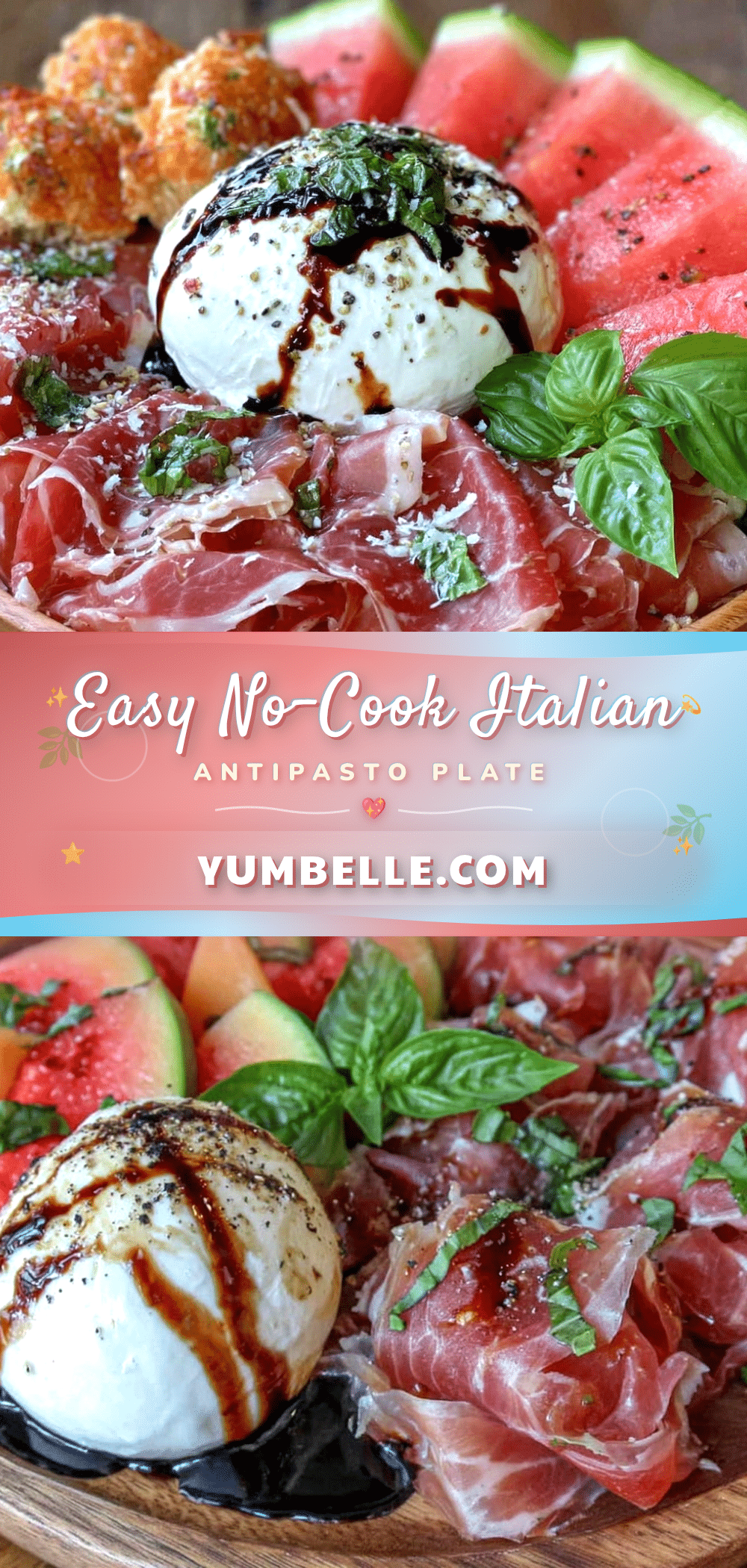
Easy No-Cook Italian Antipasto Plate Recipe with Prosciutto and Burrata for Perfect Entertaining
A quick, elegant, and delicious no-cook Italian antipasto plate featuring prosciutto, creamy burrata, olives, and fresh seasonal accompaniments. Perfect for effortless entertaining and customizable to your pantry.
- Prep Time: 10 minutes
- Cook Time: 0 minutes
- Total Time: 10 minutes
- Yield: 4 servings
- Category: Appetizer
- Cuisine: Italian
Ingredients
- Thinly sliced prosciutto (about 4-6 oz)
- Fresh burrata cheese (2-3 small balls)
- Mixed kalamata and Castelvetrano olives (1 cup)
- Marinated artichoke hearts, quartered (1 cup)
- Roasted red peppers, thinly sliced (1/2 cup)
- Fresh seasonal fruit such as ripe figs, melon slices, or grapes (1 cup, optional)
- Cherry tomatoes, halved (1 cup)
- Crusty bread slices or grissini sticks (1 baguette or 1 package breadsticks)
- Extra virgin olive oil (about 2 tablespoons)
- Fresh basil leaves (a handful, torn or whole)
- Flaky sea salt (to taste)
- Freshly ground black pepper (to taste)
Instructions
- Rinse cherry tomatoes and fresh basil leaves. Slice tomatoes in half and tear basil leaves into bite-sized pieces. Slice fresh fruit like figs or melon into wedges or bite-sized pieces if using.
- Gently place whole balls of burrata in the center of your serving platter. Drizzle each ball with about 1 tablespoon of extra virgin olive oil and sprinkle lightly with flaky sea salt and freshly ground black pepper. Let sit while preparing the rest.
- Fan out the prosciutto slices around the burrata, folding loosely if slices are large to create an airy presentation.
- Distribute marinated artichoke hearts and roasted red peppers evenly around the board, using small bowls or piles to keep flavors distinct.
- Place olives in small bowls or piles; scatter halved cherry tomatoes near the burrata for color and freshness.
- Add seasonal fruit wedges or grapes around the edges of the board for a sweet contrast, if using.
- Arrange slices of crusty bread or grissini sticks on one side of the platter for easy grabbing.
- Sprinkle torn basil leaves over the entire platter and optionally drizzle extra olive oil over tomatoes and fruit to bring everything together.
Notes
Let burrata and prosciutto come to room temperature before serving for best flavor. Handle burrata gently to avoid breaking. Keep wet ingredients separate from bread until serving to prevent sogginess. Use a serrated knife for slicing bread to avoid squashing. Customize with seasonal fruits or substitute ingredients as desired.
Nutrition
- Serving Size: Approximately 1/4 of
- Calories: 320
- Sugar: 3
- Sodium: 720
- Fat: 24
- Saturated Fat: 8
- Carbohydrates: 10
- Fiber: 2
- Protein: 12
Keywords: antipasto, no-cook, Italian appetizer, prosciutto, burrata, easy entertaining, antipasto plate, olives, marinated vegetables