Love this? Save it for later!
Share the inspiration with your friends
“I’ll never forget the afternoon I stumbled upon this recipe,” I said to my friend as we prepped for a long-overdue summer birthday picnic. It was one of those rare, perfect days in late June—sunlight spilling like honey through the kitchen window, the scent of fresh herbs drifting in from the garden. I wasn’t even planning on baking a cake; honestly, I thought I’d just pick something up on the way. But then I found a little scribbled note tucked inside an old cookbook at the local library’s summer sale. It was titled Perfect Modern Summer Naked Birthday Cake with Lemon Curd and Elderflower Frosting. The name alone was enough to make me pause.
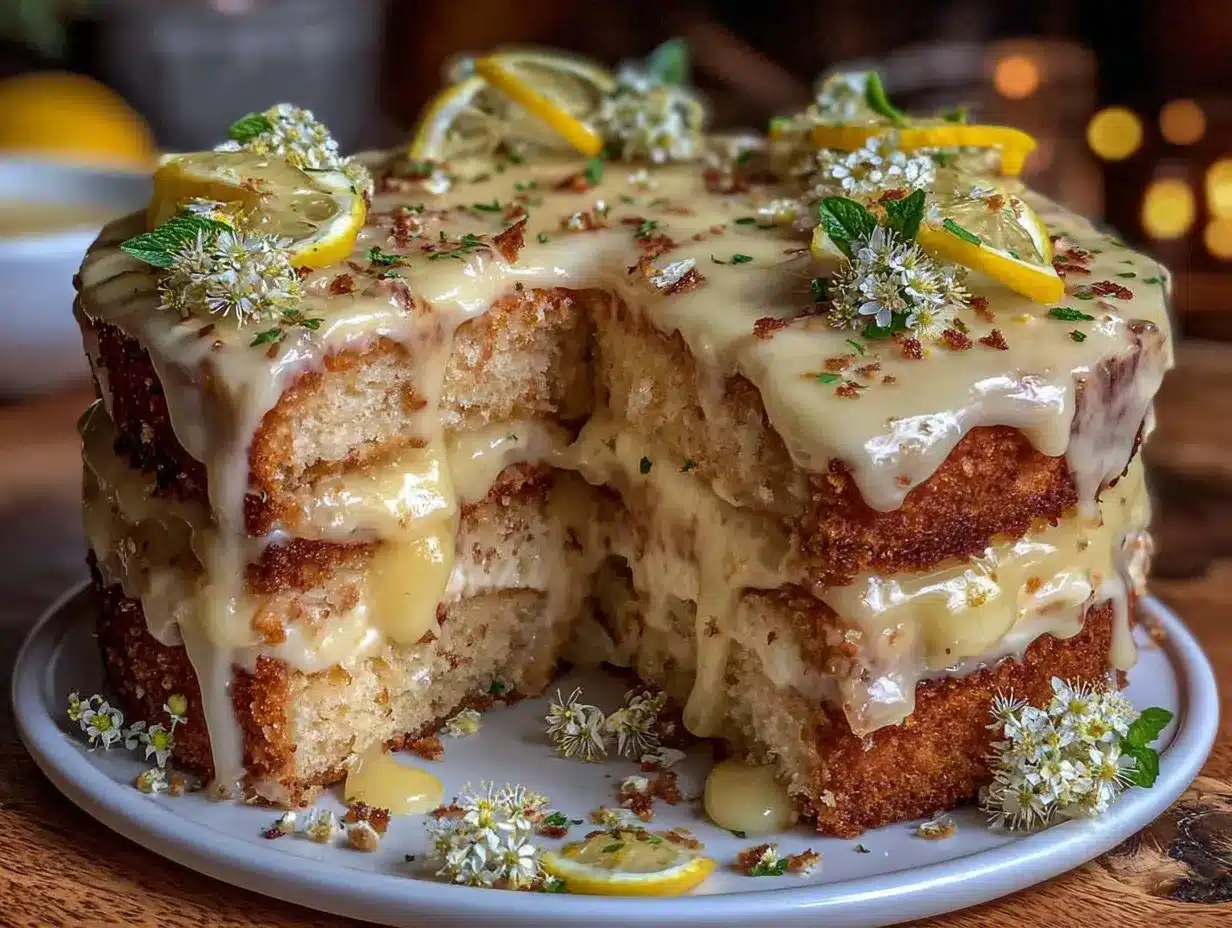
What caught me most was the simplicity paired with elegance—no heavy layers of frosting smothering the cake, just that delicate “naked” style where the cake’s golden crumb peeks through. Plus, the zing of lemon curd and the floral whisper of elderflower frosting sounded like a dream for a summer celebration. I mean, you know that feeling when you want a cake that’s not too sweet but still feels special? This was it. I decided to try it out, though I forgot halfway through to check the oven temperature (classic me), but somehow it turned out better than I imagined.
Since that day, this cake has become my go-to for birthday gatherings, garden parties, or any time the calendar insists on a celebration. It’s light, fresh, and honestly, the kind of cake that makes you close your eyes on the first bite and just savor the moment. Whether you’re a seasoned baker or just someone who loves a good slice with afternoon tea, this recipe is one you’ll keep coming back to, I promise.
Why You’ll Love This Recipe
This Perfect Modern Summer Naked Birthday Cake with Lemon Curd and Elderflower Frosting isn’t just another pretty face on the dessert table. After baking it dozens of times for friends, family, and even a few impromptu potlucks, I’ve picked up some insights that make this recipe truly stand out:
- Quick & Easy: Comes together in about 90 minutes, including baking and frosting—ideal for last-minute celebrations or spontaneous baking urges.
- Simple Ingredients: Uses pantry staples plus a few easy-to-find specialty items like elderflower cordial, which you can find at most well-stocked grocery stores or online.
- Perfect for Summer Occasions: Light, fresh, and bursting with seasonal flavors that pair perfectly with sunny afternoons, garden parties, or birthday brunches.
- Crowd-Pleaser: Everyone from kids to grandparents loves this cake—the balance of tart lemon curd and floral frosting is just right without overwhelming the palate.
- Unbelievably Delicious: The “naked” style means the cake stays moist and tender, and the elderflower frosting adds a unique, subtle floral note that’s unexpected but not overpowering.
What makes this cake different? Well, I’ve tested versions with everything from heavy buttercream to fruit compotes, but the elderflower frosting gives it that special, almost magical, twist. Plus, layering with homemade lemon curd adds a tangy freshness that feels like the essence of summer in every bite. Honestly, this cake isn’t just about taste—it’s about creating a vibe, the kind of cake that makes your party feel effortlessly chic and just a little bit fancy.
What Ingredients You Will Need
This recipe uses simple, wholesome ingredients to deliver bold flavor and a satisfying texture without fussing over complicated steps. Most of these are pantry staples, with a few fresh or specialty items that bring the cake to life.
For the Cake Batter:
- All-purpose flour: 2 ½ cups (310g), sifted for a light crumb
- Baking powder: 2 ½ teaspoons, to give that perfect rise
- Salt: ½ teaspoon, balances the sweetness
- Unsalted butter: 1 cup (225g), softened (I use Plugrá for a creamy texture)
- Granulated sugar: 1 ¾ cups (350g), for sweetness and moisture
- Large eggs: 4, room temperature (helps with emulsifying)
- Whole milk: 1 cup (240ml), adds tenderness
- Pure vanilla extract: 2 teaspoons, for that warm aroma
For the Lemon Curd:
- Fresh lemons: 3 large, juiced and zested (use unwaxed if possible)
- Granulated sugar: ¾ cup (150g)
- Unsalted butter: 6 tablespoons (85g), cubed
- Large eggs: 3, beaten
- Salt: A pinch, to balance flavors
For the Elderflower Frosting:
- Unsalted butter: 1 cup (225g), softened
- Powdered sugar: 4 cups (480g), sifted for smoothness
- Elderflower cordial: 3 tablespoons (substitute with elderflower syrup if needed)
- Heavy cream: 2-3 tablespoons, to adjust consistency
- Vanilla extract: 1 teaspoon, to round out the floral notes
If you want to swap out ingredients, almond flour works well for a gluten-free cake base, though the texture will be slightly denser. I find fresh lemons make a huge difference here—avoid bottled juice for that bright zing. And if you can’t find elderflower cordial, a splash of orange blossom water can create a similar delicate floral hint.
Equipment Needed
- Two 8-inch (20 cm) round cake pans: Preferably non-stick or lined with parchment paper to prevent sticking.
- Electric mixer or stand mixer: For creaming butter and sugar, though a strong hand whisk works in a pinch.
- Mixing bowls: Several sizes to keep ingredients organized.
- Fine mesh sieve: To sift flour and powdered sugar for that light texture.
- Spatulas and wooden spoons: For folding and scraping down bowls.
- Juicer or citrus reamer: Makes extracting fresh lemon juice easier and less messy.
- Small saucepan: Needed to cook the lemon curd gently over low heat.
- Cooling racks: To let cakes cool evenly and avoid sogginess.
If you don’t have cake pans, you can use springform pans or even a 9-inch pan, but adjust baking times accordingly. I once made this cake in a cast-iron skillet (because I forgot my pans were in the dishwasher), and while it looked rustic, it tasted just as good! For frosting, a simple offset spatula works wonders for that semi-naked finish.
Preparation Method
- Preheat your oven to 350°F (175°C). Grease and flour your cake pans or line them with parchment paper. This helps the cake release easily after baking (about 10 minutes prep).
- Sift together the flour, baking powder, and salt. Set aside. Sifting aerates the flour and prevents lumps, which makes for a lighter crumb.
- Cream the butter and sugar. Using your mixer on medium speed, beat the softened butter with sugar until pale and fluffy—this usually takes 3-4 minutes. You’ll notice the texture change; it’s a good sign that air is incorporated.
- Add eggs one at a time. Beat each egg fully into the butter mixture before adding the next. This helps maintain the emulsion and prevents curdling. Then mix in the vanilla extract.
- Alternate adding dry ingredients and milk. Start by adding about one-third of the flour mixture, then half the milk, continuing this pattern until all is incorporated. Use low speed and don’t overmix—stop as soon as the batter looks smooth and homogenous.
- Divide the batter evenly between the pans. Smooth the tops with a spatula for even baking. I like to weigh the batter in each pan for precision, about 500g (17.6 oz) each.
- Bake for 30-35 minutes. Test doneness by inserting a toothpick into the center; it should come out clean or with a few moist crumbs. Avoid overbaking or the cake will dry out.
- Cool cakes in the pans for 10 minutes. Then transfer to cooling racks to cool completely. Patience here is key—frosting warm cake leads to melting and sliding layers.
- Prepare the lemon curd. In a small saucepan, combine lemon juice, zest, sugar, and salt. Warm gently over medium-low heat, stirring until sugar dissolves. Whisk beaten eggs in a bowl, then slowly add some warm lemon mixture to temper the eggs. Pour eggs back into saucepan, stirring constantly until thickened (about 7-10 minutes). Remove from heat, stir in butter until smooth, then strain to remove zest if desired. Chill until set.
- Make the elderflower frosting. Beat the softened butter until creamy. Gradually add powdered sugar, beating on low at first, then medium speed. Add elderflower cordial and vanilla extract. Adjust consistency with heavy cream if needed—frosting should be spreadable but hold shape.
- Assemble the cake. Place one cake layer on your serving plate. Spread a generous layer of lemon curd over the top. Add a dollop of elderflower frosting around the edge if you like a bit of extra sweetness inside. Top with the second cake layer. Lightly frost the entire cake with elderflower frosting, leaving bits of the cake visible for that “naked” look.
- Chill the cake for 30 minutes. This helps the frosting set nicely before slicing and serving.
Quick tip: If your lemon curd is too runny, pop it in the fridge longer or add a small amount of cornstarch while cooking next time. Also, using room temperature ingredients for the cake batter really helps everything blend smoothly.
Cooking Tips & Techniques
Baking the Perfect Modern Summer Naked Birthday Cake with Lemon Curd and Elderflower Frosting can seem fancy, but a few key tips make all the difference. First, always measure your flour correctly—too much flour is the sneaky culprit behind dry cakes. I spoon flour into the cup and level it off rather than scooping directly.
When creaming butter and sugar, patience pays. You’re aiming for a light, fluffy mixture that traps air, which gives your cake its tender crumb. If your butter is too cold, it won’t cream well—soften it on the counter for about an hour or zap it in 10-second bursts in the microwave (careful not to melt).
Don’t overmix once you add the dry ingredients. Overworking the batter develops gluten and results in a tougher cake, so fold gently until just combined.
For lemon curd, stirring constantly and gentle heat are crucial. Nobody wants scrambled eggs in their curd! I learned this the hard way once, and trust me, it’s worth the attention.
When frosting, keep your butter soft but not melting. If frosting gets too soft, chill it briefly. Also, the elderflower cordial is potent, so start with less and adjust to your taste to avoid overpowering the frosting.
Lastly, for that “naked” cake look, use an offset spatula and apply frosting thinly, leaving parts of the cake visible to show off the beautiful layers beneath. It’s rustic but elegant—perfect for a modern summer vibe.
Variations & Adaptations
This recipe is wonderfully adaptable. Here are a few twists you might enjoy:
- Berry Infusion: Add fresh raspberries or blueberries between layers for a juicy burst of summer flavor. In fall, swap lemon curd for spiced apple butter.
- Vegan Version: Use plant-based butter and flax eggs (1 tablespoon ground flaxseed mixed with 3 tablespoons water per egg). Substitute dairy milk with almond or oat milk, and swap elderflower cordial for a rose water syrup.
- Chocolate Twist: Add ¼ cup (25g) cocoa powder to the cake batter for a subtle chocolate note that pairs surprisingly well with lemon curd. Use white chocolate elderflower frosting for contrast.
I once made a gluten-free version using a trusted gluten-free flour blend, which turned out moist and delightful—just be mindful that the texture changes slightly. Also, if elderflower cordial isn’t accessible, try substituting with a mix of honey and lemon zest to capture that floral-sweet balance.
Serving & Storage Suggestions
This cake tastes best served slightly chilled or at room temperature. The lemon curd and elderflower frosting are refreshing without being heavy, making it ideal for warm summer days. For presentation, add a few edible flowers or fresh lemon slices on top to echo the cake’s flavors.
Pair it with a light, floral tea such as jasmine or chamomile, or a sparkling elderflower lemonade for a matching beverage. It’s also lovely alongside a simple bowl of fresh berries.
Store leftover cake covered in the refrigerator for up to 3 days. The flavors meld beautifully overnight, but be sure to bring the slices to room temperature before serving for the best texture and taste. You can freeze unfrosted cake layers wrapped tightly in plastic wrap and foil for up to 2 months—thaw completely before frosting and assembling.
Nutritional Information & Benefits
Each slice (based on 12 servings) contains approximately 320 calories, 15g fat, 40g carbohydrates, and 4g protein. The fresh lemon juice adds vitamin C and antioxidants, while elderflower is known for its gentle anti-inflammatory properties. Using real butter and fresh ingredients means no odd preservatives or artificial flavors.
If you’re watching carbs or gluten, consider swapping flours or reducing sugar slightly—this cake is forgiving and delicious either way. Just a heads-up: this recipe contains dairy, eggs, and gluten, so it’s not suitable for all allergies.
Conclusion
If you’re looking for a show-stopping yet approachable cake to celebrate a special summer moment, the Perfect Modern Summer Naked Birthday Cake with Lemon Curd and Elderflower Frosting is a winner. It’s fresh, light, and just different enough to make your guests pause and take notice.
Honestly, I love this cake because it feels like a breath of fresh air amid the usual heavy desserts. Plus, it’s flexible—you can customize it easily to suit your taste or dietary needs. Give this recipe a try, and let me know how it turns out! Feel free to share your own twists or questions below. Baking is more fun when we do it together, after all.
Here’s to many joyful celebrations with cake slices that taste like summer sunshine.
FAQs
Can I make this cake ahead of time?
Yes! You can bake the cake layers up to 2 days ahead and keep them wrapped tightly in the fridge. Assemble and frost the day you plan to serve for the freshest texture.
What if I can’t find elderflower cordial?
You can substitute with elderflower syrup, rose water, or even a bit of honey mixed with lemon zest to mimic the floral notes.
Is this cake suitable for gluten-free diets?
By swapping all-purpose flour for a gluten-free blend, you can make a gluten-free version. The texture may be slightly denser but still delicious.
How long does homemade lemon curd keep?
Store lemon curd in an airtight container in the refrigerator for up to one week. It’s best when fresh and chilled.
Can I use frozen lemons for the curd?
Fresh lemons are recommended for the best flavor, but if you only have frozen lemons, thaw and juice them as usual. The zest may be less vibrant, so consider adding a little extra.
Pin This Recipe!
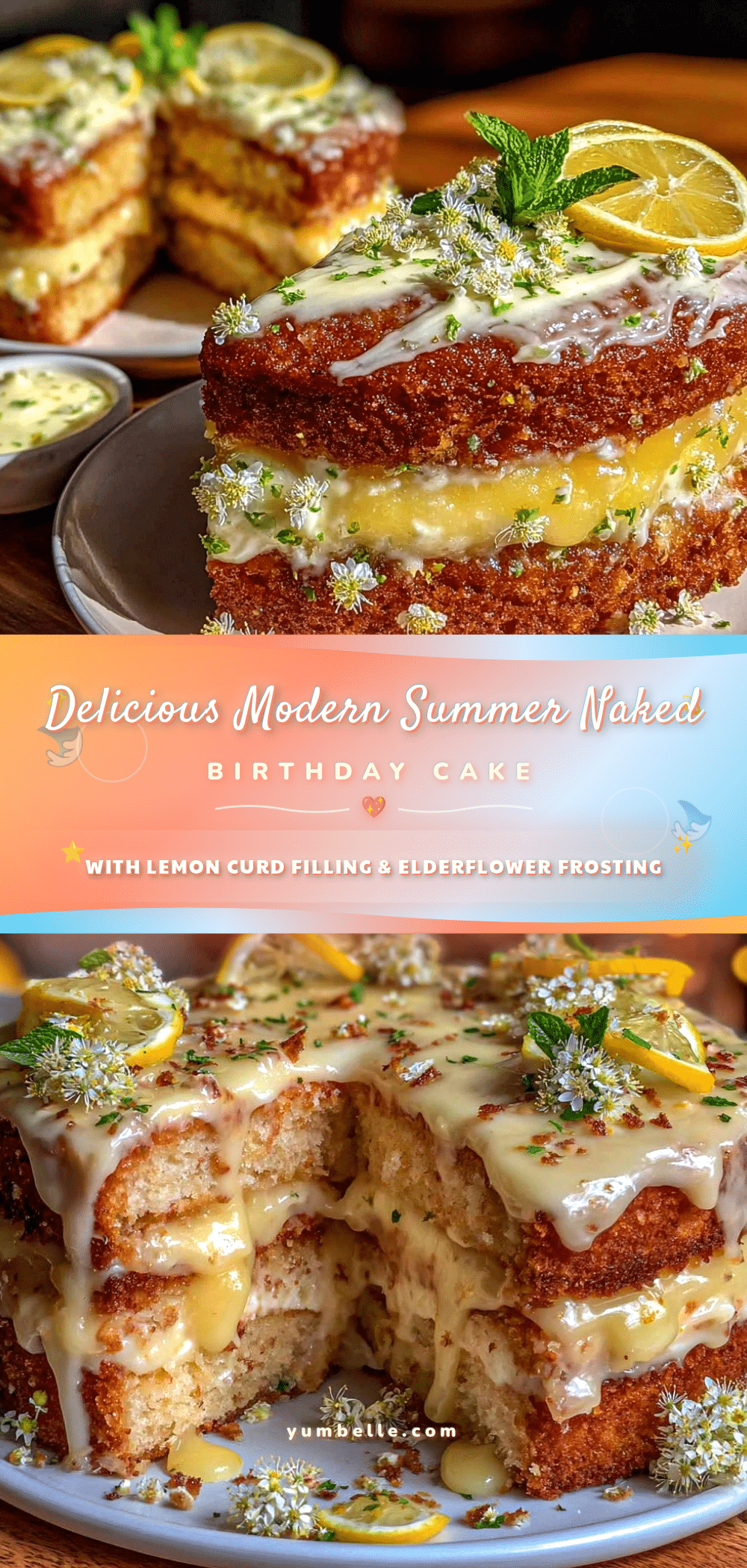
Perfect Modern Summer Naked Birthday Cake with Lemon Curd and Elderflower Frosting
A light and fresh naked cake featuring a tangy homemade lemon curd and delicate elderflower frosting, perfect for summer celebrations and garden parties.
- Prep Time: 20 minutes
- Cook Time: 35 minutes
- Total Time: 90 minutes
- Yield: 12 servings 1x
- Category: Dessert
- Cuisine: Modern American
Ingredients
- 2 ½ cups (310g) all-purpose flour, sifted
- 2 ½ teaspoons baking powder
- ½ teaspoon salt
- 1 cup (225g) unsalted butter, softened
- 1 ¾ cups (350g) granulated sugar
- 4 large eggs, room temperature
- 1 cup (240ml) whole milk
- 2 teaspoons pure vanilla extract
- 3 large fresh lemons, juiced and zested
- ¾ cup (150g) granulated sugar (for lemon curd)
- 6 tablespoons (85g) unsalted butter, cubed (for lemon curd)
- 3 large eggs, beaten (for lemon curd)
- A pinch of salt (for lemon curd)
- 1 cup (225g) unsalted butter, softened (for frosting)
- 4 cups (480g) powdered sugar, sifted
- 3 tablespoons elderflower cordial (or elderflower syrup)
- 2–3 tablespoons heavy cream
- 1 teaspoon vanilla extract
Instructions
- Preheat oven to 350°F (175°C). Grease and flour two 8-inch round cake pans or line with parchment paper.
- Sift together flour, baking powder, and salt. Set aside.
- Cream softened butter and granulated sugar using a mixer on medium speed until pale and fluffy, about 3-4 minutes.
- Add eggs one at a time, beating fully after each addition. Mix in vanilla extract.
- Alternate adding the dry ingredients and milk in thirds, starting and ending with dry ingredients. Mix on low speed until just combined.
- Divide batter evenly between prepared pans, smoothing tops.
- Bake for 30-35 minutes or until a toothpick inserted in the center comes out clean or with a few moist crumbs.
- Cool cakes in pans for 10 minutes, then transfer to cooling racks to cool completely.
- To make lemon curd: In a small saucepan, combine lemon juice, zest, sugar, and salt. Warm gently over medium-low heat until sugar dissolves.
- Temper beaten eggs by slowly adding some warm lemon mixture while whisking. Pour eggs back into saucepan and stir constantly until thickened, about 7-10 minutes.
- Remove from heat, stir in butter until smooth, strain if desired, and chill until set.
- To make elderflower frosting: Beat softened butter until creamy. Gradually add powdered sugar, beating on low then medium speed.
- Add elderflower cordial and vanilla extract. Adjust consistency with heavy cream to be spreadable but firm.
- Assemble cake by placing one layer on a plate, spreading lemon curd generously over the top, optionally adding a dollop of frosting around the edge.
- Top with second cake layer and lightly frost the entire cake, leaving parts of the cake visible for a naked look.
- Chill cake for 30 minutes before slicing and serving.
Notes
Use room temperature ingredients for best blending. Avoid overmixing batter to keep cake tender. If lemon curd is too runny, chill longer or add cornstarch next time. For frosting, keep butter soft but not melting; chill if too soft. Use offset spatula for semi-naked frosting finish. Fresh lemons and elderflower cordial are recommended for best flavor. Almond flour can substitute for gluten-free version but expect denser texture.
Nutrition
- Serving Size: 1 slice (1/12th of c
- Calories: 320
- Fat: 15
- Carbohydrates: 40
- Protein: 4
Keywords: naked cake, lemon curd, elderflower frosting, summer cake, birthday cake, easy cake recipe, homemade cake, celebration cake