Love this? Save it for later!
Share the inspiration with your friends
I was elbow-deep in flour and butter last December, testing yet another batch of dinner rolls, when the smell hit me. It wasn’t from my oven. It was drifting in from my neighbor’s kitchen window, cracked open just an inch despite the cold. That rich, beefy aroma mixed with garlic and thyme. It stopped me mid-knead, and suddenly I was twenty-two years old, standing in my first real kitchen, watching my landlord’s dad, Mr. Kowalski, pull a massive roast from a tiny apartment oven.
He wasn’t a chef or anything. He was a retired postal worker who lived downstairs and had a habit of adopting the young, clueless tenants. That Christmas, he decided I needed to learn how to cook a proper prime rib. “None of that dried-out nonsense,” he’d grumbled, handing me a bundle of fresh rosemary from his sad little balcony garden. I remember thinking it looked way too fancy for me to pull off. I was more of a boxed-macaroni person back then.
Honestly, I burned my forearm on the oven rack and forgot to take the butter out of the fridge to soften. We had to microwave it, which he insisted was a sin. But that roast? It was the most incredible thing I’d ever eaten. The crust was savory and dark, and the inside was butter-soft. I’ve been chasing that exact moment ever since. This herb butter prime rib roast for the holidays is my best attempt, perfected over years of trial and error. It’s the one I make when I want to feel like I have it all figured out, even if my kitchen is still a mess.
Why You’ll Love This Recipe
Let’s be real for a second. Cooking a huge, expensive cut of beef can feel intimidating. I’ve been there, staring at a raw roast, wondering if I’m about to ruin Christmas dinner. But this recipe changes everything. It takes the stress out of the equation and gives you a result that looks like you spent a week in culinary school.
- Foolproof Method: This isn’t guesswork. I use a specific technique that guarantees a perfectly pink center and a beautifully browned crust every single time. No more dry, gray meat.
- Incredible Flavor: The herb butter isn’t just a topping. It’s a flavor bomb that seeps into the meat as it roasts, creating a crust that’s savory, garlicky, and utterly addictive.
- Impressive Without the Stress: This is the centerpiece of the holiday table. It commands attention. But the hands-on time is surprisingly short. You get to be the hero without spending all day slaving away.
- Leftovers for Days: Honestly, the best part might be the next day. Cold prime rib sandwiches on crusty bread with horseradish sauce? Yes, please.
- It’s a Memory Maker: This isn’t just food. It’s the smell that fills your house when everyone arrives. It’s the “oohs” and “ahhs” when you bring it to the table. It’s the kind of meal that becomes a tradition.
What makes this version different? It’s the perfect balance of fat and flavor. The herb butter locks in moisture while the high-heat start creates a spectacular crust. I’ve tested the timing, the temperature, and the butter-to-herb ratio so you don’t have to. This is the best herb butter prime rib roast for the holidays, and I mean that. It’s the one I serve my own family, and it never disappoints.
What Ingredients You Will Need
This recipe relies on a handful of high-quality ingredients to build incredible depth of flavor. The shopping list is simple, but each component plays a crucial role. Don’t skimp on the butter or the herbs—they are the soul of this dish.
- For the Prime Rib Roast:
- 1 (6-8 pound) bone-in prime rib roast: This is the star. I always go for a bone-in roast (also called a standing rib roast) because the bones add incredible flavor and act as a natural roasting rack. Look for one with good marbling (those thin white lines of fat running through the meat). Ask your butcher for a “first-cut” or “small end” roast for the most tender meat. If you’re feeding a smaller crowd, a 4-pound roast works, but you’ll need to adjust the cooking time.
- Kosher salt and freshly ground black pepper: Don’t be shy. This is a big piece of meat, and it needs a generous seasoning. I use about 1 tablespoon of salt per 5 pounds of meat. Freshly cracked pepper makes a difference here.
- For the Herb Butter:
- 1 cup (2 sticks) unsalted butter, softened: Make sure it’s truly softened to room temperature. Cold butter won’t spread evenly. I like using a good quality European-style butter like Plugrà or Kerrygold for extra richness. It really does make a difference in the flavor of the crust.
- 4 cloves garlic, minced: Fresh garlic is non-negotiable. The jarred stuff just doesn’t have the same punch. I use a microplane to grate it into a paste, which distributes the flavor more evenly.
- 2 tablespoons fresh rosemary, finely chopped: Rosemary and beef are a classic pair. The woodsy, pine-like flavor cuts through the richness of the fat beautifully.
- 2 tablespoons fresh thyme leaves: Thyme adds a subtle, earthy warmth. Don’t use dried if you can help it; fresh herbs are key here.
- 1 tablespoon fresh parsley, finely chopped: This adds a touch of freshness and color.
- 1 teaspoon red pepper flakes (optional): I love a tiny hint of heat. It doesn’t make the roast spicy, just gives it a little something extra. Feel free to leave it out.
- 1 teaspoon Worcestershire sauce: This adds a deep, savory umami kick that beef absolutely loves. It’s my secret weapon.
- For the Roasting Pan:
- 1 large yellow onion, quartered: These aren’t for eating. They sit in the bottom of the pan and add a subtle sweetness to the drippings, which you’ll use for the most incredible au jus.
- 2 carrots, roughly chopped: Same as the onion. They add depth and a touch of sweetness to the pan juices.
- 2 celery stalks, roughly chopped: This completes the classic mirepoix base for the drippings.
- 1 cup beef broth: You’ll deglaze the pan with this after the roast is done. Use a low-sodium broth so you can control the salt level.
Equipment Needed
You don’t need a ton of fancy gear for this, but a few key tools will make your life much easier. I’ve learned the hard way that using the wrong pan can ruin a good roast.
- Large Roasting Pan with a Rack: This is essential. A V-rack is ideal because it lifts the roast up, allowing hot air to circulate all around it for even cooking. If you don’t have a rack, you can roll up some aluminum foil into coils and place them under the roast. It’s a little janky, but it works in a pinch.
- Instant-Read Meat Thermometer: This is your most important tool. Do not try to cook a prime rib without one. I use a digital Thermapen, but any reliable instant-read thermometer will do. Guessing the doneness is a recipe for disaster.
- Chef’s Knife: A sharp knife makes trimming any excess fat (if needed) and slicing the finished roast much easier.
- Mixing Bowl: For combining your herb butter.
- Measuring Spoons: For accuracy with the salt and herbs.
- Aluminum Foil: For tenting the roast while it rests.
- Cutting Board: A large, sturdy one for carving.
Preparation Method
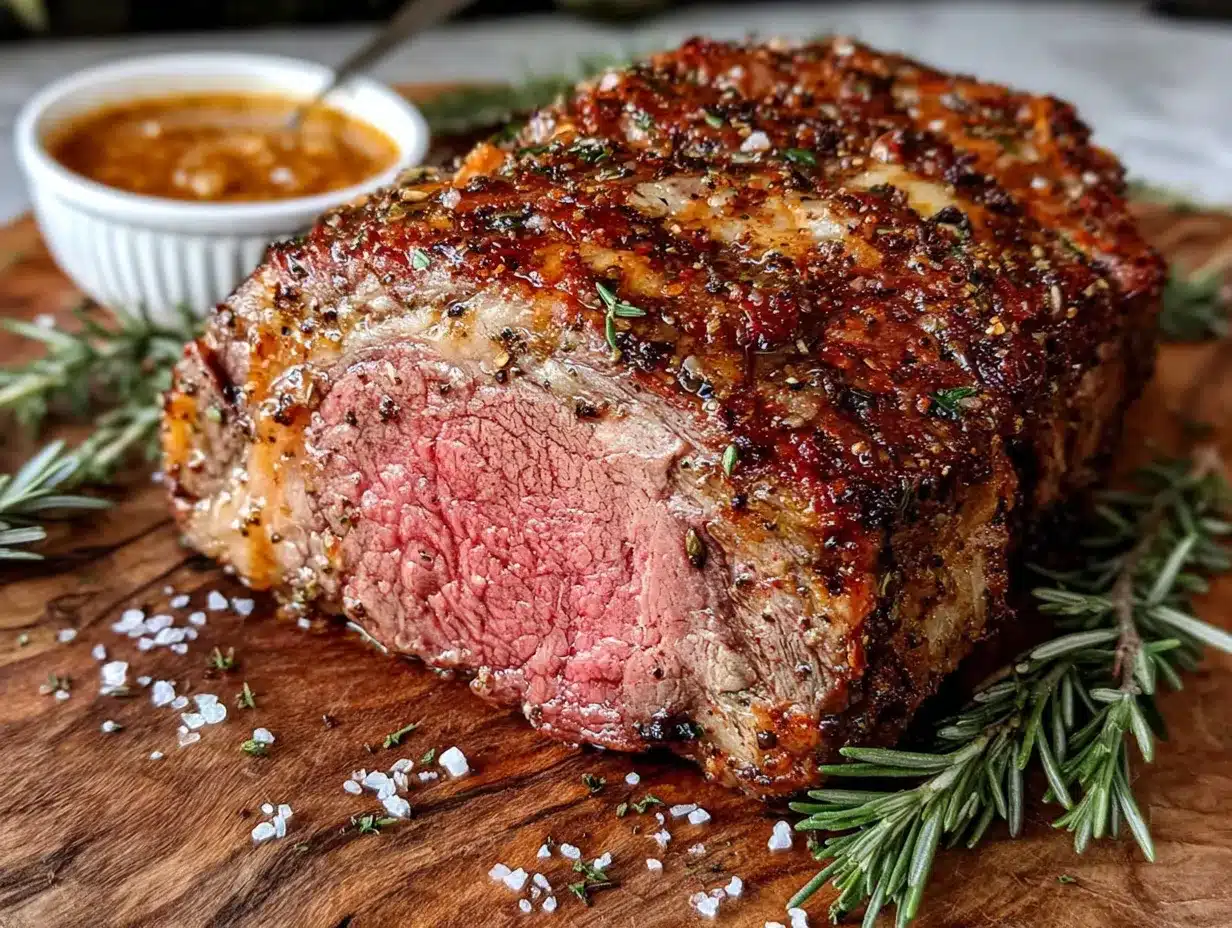
Alright, let’s get cooking. This process is broken down into simple steps. Trust the thermometer, and you will nail this. I’ve included all the little cues I look for along the way.
- Take the Chill Off (2-3 hours before cooking): Pull your prime rib roast out of the refrigerator at least 2-3 hours before you plan to cook it. This is a crucial step. A cold roast will cook unevenly, leaving you with a raw center and an overcooked exterior. Let it sit on a baking sheet, unwrapped, on the counter. It should lose its refrigerator chill.
- Make the Herb Butter (15 minutes before cooking): In a medium bowl, combine the softened butter, minced garlic, chopped rosemary, thyme, parsley, red pepper flakes (if using), and Worcestershire sauce. Mash it all together with a fork until it’s well combined and looks like a beautiful, speckled paste. Season it with a pinch of salt and pepper.
- Preheat and Prep (30 minutes before cooking): Position your oven rack in the lower third of the oven and preheat it to 450°F (232°C). Place the quartered onion, carrots, and celery in the bottom of your roasting pan. This will create a little bed for the roast and flavor the drippings.
- Season the Roast (Right before it goes in): Pat the roast completely dry with paper towels. This is non-negotiable for a good crust. Season it very generously all over with kosher salt and freshly ground black pepper. Don’t be shy. Use about 1 tablespoon of salt for a 6-8 pound roast.
- Apply the Herb Butter: Now, slather that herb butter all over the roast. Use your hands (it’s messy, but it’s the best way). Make sure you get it on the top, the bottom, and the sides. Don’t forget the meat between the bones. This is where all the flavor lives.
- Initial High-Heat Sear (15 minutes): Place the roast, bone-side down, directly on the rack in the roasting pan (or on your foil coils). Put it in the preheated 450°F (232°C) oven and roast for 15 minutes. This high heat blast creates that beautiful, dark brown crust.
- Lower the Heat (The rest of the cooking time): After 15 minutes, without opening the oven door, reduce the oven temperature to 325°F (163°C). Continue roasting. The total cooking time will depend on the size of your roast and your desired doneness. A general rule of thumb is about 15-20 minutes per pound for medium-rare, but your thermometer is the boss here.
- Use Your Thermometer (Crucial Step): Start checking the internal temperature about 30 minutes before you think it will be done. Insert the thermometer into the thickest part of the meat, away from the bone. For medium-rare, you are looking for 120-125°F (49-52°C). For medium, aim for 130-135°F (54-57°C). Remember, the temperature will rise another 5-10 degrees while it rests.
- Rest, Rest, Rest (30-45 minutes): This is the hardest part, but don’t skip it. Once the roast hits your target temperature, remove it from the oven. Transfer it to a cutting board and tent it loosely with aluminum foil. Let it rest for at least 30 minutes, and up to 45. This allows the juices to redistribute throughout the meat. If you cut into it too soon, all those beautiful juices will end up on your cutting board instead of in your mouth.
- Make the Au Jus (While the roast rests): While the roast is resting, place the roasting pan (with the vegetables and drippings) over two burners on your stovetop over medium-high heat. Pour in the beef broth and bring it to a simmer, scraping up all the browned bits from the bottom of the pan with a wooden spoon. Let it simmer for 5-7 minutes, then strain the liquid through a fine-mesh sieve into a serving bowl. Season with salt and pepper to taste. This is liquid gold.
- Carve and Serve: After the rest, remove the bones by slicing down along them. Then, slice the roast against the grain into 1/2-inch to 3/4-inch thick slices. Serve immediately with the warm au jus.
Cooking Tips & Techniques
I’ve made a lot of prime rib in my day, and I’ve definitely had my share of flops. Here are the things I wish someone had told me when I was starting out.
Don’t Overcrowd the Pan: The vegetables in the bottom are for flavor, not for roasting. If you pile them too high, they’ll steam and prevent the drippings from browning properly. A single layer is perfect.
The Biggest Mistake I Made: The first time I made this, I was so worried about it being undercooked that I left it in until it hit 140°F (60°C) before resting. It came out a solid medium-well. It was still tasty, but it wasn’t that show-stopping, melt-in-your-mouth prime rib. Learn from my failure. Trust the lower temperature.
Mastering the Timing: Prime rib is all about timing. I like to plan for the roast to be done about 45 minutes before I want to eat. That gives me plenty of time for it to rest and for me to make the au jus and get my side dishes ready without any last-minute panic.
For a Perfect Crust Every Time: If you want an even more intense crust, you can sear the roast in a hot cast-iron skillet with a little oil before applying the herb butter and putting it in the oven. It’s an extra step, but it builds an incredible amount of flavor.
The Reverse Sear Method: Some people swear by the reverse sear for prime rib, where you cook it low and slow first and then blast it with high heat at the end. I’ve tested both, and I prefer the method I’ve outlined here. I find it creates a slightly better crust and a more evenly cooked interior for a roast this large. But the reverse sear is a great alternative if you’re feeling adventurous.
Variations & Adaptations
This recipe is fantastic as is, but it’s also a great base for getting creative. Here are a few ways I’ve adapted it over the years.
- Herb Variations: Not a fan of rosemary? Swap it out! A combination of fresh sage and oregano is wonderful, especially if you’re serving the roast with a side of roasted root vegetables. Or, try a simple garlic and chive butter for a milder, more delicate flavor.
- Spicy Kick: For those who love heat, add a tablespoon of Dijon mustard to the herb butter along with the red pepper flakes. The mustard adds a tangy sharpness that cuts through the fat beautifully. I did this for a New Year’s Eve dinner once, and it was a huge hit.
- Garlic Lover’s Dream: If you’re like me and think there’s no such thing as too much garlic, roast a whole head of garlic alongside the prime rib. Once it’s soft and caramelized, squeeze the cloves out and mash them into your herb butter. It adds a sweet, mellow garlic flavor that’s completely different from raw garlic.
- Dietary Adaptation (Dairy-Free): To make this dairy-free, simply substitute the butter with a high-quality vegan butter or a good olive oil. Use 1/2 cup of extra virgin olive oil mixed with the herbs and garlic. It won’t be as rich as the butter version, but it will still be incredibly flavorful and create a lovely crust.
- Smaller Roast, Same Method: Cooking for two? You can use a 2-3 pound boneless ribeye roast. The same method applies, but the cooking time will be significantly less. Start checking the temperature after about 30 minutes at 325°F (163°C).
Serving & Storage Suggestions
How you serve and store this roast is almost as important as how you cook it. Here’s my tried-and-true advice.
Serving Temperature: Serve the prime rib hot, right after its rest. The au jus should be piping hot. I like to arrange the slices on a warm platter and pour a little bit of the au jus over the top just before serving.
What to Serve With It: This roast is the star, so keep the sides classic and simple. Creamy mashed potatoes are a must to soak up all that au jus. A bright, acidic horseradish sauce is the perfect counterpoint to the rich beef. For vegetables, roasted asparagus, green beans with almonds, or a simple arugula salad with a lemon vinaigrette are all fantastic choices. Don’t forget the Yorkshire puddings if you’re feeling extra traditional!
Storage: Store any leftover prime rib in an airtight container in the refrigerator for up to 4 days. The flavor actually gets even better as it sits.
Reheating: The key to reheating is to not dry it out. The best method is to place slices in a baking dish with a splash of beef broth, cover it tightly with foil, and warm it in a 300°F (150°C) oven for about 10-15 minutes. You can also reheat slices in a skillet with a little butter over medium-low heat. I avoid the microwave at all costs—it turns the meat tough and rubbery.
How Flavors Develop: The herb butter’s flavors will meld and deepen overnight. That’s why leftover cold prime rib sandwiches are so incredible. The garlic and rosemary flavor has had time to fully infuse the meat.
Nutritional Information & Benefits
While prime rib is certainly a rich and indulgent dish, it does offer some nutritional benefits, especially when enjoyed in moderation as part of a balanced holiday meal.
Estimated Nutritional Values (per 6-ounce serving, without au jus):
| Nutrient | Amount |
|---|---|
| Calories | ~550 |
| Protein | ~45g |
| Fat | ~40g |
| Saturated Fat | ~18g |
| Carbohydrates | ~0g |
| Sodium | ~400mg (varies by seasoning) |
Health Benefits: Beef is an excellent source of high-quality protein, which is essential for muscle building and repair. It is also packed with important nutrients like iron (for healthy blood), zinc (for immune function), and B vitamins (for energy metabolism). The herbs in the butter, like rosemary and thyme, are rich in antioxidants. Remember, this is a special occasion meal, so enjoy it without guilt and focus on the joy of sharing it with loved ones.
Dietary Considerations: This recipe is naturally gluten-free and low-carb/keto-friendly. It is high in fat, so those on a strict low-fat diet should enjoy it sparingly.
Conclusion
This perfect herb butter prime rib roast for the holidays is more than just a recipe. It’s a centerpiece. It’s the anchor of a memorable meal, the thing everyone gathers around. It’s a chance to slow down, to celebrate, and to share something truly special with the people you care about most.
I hope you give it a try. Don’t be intimidated by the size or the price tag. Follow the steps, trust your thermometer, and you will absolutely nail it. And honestly, even if it’s not perfect, you made a prime rib! That alone is something to be proud of. The most important ingredient is the love you put into it.
I’d love to hear how it turns out for you. Did you add any twists? Any funny kitchen stories? Drop a comment below and let me know. And if you loved it, share this post with a friend who needs a little holiday confidence boost. Happy cooking, and have the most wonderful holiday season!
Frequently Asked Questions
Can I use a boneless prime rib roast instead of bone-in?
Absolutely. A boneless roast will work just fine. The main difference is that it will cook a little faster because there’s no bone to conduct heat. I recommend reducing the total cooking time by about 10-15%. Also, the bones add flavor, so if you go boneless, you might want to be extra generous with the herb butter.
My roast is smaller than 6 pounds. How do I adjust the cooking time?
For a smaller roast, the same method applies, but the total time in the oven will be shorter. The initial 15-minute sear at 450°F (232°C) stays the same. Then, at 325°F (163°C), start checking the internal temperature with your thermometer after about 20 minutes of cooking. The key is to rely on the thermometer, not the clock.
What if I don’t have a meat thermometer?
Honestly, I strongly recommend getting one. It’s the only reliable way to ensure perfect doneness. If you absolutely cannot get one, you can use the “touch test” method, but it’s less reliable for a thick roast. A medium-rare roast will feel slightly firm but still have a lot of give when you press the center. It’s a gamble, though. A $15 thermometer is a much safer bet for a $80 piece of meat.
Can I prepare the herb butter ahead of time?
Yes, and I actually recommend it! You can make the herb butter up to 3 days in advance. Simply shape it into a log using plastic wrap, twist the ends, and store it in the refrigerator. Let it come to room temperature for about 30 minutes before you need to spread it on the roast. You can also freeze the herb butter for up to 3 months.
My au jus is too salty. What can I do?
Don’t panic. If your au jus is too salty, you can try a few things. First, you can add a splash of water or unsalted beef broth to dilute it. You can also add a peeled, raw potato to the simmering liquid. The potato will absorb some of the excess salt. Remove the potato before serving. Next time, use a low-sodium beef broth and be careful with the salt you season the roast with.
Pin This Recipe!
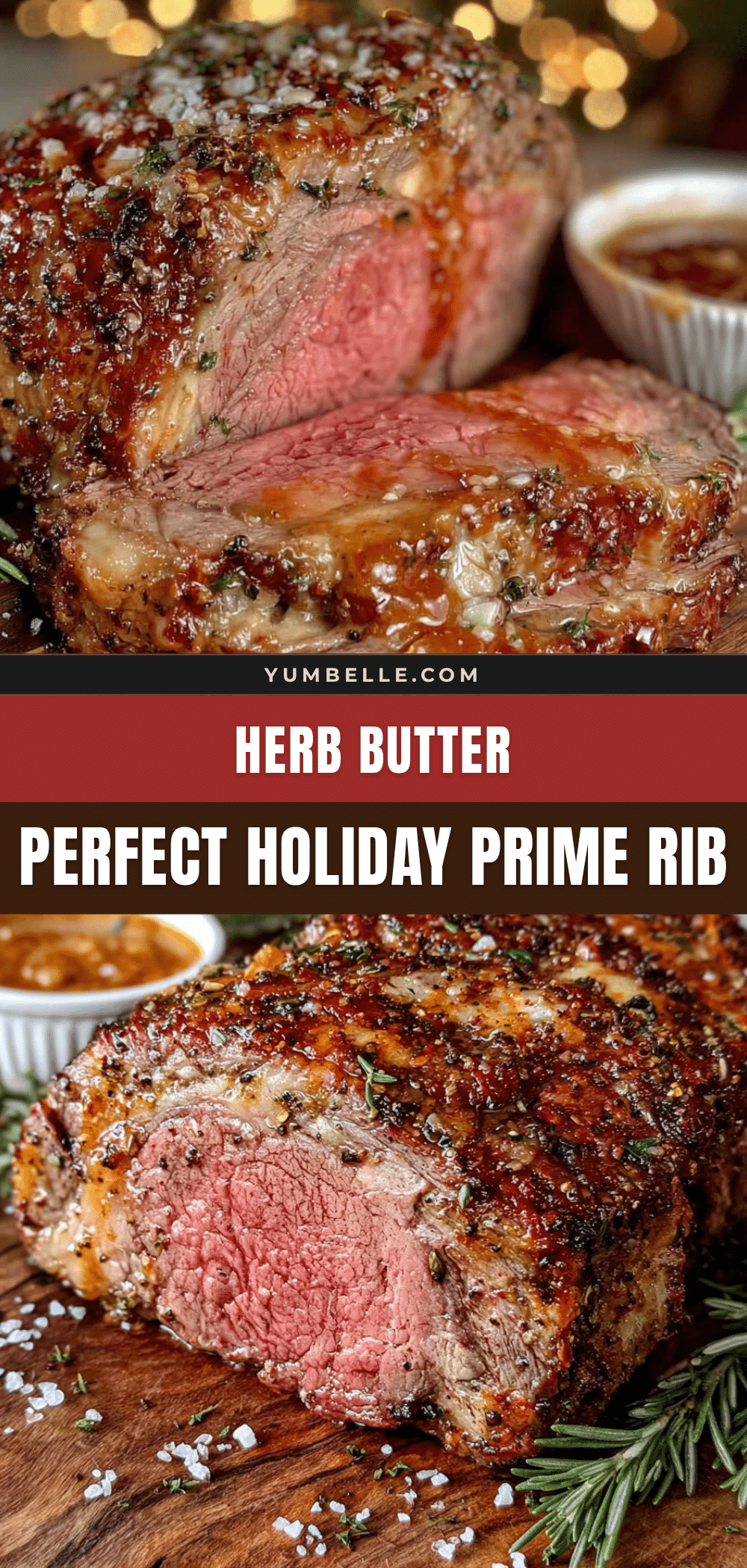
Best Herb Butter Prime Rib Roast for the Holidays
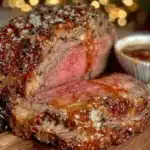
A foolproof method for a perfectly pink center and beautifully browned crust, this herb butter prime rib roast is the ultimate holiday centerpiece. The herb butter locks in moisture while the high-heat start creates a spectacular crust.
- Prep Time: 15 minutes
- Cook Time: 2 hours 30 minutes
- Total Time: 3 hours 30 minutes
- Yield: 8 servings 1x
- Category: Main Course
- Cuisine: American
Ingredients
- 1 (6-8 pound) bone-in prime rib roast
- Kosher salt and freshly ground black pepper
- 1 cup (2 sticks) unsalted butter, softened
- 4 cloves garlic, minced
- 2 tablespoons fresh rosemary, finely chopped
- 2 tablespoons fresh thyme leaves
- 1 tablespoon fresh parsley, finely chopped
- 1 teaspoon red pepper flakes (optional)
- 1 teaspoon Worcestershire sauce
- 1 large yellow onion, quartered
- 2 carrots, roughly chopped
- 2 celery stalks, roughly chopped
- 1 cup beef broth
Instructions
- Take the Chill Off (2-3 hours before cooking): Pull your prime rib roast out of the refrigerator at least 2-3 hours before you plan to cook it. Let it sit on a baking sheet, unwrapped, on the counter.
- Make the Herb Butter (15 minutes before cooking): In a medium bowl, combine the softened butter, minced garlic, chopped rosemary, thyme, parsley, red pepper flakes (if using), and Worcestershire sauce. Mash it all together with a fork until well combined. Season with a pinch of salt and pepper.
- Preheat and Prep (30 minutes before cooking): Position your oven rack in the lower third of the oven and preheat it to 450°F (232°C). Place the quartered onion, carrots, and celery in the bottom of your roasting pan.
- Season the Roast (Right before it goes in): Pat the roast completely dry with paper towels. Season it very generously all over with kosher salt and freshly ground black pepper (about 1 tablespoon of salt for a 6-8 pound roast).
- Apply the Herb Butter: Slather the herb butter all over the roast, covering the top, bottom, sides, and between the bones.
- Initial High-Heat Sear (15 minutes): Place the roast, bone-side down, on a rack in the roasting pan. Roast at 450°F (232°C) for 15 minutes.
- Lower the Heat: After 15 minutes, without opening the oven door, reduce the oven temperature to 325°F (163°C). Continue roasting. Total cooking time will be about 15-20 minutes per pound for medium-rare.
- Use Your Thermometer: Start checking the internal temperature about 30 minutes before you think it will be done. Insert the thermometer into the thickest part of the meat, away from the bone. For medium-rare, aim for 120-125°F (49-52°C); for medium, 130-135°F (54-57°C).
- Rest, Rest, Rest (30-45 minutes): Once the roast hits your target temperature, remove it from the oven. Transfer to a cutting board and tent loosely with aluminum foil. Let rest for at least 30 minutes, up to 45.
- Make the Au Jus (While the roast rests): Place the roasting pan over two burners on medium-high heat. Pour in the beef broth and bring to a simmer, scraping up browned bits. Simmer for 5-7 minutes, then strain through a fine-mesh sieve. Season with salt and pepper to taste.
- Carve and Serve: After the rest, remove the bones by slicing down along them. Slice the roast against the grain into 1/2-inch to 3/4-inch thick slices. Serve immediately with warm au jus.
Notes
For a more intense crust, sear the roast in a hot cast-iron skillet with oil before applying the herb butter. The reverse sear method is an alternative. Leftovers can be stored in an airtight container in the refrigerator for up to 4 days. Reheat slices in a baking dish with a splash of beef broth, covered with foil, at 300°F (150°C) for 10-15 minutes.
Nutrition
- Serving Size: 6 ounces
- Calories: 550
- Sodium: 400
- Fat: 40
- Saturated Fat: 18
- Protein: 45
Keywords: prime rib, herb butter, holiday roast, Christmas dinner, beef roast, standing rib roast