Love this? Save it for later!
Share the inspiration with your friends
I was digging through my freezer last Tuesday, looking for a bag of frozen peas, when my hand brushed against a jar of sourdough starter I’d forgotten about. It was cloudy, a little grey on top, and honestly—it smelled like a science experiment I’d abandoned weeks ago. And just like that, I was back in my tiny first apartment, twenty-two years old, trying to convince myself I could be the kind of person who keeps a sourdough starter alive. I couldn’t. That one died somewhere between a breakup and a move. But that smell—that tangy, yeasty, slightly sour scent—it didn’t just remind me of failure. It reminded me of the first time I pulled a pan of focaccia out of the oven, the top glistening with oil and salt, the bottom crisp, the inside so pillowy I almost cried. I hadn’t made it since. Maybe you’ve been there—you try something once, it works, and then life gets loud and you forget you even knew how. But last Tuesday, I pulled that sad starter out, fed it, and waited. Three days later, I made this easy sourdough focaccia with rosemary and sea salt. And let me tell you—it was better than I remembered. That first bite, with the crunch of salt and the warmth of rosemary, it felt like coming home to a version of myself I’d almost lost. This recipe stayed with me because it’s forgiving. It doesn’t care if you forgot to feed your starter. It doesn’t mind if you’re impatient. It just wants olive oil and time. And honestly? That’s a recipe I can keep making.
Why You’ll Love This Recipe
This isn’t just another bread recipe you’ll try once and forget. This easy sourdough focaccia is the kind of thing you’ll make on a Sunday afternoon and still be thinking about on Wednesday. I’ve tested this version more times than I care to admit—through sticky dough disasters, under-proofed pucks, and one memorable batch that turned into a giant cracker. So trust me when I say this one works.
- Quick & Easy: While traditional sourdough can take all day, this focaccia comes together in about 4 hours from start to finish. Most of that time is hands-off rising.
- Simple Ingredients: You need flour, water, olive oil, salt, rosemary, and your sourdough starter. No yeast packets, no special flours, no trips to a specialty store.
- Perfect for Beginners: Sourdough can be intimidating, but focaccia is the most forgiving bread you’ll ever make. The dough is wet and sticky, which means it’s almost impossible to overwork.
- Crowd-Pleaser: I’ve brought this to potlucks, dinner parties, and even a book club meeting where everyone forgot the book but remembered the bread. It disappears fast.
- Unbelievably Delicious: The crust is golden and crackly, the inside is soft and airy, and the rosemary and sea salt create this savory bite that keeps you coming back for “just one more piece.”
What makes this different from every other focaccia recipe? It’s the fermentation. The sourdough starter gives the bread a subtle tang that balances the richness of the olive oil. It’s not sour like a rye bread—it’s more like a whisper of acidity that makes the salt and herbs pop. This isn’t just another version of focaccia. It’s the one I make when I want to feel like I’ve actually accomplished something in the kitchen without spending my whole day there.
What Ingredients You Will Need
This easy sourdough focaccia uses pantry staples to create something that feels fancy. The magic is in the fermentation, not the grocery list. Here’s what you need:
- 500 grams bread flour (I use King Arthur for consistent results—it has higher protein which gives better structure)
- 400 grams lukewarm water (about 80°F—should feel like a warm bath, not hot)
- 150 grams active sourdough starter (fed and bubbly—if it floats in water, it’s ready)
- 10 grams fine sea salt (plus extra for topping—Maldon or fleur de sel if you’re feeling fancy)
- 60 grams extra-virgin olive oil (divided—use a good one for the pan and dough, save your best for drizzling at the end)
- 2 tablespoons fresh rosemary (finely chopped—dried works in a pinch but fresh is so much better)
- Optional: flaky sea salt for finishing (this is non-negotiable for me—the crunch makes the bread)
A note on the starter: If yours has been sitting in the fridge for a while, feed it a couple of times before using. You want it to be active and bubbly, not sluggish. I’ve made this with a slightly neglected starter and it still worked—it just took longer to rise. The dough is forgiving like that.
For the flour: Bread flour gives the best chew and structure, but all-purpose works too. If you use all-purpose, expect a slightly softer, less chewy crumb. Still delicious, just different.
For the rosemary: I grow my own because I’m that person now, but store-bought is fine. Just avoid the dried stuff that’s been sitting in your cabinet for two years—it won’t have the same punch.
Equipment Needed
You don’t need much to make this easy sourdough focaccia. That’s part of the appeal. Here’s what I use:
- 9×13-inch baking pan (metal or glass—metal gives a crisper bottom crust)
- Large mixing bowl (glass or ceramic—avoid metal if your starter is young and sensitive)
- Digital kitchen scale (I fought using a scale for years. I was wrong. It makes everything more consistent)
- Bench scraper (for folding the dough—a spatula works too, but a scraper is better)
- Plastic wrap or a damp kitchen towel (to cover the dough while it rises)
- Pastry brush (for spreading oil—or just use your hands, I won’t judge)
If you don’t have a 9×13 pan, you can use a cast iron skillet or a round cake pan. The shape will be different but the bread will still be amazing. I once used a disposable aluminum pan when I was traveling and it worked fine—just don’t skip the olive oil coating.
Preparation Method
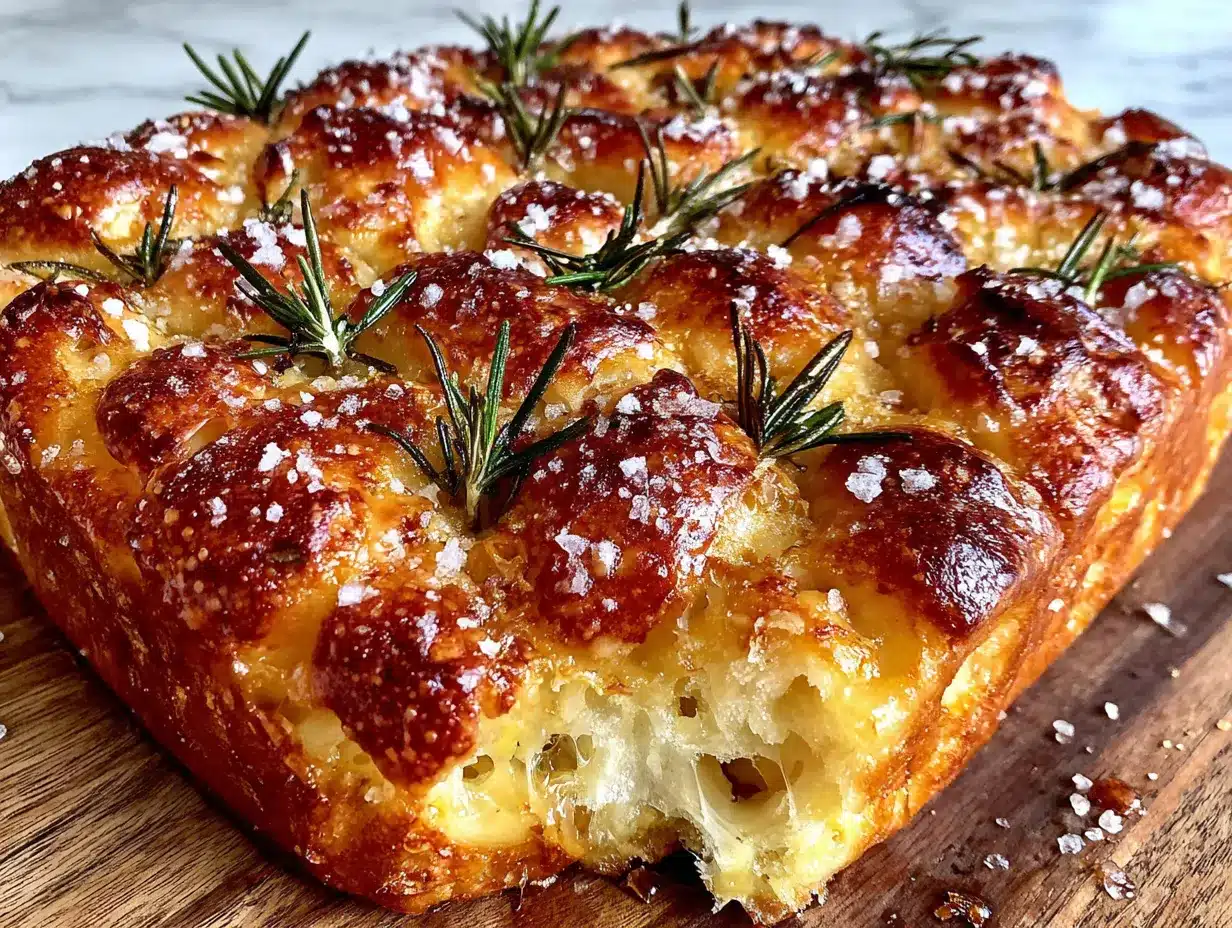
- Mix the dough (10:00 AM): In your large bowl, combine the lukewarm water and active sourdough starter. Stir until the starter dissolves—it should look milky and slightly bubbly. Add the bread flour and salt. Mix with your hand (yes, your hand—it’s the best tool) until a shaggy, sticky dough forms. There should be no dry flour left. Cover with plastic wrap and let it rest for 30 minutes. This is the autolyse—it lets the flour absorb the water and makes the dough easier to work with.
- First fold (10:30 AM): Wet your hand with water (this prevents sticking). Grab one corner of the dough, stretch it up, and fold it over the center. Rotate the bowl 90 degrees and repeat. Do this 4 times—once for each “corner.” The dough will feel loose and sticky. That’s normal. Cover and rest 30 minutes.
- Second fold (11:00 AM): Repeat the folding process. The dough should feel slightly tighter and more elastic. If it’s still very sticky, wet your hand again. Cover and rest 30 minutes.
- Third fold (11:30 AM): One more round of folds. By now, the dough should be smoother and starting to show some bubbles. It will still be sticky—that’s the focaccia way. Cover and let it rise for 2-3 hours, or until it has doubled in size and looks bubbly on top.
- Prepare the pan (around 2:00 PM): Pour 30 grams of olive oil into your 9×13 pan. Spread it around so the bottom and sides are coated. Gently tip the risen dough into the pan—don’t deflate it too much. Let it sit for 30 minutes to relax.
- Stretch and dimple (2:30 PM): With oiled fingers, gently stretch the dough to fill the corners of the pan. If it resists, let it rest 10 minutes and try again. Once it’s spread out, oil your fingertips and press deep dimples all over the dough—go all the way to the bottom of the pan. This isn’t just for looks; it traps the oil and creates those crispy, chewy pockets.
- Second rise (2:30 PM to 4:00 PM): Cover the pan and let the dough rise for 1.5 to 2 hours. It should be puffy and jiggly, like a marshmallow. If it’s cold in your kitchen, it might take longer. Be patient.
- Preheat and top (4:00 PM): About 30 minutes before baking, preheat your oven to 425°F (220°C). Drizzle the remaining 30 grams of olive oil over the top. Sprinkle the chopped rosemary evenly, then add a generous pinch of flaky sea salt. Don’t be shy with the salt—it’s the star.
- Bake (4:00 PM to 4:25 PM): Place the pan on the middle rack and bake for 20-25 minutes. The top should be deep golden brown and the edges should look crispy. If the bottom isn’t browning, move the pan to a lower rack for the last 5 minutes. Let it cool in the pan for 10 minutes, then transfer to a wire rack.
Your kitchen will smell like a bakery. The top will be crackly, the bottom will be crisp, and the inside will be so soft you’ll wonder why you ever bought bread at the store.
Cooking Tips & Techniques
I’ve made this easy sourdough focaccia at least twenty times, and I’ve messed it up in almost every way possible. Here’s what I learned:
- Don’t skip the folds: I tried to save time once by just mixing and letting it rise. The result was a flat, dense bread that tasted fine but had none of those beautiful air pockets. The folds build structure. Do them.
- Wet your hands: Sourdough dough is sticky. Fighting it with dry hands is a losing battle. Keep a small bowl of water nearby and dip your fingers before touching the dough. It makes everything smoother.
- Watch the temperature: If your kitchen is cold (below 70°F), your rise times will be longer. I’ve had dough take 5 hours to double in winter. If you’re in a hurry, put the bowl in your oven with the light on—it creates a warm, draft-free environment.
- Don’t over-flour your work surface: For this recipe, you don’t even need a work surface. Everything happens in the bowl and the pan. If you’re used to kneading bread on a counter, unlearn that instinct for focaccia. Wet dough is the goal.
- The dimples matter: I know it feels silly to poke your dough a hundred times, but those dimples are what create the signature focaccia texture. They allow the olive oil to pool and create crispy, almost fried edges. Don’t skimp on them.
One time I forgot to add the salt to the dough. The focaccia came out bland and lifeless. Salt isn’t just for flavor—it strengthens the gluten structure and controls fermentation. Don’t leave it out.
Variations & Adaptations
This easy sourdough focaccia is a blank canvas. Here are some ways I’ve played with it:
- Garlic and Herb: Add 3 cloves of minced garlic to the olive oil before dimpling. Sprinkle with thyme and oregano along with the rosemary. It’s like garlic bread’s sophisticated cousin.
- Everything Bagel: Skip the rosemary. Before baking, sprinkle with sesame seeds, poppy seeds, dried garlic, dried onion, and salt. It’s dangerously addictive.
- Tomato and Basil: After dimpling, press halved cherry tomatoes into the dough. Drizzle with olive oil and top with fresh basil after baking. The tomatoes get jammy and sweet.
- Cheese Lover’s: Sprinkle 1/2 cup of grated parmesan over the top before baking. For extra indulgence, add cubes of feta or dollops of ricotta during the last 5 minutes.
- Gluten-Free Option: I’ve had success using a 1:1 gluten-free flour blend, but the texture is more cake-like and less chewy. Add 1 teaspoon of xanthan gum if your blend doesn’t include it. The rise will be shorter, so watch it carefully.
My personal favorite variation? I add caramelized onions to the dough before the second rise. It makes the bread almost dessert-like in its sweetness. I served it at a dinner party and someone asked if they could take the leftovers home. That’s the highest compliment.
Serving & Storage Suggestions
This focaccia is best served warm, straight from the oven, with a generous drizzle of good olive oil and a sprinkle of flaky salt. But let’s be real—it’s also amazing at room temperature the next day.
- Serving Temperature: Serve warm or at room temperature. If you’re reheating, pop it in a 350°F oven for 5-7 minutes. Don’t use the microwave—it turns the crust soggy.
- What to Serve With: This focaccia is perfect alongside soups (especially tomato or minestrone), salads (try it with a lemony arugula salad), or as a side for pasta. It’s also incredible dipped in balsamic vinegar and olive oil as an appetizer.
- Storage: Store in an airtight container at room temperature for up to 3 days. Do not refrigerate—it will dry out and go stale faster. If you need to keep it longer, freeze it.
- Freezing: Wrap the cooled focaccia tightly in plastic wrap, then in foil. Freeze for up to 3 months. To serve, thaw at room temperature and reheat in a 350°F oven for 10 minutes. It will taste almost fresh-baked.
- Flavor Development: Honestly, this focaccia is even better on day two. The flavors meld together, the rosemary infuses the bread, and the salt crystals soften just a bit. If you can resist eating it all on day one, you’re a stronger person than me.
Nutritional Information & Benefits
Per serving (1/8 of the recipe): Approximately 280 calories, 8g fat, 44g carbohydrates, 7g protein, 2g fiber. These are estimates—actual values depend on your specific ingredients and portion sizes.
The sourdough fermentation process has some benefits worth mentioning. The long fermentation breaks down phytic acid, which makes the minerals in the flour more bioavailable. Some people find sourdough easier to digest than commercial yeast bread. The olive oil provides healthy monounsaturated fats, and rosemary is rich in antioxidants and anti-inflammatory compounds.
If you’re watching your sodium, you can reduce the salt in the dough to 8 grams, but don’t skip the flaky salt on top—it’s what makes the crust sing. For a lower-carb option, this isn’t the recipe for you—focaccia is bread, and bread is carbs. But if you’re looking for a wholesome, homemade alternative to store-bought bread, this is a solid choice.
Conclusion
This easy sourdough focaccia with rosemary and sea salt is more than just a recipe—it’s a reminder that good things take time, but they don’t have to be complicated. The dough is forgiving, the ingredients are simple, and the result is something you’ll be proud to share. Whether you’re a seasoned sourdough baker or someone who’s never fed a starter in your life, this focaccia will work for you.
I love this recipe because it makes me feel like I’ve accomplished something real. In a world of instant gratification, waiting for dough to rise feels almost rebellious. And when you pull that golden, crackling bread out of the oven, you’ll know exactly what I mean.
Now I want to hear from you. Have you tried making sourdough focaccia? What’s your favorite topping combination? Drop a comment below—I read every single one. And if you make this recipe, tag me in your photos. There’s nothing that makes my day like seeing your dimpled, golden, salty focaccia come to life in your kitchen. Happy baking, friend.
Frequently Asked Questions
Can I use a sourdough starter that’s not active?
You can, but the rise will take much longer—possibly 8-12 hours. The flavor will still develop, but the texture might be denser. I recommend feeding your starter at least once before using it for the best results.
Why is my focaccia dough so sticky?
That’s normal! Focaccia dough has a high hydration level (about 80%), which means it’s intentionally sticky. Don’t add more flour—trust the process. Wet hands and patience are all you need.
Can I make this without a sourdough starter?
This recipe is designed for sourdough, but you can substitute 1 teaspoon of active dry yeast mixed with 150 grams of water and 150 grams of flour. Let it sit for 30 minutes before proceeding. The flavor won’t have that sour tang, but it will still be delicious.
How do I know when the focaccia is fully baked?
The top should be deep golden brown, and the edges should look crispy and slightly darker. If you tap the bottom of the pan, it should sound hollow. An instant-read thermometer inserted into the center should read 200°F (93°C).
Can I add toppings before or after baking?
Both work! Hardy toppings like rosemary, garlic, and salt should go on before baking so they infuse into the bread. Delicate toppings like fresh basil or arugula are best added after baking so they don’t wilt.
Pin This Recipe!
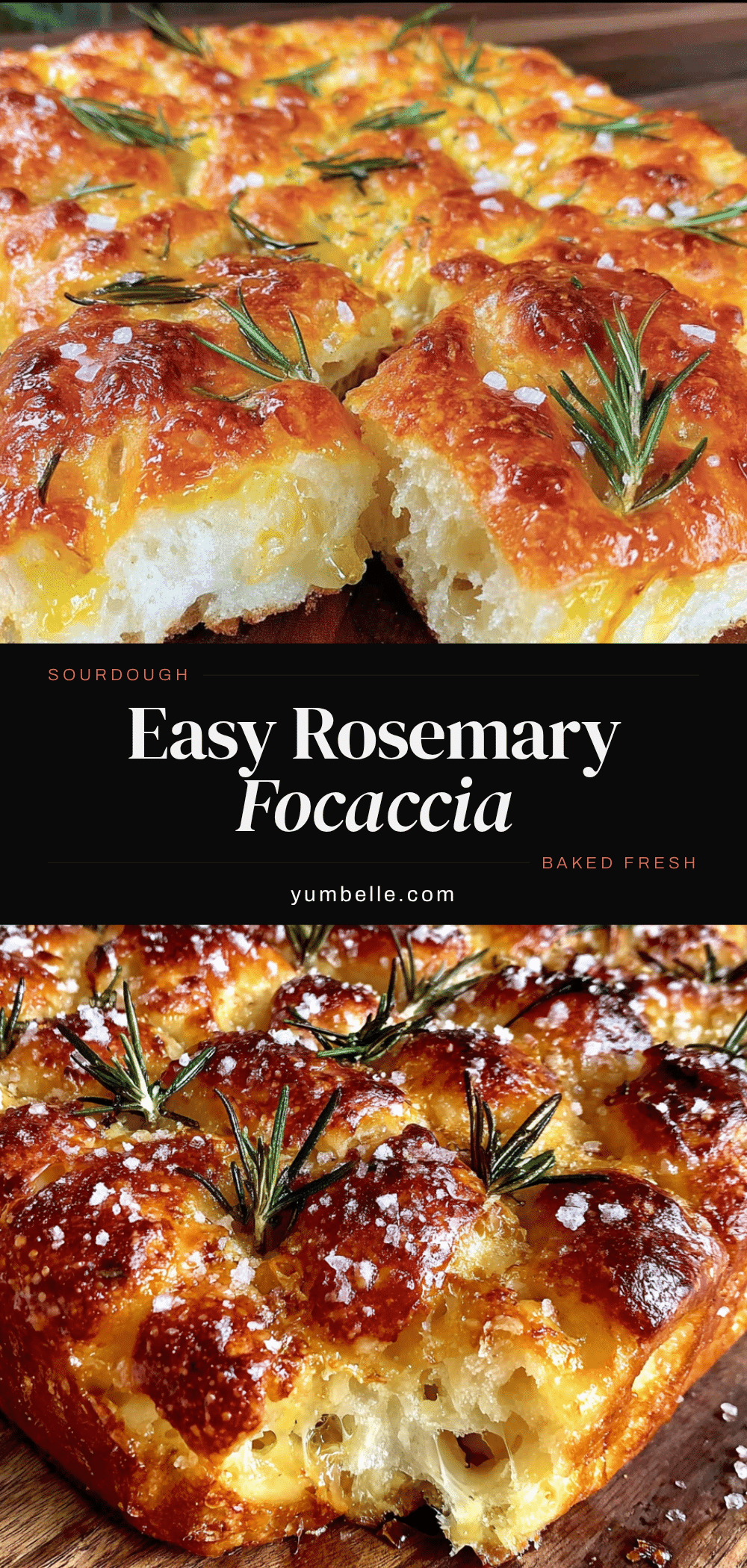
Easy Sourdough Focaccia with Rosemary and Sea Salt

This easy sourdough focaccia is forgiving, uses simple ingredients, and delivers a golden, crackly crust with a soft, airy interior. Perfect for beginners and seasoned bakers alike, it’s a crowd-pleaser that comes together in about 4 hours.
- Prep Time: 15 minutes
- Cook Time: 25 minutes
- Total Time: 4 hours (includes rising time)
- Yield: 8 servings 1x
- Category: Bread
- Cuisine: Italian
Ingredients
- 500 grams bread flour (about 3 1/2 cups)
- 400 grams lukewarm water (about 1 3/4 cups, 80°F)
- 150 grams active sourdough starter (about 2/3 cup, fed and bubbly)
- 10 grams fine sea salt (about 1 1/2 teaspoons, plus extra for topping)
- 60 grams extra-virgin olive oil (about 1/4 cup, divided)
- 2 tablespoons fresh rosemary (finely chopped)
- Optional: flaky sea salt for finishing
Instructions
- Mix the dough (10:00 AM): In a large bowl, combine the lukewarm water and active sourdough starter. Stir until the starter dissolves. Add the bread flour and salt. Mix with your hand until a shaggy, sticky dough forms. Cover with plastic wrap and let rest for 30 minutes.
- First fold (10:30 AM): Wet your hand with water. Grab one corner of the dough, stretch it up, and fold it over the center. Rotate the bowl 90 degrees and repeat 4 times. Cover and rest 30 minutes.
- Second fold (11:00 AM): Repeat the folding process. Cover and rest 30 minutes.
- Third fold (11:30 AM): One more round of folds. Cover and let rise for 2-3 hours, or until doubled in size and bubbly on top.
- Prepare the pan (around 2:00 PM): Pour 30 grams (2 tablespoons) of olive oil into a 9×13-inch baking pan. Spread to coat the bottom and sides. Gently tip the risen dough into the pan. Let sit for 30 minutes.
- Stretch and dimple (2:30 PM): With oiled fingers, gently stretch the dough to fill the corners. If it resists, let rest 10 minutes. Once spread, oil your fingertips and press deep dimples all over the dough, going to the bottom of the pan.
- Second rise (2:30 PM to 4:00 PM): Cover the pan and let rise for 1.5 to 2 hours, until puffy and jiggly.
- Preheat and top (4:00 PM): Preheat oven to 425°F (220°C). Drizzle remaining 30 grams (2 tablespoons) olive oil over the top. Sprinkle chopped rosemary evenly, then add a generous pinch of flaky sea salt.
- Bake (4:00 PM to 4:25 PM): Place pan on middle rack and bake for 20-25 minutes, until deep golden brown and edges are crispy. Let cool in pan for 10 minutes, then transfer to a wire rack.
Notes
Don’t skip the folds—they build structure. Wet your hands to handle sticky dough. If your kitchen is cold, rise times will be longer. The dimples are essential for trapping oil and creating crispy pockets. Salt is crucial for flavor and gluten structure. For best results, use an active, bubbly starter.
Nutrition
- Serving Size: 1/8 of recipe
- Calories: 280
- Sodium: 400
- Fat: 8
- Saturated Fat: 1
- Carbohydrates: 44
- Fiber: 2
- Protein: 7
Keywords: sourdough focaccia, easy focaccia, rosemary focaccia, sea salt focaccia, sourdough bread, homemade bread, Italian bread