Love this? Save it for later!
Share the inspiration with your friends
It was 11:23 PM on a rainy Tuesday in November, and I had a desperate craving for the kind of soup that feels like a hug from the inside. I didn’t have a proper beef stock or the fancy red wine the fancier recipes call for, but I had a sad-looking chuck roast in the freezer, a half-empty bag of pearled barley, and the sudden, stubborn idea that I could make it work anyway. Honestly, that late-night impulse turned into one of my most-requested recipes, and let me tell you, it changed how I think about slow cooker soups forever.
I remember standing there in my kitchen, barefoot on the cold tile, just staring into the fridge like it owed me something. I mean, we’ve all been there, right? That moment when you want something deeply comforting but you’re too tired to run to the store. I grabbed a couple of sad carrots, some celery that was still crispy, and an onion that was starting to sprout. I figured, why not? The slow cooker does most of the work anyway. So I chopped everything roughly, tossed it in with the beef and barley, and crossed my fingers.
The next morning, the whole house smelled like a diner in the best possible way. That rich, beefy aroma with a hint of thyme and bay leaf just hanging in the air. I lifted the lid, and there it was—a deep, dark, almost velvety broth with tender shreds of beef and plump, chewy barley. It was exactly what I needed. That accidental, late-night experiment became the recipe I turn to whenever the world feels a little heavy or the weather turns cold. It’s the kind of soup that makes you slow down, take a deep breath, and remember that simple things are often the best.
Why You’ll Love This Recipe
This isn’t just another beef soup recipe. I’ve tested this one more times than I can count, tweaking the searing time, the barley ratio, and even the order of ingredients. What I landed on is pure gold. Let me break down why this one is different.
- Set It and Forget It: The slow cooker does all the heavy lifting. You get that slow-simmered, all-day flavor with about 15 minutes of active prep work. Perfect for busy weekdays or lazy Sundays.
- Budget-Friendly Pantry Staples: You don’t need any exotic ingredients. Beef chuck, carrots, celery, onion, barley, and broth. That’s it. Your wallet will thank you.
- Deep, Rich Flavor Without the Fuss: The secret is searing the beef first. It takes an extra 5 minutes, but it builds a layer of flavor that no amount of simmering can replace. Trust me on this one.
- Incredibly Satisfying and Filling: This is a meal in a bowl. The barley adds a wonderful chew and makes it hearty enough to stand alone. No need for a side of bread, though it never hurts.
- Crowd-Pleaser Approved: I’ve served this to picky kids, hungry teenagers, and my in-laws. It gets empty bowls every single time. The beef gets so tender it practically melts, and the broth is just so savory.
What truly sets this apart is the texture. I know some recipes use barley that turns into mush, or beef that stays tough. This one nails it. The beef is fall-apart tender, and the barley is perfectly chewy, not gummy. It’s the kind of soup that makes you close your eyes after the first spoonful. Honestly, it’s comfort food at its finest—hearty, healthy-ish, and full of soul.
What Ingredients You Will Need
This recipe relies on humble, straightforward ingredients to build something truly special. Most of these are probably in your kitchen right now. Here’s what you need and why each one matters.
- Beef Chuck Roast (2 lbs / 900g): This is your best friend for slow cooking. It has enough marbling to break down into tender, shreddable pieces. Don’t use a lean cut like sirloin; it will dry out and get tough. I usually buy a whole roast and cut it into 2-inch chunks myself. It’s cheaper that way.
- Pearled Barley (1 cup / 200g): The star of the show. Pearled barley cooks faster than hulled barley and gives that perfect, slightly chewy texture. Rinse it under cold water before adding it to the pot. This removes excess starch and keeps the broth clear.
- Yellow Onion (1 large, diced): The base of all good soups. I prefer yellow onions for their balanced sweetness after cooking. A sweet onion like Vidalia would also work, but a red onion might be too sharp.
- Carrots (3 medium, peeled and diced): They add a subtle sweetness and a pop of color. I like to dice them into uniform, bite-sized pieces so they cook evenly. Don’t chop them too small, or they’ll disappear into the broth.
- Celery Stalks (3, diced): The classic aromatic. It adds a savory, slightly peppery note that balances the sweetness of the carrots. Make sure to wash them well and trim the leaves.
- Garlic (4 cloves, minced): Fresh garlic is non-negotiable here. The jarred stuff just doesn’t have the same punch. I always add it right after the onion is soft, just for a minute, to wake up its flavor.
- Beef Broth (6 cups / 1.4 liters): Use a good quality broth. I recommend Pacific Foods or Swanson for a rich, clean flavor. If you have homemade beef stock, even better. Low-sodium is a good idea so you can control the salt.
- Tomato Paste (2 tablespoons): This is the secret weapon. It adds a deep, savory umami and a beautiful dark color to the broth. Don’t skip it. I like to cook it with the garlic for a minute to remove any raw, tinny taste.
- Dried Thyme (1 teaspoon): Earthy and slightly floral, thyme is a classic partner for beef. It holds up well during long cooking. If you use fresh, triple the amount and add the sprigs whole so you can remove them later.
- Dried Bay Leaves (2): They add a subtle, almost tea-like background note. Remember to fish them out before serving. Nobody wants to bite into a whole bay leaf.
- Salt and Black Pepper (to taste): Season generously. I start with 1 teaspoon of salt and ½ teaspoon of pepper, then adjust at the end. The barley absorbs a lot of salt, so don’t be shy.
- Olive Oil (2 tablespoons): For searing the beef and sautéing the vegetables. Avocado oil works too, but use a neutral oil with a high smoke point.
- Fresh Parsley (¼ cup, chopped, for garnish): A bright, fresh finish that cuts through the richness. It’s optional but highly recommended. A little green on top makes everything look more appetizing.
Equipment Needed
You don’t need a fancy kitchen to pull this off. Here’s the gear that makes it happen.
- Slow Cooker (6-quart or larger): This is your main vessel. A 6-quart is the sweet spot for this amount of soup. If yours is smaller, just reduce the broth by a cup. I use a Crock-Pot brand, but any reputable brand works.
- Large Skillet or Dutch Oven: For searing the beef. A cast-iron skillet is ideal because it gets screaming hot and holds the heat. If you don’t have one, a heavy-bottomed stainless steel pan will do.
- Cutting Board and Sharp Knife: A good chef’s knife makes dicing vegetables a breeze. A dull knife is dangerous and frustrating. Keep it sharp.
- Wooden Spoon or Spatula: For stirring the vegetables and scraping up the browned bits from the pan. Those bits are pure flavor.
- Measuring Cups and Spoons: For accuracy. I know some people eyeball it, but for the best results, measure the barley and broth.
- Tongs: For flipping the beef chunks while searing. They give you better control than a fork.
- Ladle: For serving. A deep, sturdy ladle makes a mess-free pour.
A note on budget: You don’t need the most expensive slow cooker. A basic model with a low and high setting is all you need. I used a $30 one for years and it made perfect soup every time. Just make sure the lid seals well.
Preparation Method
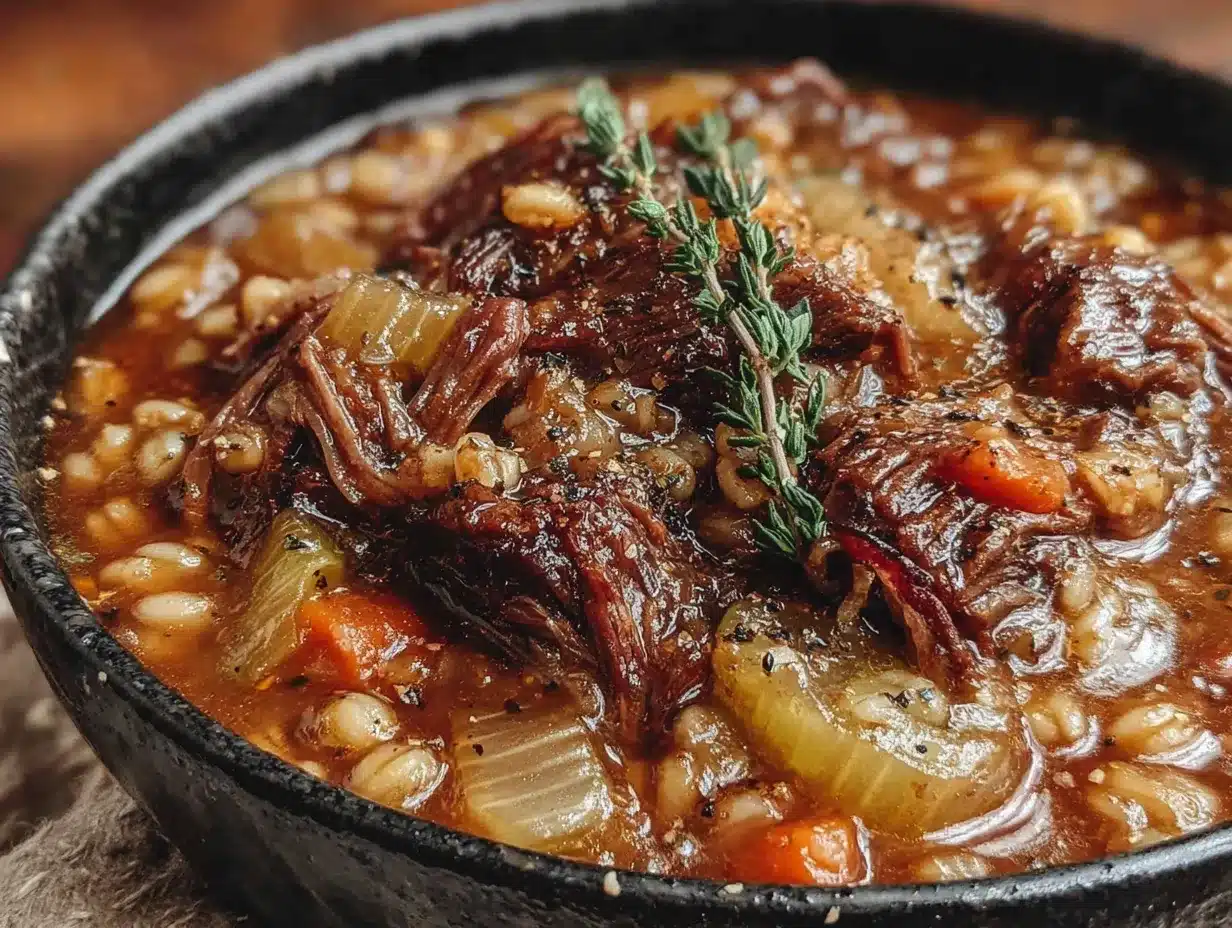
Let’s get cooking. Follow these steps, and you’ll have a pot of soup that tastes like you’ve been tending it all day. I’ve included time estimates and little cues to help you know you’re on the right track.
- Prep the Beef (5 minutes): Pat the beef chuck dry with paper towels. This is crucial for a good sear. Cut it into 2-inch chunks. Season generously with salt and pepper. Don’t be shy—this is the only chance to season the meat directly.
- Sear the Beef (10 minutes): Heat 1 tablespoon of olive oil in your large skillet over medium-high heat until it shimmers. Add the beef chunks in a single layer. Don’t crowd the pan; work in batches if needed. Let them sear undisturbed for 3-4 minutes per side until deeply browned. You’re looking for a dark, crusty exterior. This is where the flavor lives. Use your tongs to flip them. Transfer the seared beef to the slow cooker.
- Sauté the Aromatics (5 minutes): Reduce the heat to medium. Add the remaining 1 tablespoon of olive oil to the same skillet. Toss in the diced onion, carrots, and celery. Cook for 4-5 minutes, stirring occasionally, until the onion is translucent and the vegetables start to soften. You’ll smell that sweet, savory aroma. Add the minced garlic and tomato paste. Cook for 1 more minute, stirring constantly, until the garlic is fragrant and the tomato paste darkens slightly.
- Deglaze the Pan (2 minutes): Pour about ½ cup of the beef broth into the skillet. Use your wooden spoon to scrape up all those browned bits from the bottom of the pan. This is called deglazing, and it’s liquid gold. Pour the entire mixture—vegetables, broth, and all—into the slow cooker.
- Assemble in the Slow Cooker (2 minutes): Add the rinsed pearled barley, the remaining beef broth, dried thyme, and bay leaves to the slow cooker. Give everything a good stir to combine. The liquid should just cover the ingredients. If it looks a little thin, don’t worry—the barley will absorb a lot as it cooks.
- Cook Low and Slow (6-8 hours on LOW or 3-4 hours on HIGH): Put the lid on and set it. For the most tender beef and the best flavor development, I highly recommend cooking on LOW. After about 6 hours, check the beef. It should shred easily with a fork. The barley should be tender but still have a slight chew. If it’s too firm, give it another 30 minutes.
- Shred the Beef (5 minutes): Once the soup is done, carefully remove the beef chunks with tongs and place them on a cutting board. Use two forks to shred the meat into bite-sized pieces. Discard any large pieces of fat. Return the shredded beef to the slow cooker.
- Final Seasoning and Serve (2 minutes): Fish out the bay leaves and discard them. Taste the soup. This is the moment of truth. Add more salt and pepper if needed. I usually add another ½ teaspoon of salt at this point. Stir in the fresh parsley. Ladle the soup into bowls and serve hot. The broth should be rich and savory, the beef tender, and the barley perfectly chewy.
One pro tip: If you want a thicker soup, you can mash a few of the cooked barley grains against the side of the pot with a spoon. This releases their starch and naturally thickens the broth. I do this sometimes when I want an extra hearty bowl.
Cooking Tips & Techniques
I’ve made this soup at least twenty times, and I’ve learned a few things the hard way. Let me save you some trouble.
Don’t Skip the Sear: I know it’s an extra step, and it dirties a pan. But I promise you, it’s the difference between a good soup and a great one. That browned crust on the beef is pure umami. If you’re really pressed for time, you can skip it, but the flavor will be noticeably flatter. I once tried to save time and just threw raw beef in the slow cooker. The soup was edible, but it was missing that deep, roasty quality. Never again.
Rinse Your Barley: This is a small step that makes a big difference. Unrinsed barley can make your soup cloudy and slightly sticky. A quick rinse under cold water in a fine-mesh strainer removes the excess starch. It takes 30 seconds.
Watch the Liquid Level: Barley is a thirsty grain. It absorbs a lot of liquid as it cooks. If you check your soup halfway through and it looks too thick, you can add a cup of water or extra broth. Conversely, if it looks too soupy at the end, don’t panic. It will thicken as it sits. The barley continues to absorb liquid even after you turn off the heat.
Season in Layers: Don’t dump all the salt in at the beginning. Season the beef, season the vegetables, and then season the broth. Then taste and adjust at the end. This builds a more complex flavor profile. I’ve made the mistake of over-salting the broth early on, only to have it become overly salty as it reduced. It’s easier to add salt than to take it away.
Multitasking Strategy: While the beef is searing, chop your vegetables. While the vegetables are sautéing, measure out your broth and rinse the barley. This keeps the process moving. The whole active prep time is only about 20 minutes if you stay organized.
Variations & Adaptations
This recipe is a fantastic base. Here are some ways to make it your own. I’ve tried most of these, and they all work beautifully.
- Vegetarian Version: Swap the beef for a can of chickpeas or a bag of frozen edamame. Use vegetable broth instead of beef broth. Add a tablespoon of soy sauce or tamari for that missing umami. The barley still provides that hearty texture. It’s a completely different soup, but equally satisfying.
- Gluten-Free Adaptation: Pearled barley contains gluten. For a gluten-free version, substitute the barley with brown rice, quinoa, or certified gluten-free oats. Adjust the cooking time accordingly. Brown rice takes about the same time as barley. Quinoa cooks faster—add it during the last hour of cooking.
- Add More Veggies: This soup is a great way to clean out the fridge. I’ve added diced zucchini, bell peppers, green beans, and even a handful of spinach at the end. Just add heartier vegetables like carrots and celery at the beginning, and tender ones like spinach or peas in the last 30 minutes. My favorite addition is a cup of frozen peas stirred in right before serving. They add a pop of sweetness and color.
- Herb and Spice Variations: Try adding a teaspoon of smoked paprika for a subtle smokiness. A pinch of red pepper flakes adds gentle heat. Fresh rosemary (one sprig) is a lovely alternative to thyme. I once made this with a cinnamon stick and a star anise for a Moroccan-inspired version. It was weird but wonderful.
- Make It a Stew: For a thicker, stew-like consistency, reduce the broth to 4 cups. Add a tablespoon of cornstarch mixed with 2 tablespoons of cold water (a slurry) in the last 30 minutes of cooking. Stir it in and let it thicken. This turns the soup into a hearty, spoon-standing-up stew that’s perfect over mashed potatoes.
Serving & Storage Suggestions
This soup is incredibly versatile when it comes to serving and storing. Here’s how to get the most out of it.
Serving: Serve the soup piping hot. Ladle it into deep bowls. I love to top it with a sprinkle of fresh parsley and a crack of black pepper. A dollop of sour cream or a spoonful of Greek yogurt adds a lovely tangy contrast. For a complete meal, serve it with a crusty baguette or a side of garlic bread recipe. It also pairs beautifully with a simple green salad dressed with a lemon vinaigrette. The acidity cuts through the richness of the broth.
Storage: This soup tastes even better the next day. The flavors meld together overnight, and the barley continues to absorb the broth, making it even more flavorful. Store leftovers in an airtight container in the refrigerator for up to 5 days. The soup will thicken significantly as it sits. When reheating, add a splash of water or broth to thin it back to your desired consistency.
Freezing: This soup freezes beautifully. Let it cool completely, then transfer it to freezer-safe containers or zip-top bags. Leave about an inch of headspace for expansion. It will keep for up to 3 months. To thaw, place it in the refrigerator overnight. Reheat on the stovetop over medium-low heat, stirring occasionally, or in the microwave. I often double the batch and freeze half for a busy weeknight. It’s a lifesaver.
Reheating Tips: The best way to reheat is on the stovetop. Pour the soup into a saucepan and warm it over medium heat, stirring often. Add a little broth or water if it’s too thick. If you’re in a hurry, the microwave works too. Just use a microwave-safe bowl, cover it with a damp paper towel, and heat in 60-second intervals, stirring between each. The key is to not let it boil, which can make the barley mushy.
Nutritional Information & Benefits
This soup is not just comforting; it’s also packed with good-for-you ingredients. Here’s a rough estimate per serving (based on 8 servings).
| Nutrient | Amount Per Serving |
|---|---|
| Calories | ~380 kcal |
| Protein | 32g |
| Fat | 14g |
| Carbohydrates | 30g |
| Fiber | 6g |
| Sugar | 6g |
| Sodium | ~800mg (varies with broth) |
Health Benefits: This soup is a nutritional powerhouse. The beef provides high-quality protein and iron, which is essential for energy and healthy blood. Barley is a fantastic source of soluble fiber, which can help lower cholesterol and keep you feeling full and satisfied. The carrots and celery are packed with vitamins A and K and antioxidants. The broth is hydrating and can help soothe a sore throat or a cold. It’s a meal that truly nourishes you from the inside out.
Dietary Considerations: This recipe is dairy-free and nut-free. As mentioned, it contains gluten from the barley. To make it gluten-free, use brown rice or quinoa. It’s also relatively low in added sugar, with the sweetness coming naturally from the vegetables. If you’re watching your sodium, use low-sodium beef broth and go easy on the added salt. You can always add more at the table.
FAQs
Can I use a different cut of beef?
Absolutely. Beef chuck is my top choice because it becomes incredibly tender. Other good options include beef brisket, bottom round, or even stew meat from the store. Just avoid very lean cuts like sirloin or eye of round, as they will dry out and become tough during the long cooking time.
Can I make this in an Instant Pot or pressure cooker?
Yes, you can! Use the sauté function to sear the beef and cook the vegetables, just like on the stovetop. Then, add all the ingredients, secure the lid, and cook on high pressure for 35 minutes. Let the pressure release naturally for 15 minutes before quick-releasing the rest. The barley will be perfectly cooked, and the beef will be tender.
My soup is too thick. How can I fix it?
This is a common issue, especially with leftovers. Simply stir in additional beef broth or water, ¼ cup at a time, until it reaches your desired consistency. Heat it through before serving. The barley will have absorbed a lot of liquid, so don’t be afraid to add more.
Can I use hulled barley instead of pearled barley?
You can, but it requires a longer cooking time and more liquid. Hulled barley is a whole grain with the outer husk intact, so it takes much longer to soften. If you use it, increase the cooking time to 8-10 hours on LOW, and add an extra cup of broth. Pearled barley is much more convenient for this recipe.
Can I add potatoes to this soup?
Definitely. Potatoes are a great addition. Dice 2 medium Yukon Gold or Russet potatoes into 1-inch cubes and add them to the slow cooker along with the barley. They will become tender and creamy, adding another layer of heartiness. Just be aware that they will absorb some of the broth, so you might need to add a little extra liquid.
Conclusion
This Cozy Slow Cooker Beef and Barley Soup is more than just a recipe; it’s a warm hug in a bowl, a quiet moment of comfort on a busy day. It’s the kind of meal that proves you don’t need complicated techniques or fancy ingredients to create something truly special. Just a little patience, a few humble ingredients, and a slow cooker that does the heavy lifting.
I love this recipe because it reminds me that the best things in life are often the simplest. It’s forgiving, adaptable, and always, always delicious. Whether you’re feeding a crowd or just yourself on a quiet evening, this soup delivers. So go ahead, give it a try. Make it your own. Add extra carrots, skip the celery, throw in a pinch of red pepper flakes. This is your soup now.
I’d love to hear how it turns out for you. Drop a comment below and let me know if you added any twists or if it became a new family favorite. Share a photo on Pinterest and tag me—I love seeing your creations. Until next time, happy cooking, and stay warm!
Pin This Recipe!
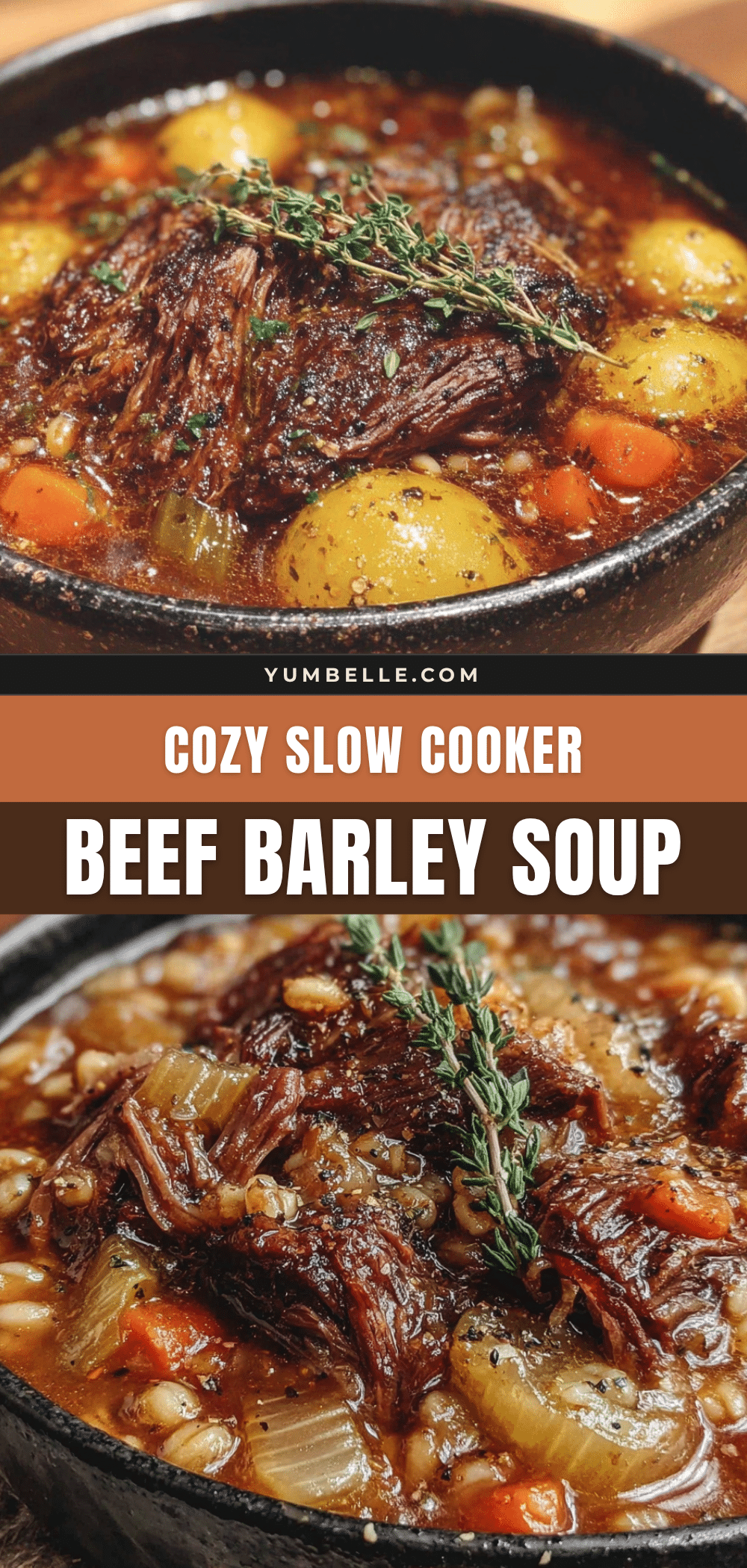
Cozy Slow Cooker Beef and Barley Soup – Easy One-Pot Recipe
This hearty and comforting slow cooker beef and barley soup is a one-pot wonder that delivers deep, rich flavor with minimal effort. Perfect for busy weeknights or lazy Sundays, it’s a budget-friendly meal that tastes like a warm hug.
- Prep Time: 15 minutes
- Cook Time: 6-8 hours (LOW) or 3-4 hours (HIGH)
- Total Time: 6 hours 15 minutes to 8 hours 15 minutes
- Yield: 8 servings 1x
- Category: Main Course
- Cuisine: American
Ingredients
- 2 lbs (900g) beef chuck roast, cut into 2-inch chunks
- 1 cup (200g) pearled barley, rinsed
- 1 large yellow onion, diced
- 3 medium carrots, peeled and diced
- 3 celery stalks, diced
- 4 cloves garlic, minced
- 6 cups (1.4 liters) beef broth (low-sodium recommended)
- 2 tablespoons tomato paste
- 1 teaspoon dried thyme
- 2 dried bay leaves
- Salt and black pepper to taste
- 2 tablespoons olive oil
- ¼ cup fresh parsley, chopped (for garnish)
Instructions
- Pat the beef chuck dry with paper towels and cut into 2-inch chunks. Season generously with salt and pepper.
- Heat 1 tablespoon olive oil in a large skillet over medium-high heat. Sear the beef chunks in a single layer for 3-4 minutes per side until deeply browned. Transfer to the slow cooker.
- Reduce heat to medium. Add remaining 1 tablespoon olive oil. Sauté onion, carrots, and celery for 4-5 minutes until onion is translucent. Add garlic and tomato paste; cook 1 minute more.
- Pour ½ cup beef broth into the skillet and scrape up browned bits. Pour the mixture into the slow cooker.
- Add rinsed barley, remaining broth, thyme, and bay leaves to the slow cooker. Stir to combine.
- Cover and cook on LOW for 6-8 hours or on HIGH for 3-4 hours, until beef is tender and shreds easily.
- Remove beef chunks, shred with two forks, and return to the slow cooker. Discard bay leaves.
- Taste and adjust seasoning with salt and pepper. Stir in fresh parsley. Serve hot.
Notes
For a thicker soup, mash a few cooked barley grains against the side of the pot. Leftovers taste even better the next day. Store in the refrigerator for up to 5 days or freeze for up to 3 months.
Nutrition
- Serving Size: 1 bowl (approx. 1.5
- Calories: 380
- Sugar: 6
- Sodium: 800
- Fat: 14
- Saturated Fat: 4
- Carbohydrates: 30
- Fiber: 6
- Protein: 32
Keywords: slow cooker beef and barley soup, easy beef soup, one-pot soup, hearty soup, comfort food, winter soup