Love this? Save it for later!
Share the inspiration with your friends
I still remember the exact night I fell in love with a piece of fish. It was a drizzly Tuesday in March, and my husband and I had squeezed into a tiny, dimly lit bistro called The Gilded Catch in Portland. The place was known for one thing—their cedar-plank salmon with a butter sauce so good I almost licked the plate. When they closed six months later (a rent hike, the owner said), I felt a genuine pang of loss. That silky, lemony, dill-flecked sauce haunted me. After nine attempts—nine!—including one where I accidentally used mint instead of dill (don’t ask), I finally cracked the code. This perfect baked salmon with lemon dill butter sauce is the result of that obsession.
Let me tell you, the first time I got it right, I actually texted my sister a photo with the caption “We’re back.” She thought I was talking about a band. But honestly, that first bite transported me straight back to that cramped little table. The salmon was flaky, the butter sauce was rich without being heavy, and the lemon cut through everything just perfectly. I mean, there’s something magical about a sauce that feels fancy but comes together in the time it takes to preheat your oven.
Maybe you’ve been there—chasing a restaurant memory in your own kitchen, staring at a pile of ingredients, hoping for a miracle. This recipe is that miracle. It’s simple enough for a Tuesday night but impressive enough for company. And the best part? You don’t need a wood-fired grill or a chef’s pedigree. Just a sheet pan, a few pantry staples, and maybe a little patience. Trust me, your kitchen is about to smell like that little bistro you wish was still open.
Why You’ll Love This Recipe
I’ve tested this perfect baked salmon with lemon dill butter sauce more times than I care to admit, and each batch taught me something new. Here is why this version stands out from the crowd:
- Quick & Easy : This dish comes together in under 30 minutes, making it ideal for busy weeknights when you want something special without the fuss.
- Simple Ingredients : No exotic grocery store trips needed. You likely have butter, lemons, and dill in your kitchen right now.
- Perfect for Entertaining : Great for dinner parties, romantic date nights, or even holiday meals. It looks like you spent hours, but you didn’t.
- Crowd-Pleaser : Even folks who claim they “don’t like fish” have asked me for seconds. The butter sauce is that good.
- Unbelievably Delicious : The texture of the salmon—crispy at the edges, tender in the middle—paired with that silky, herby sauce is next-level comfort food.
What makes this recipe different from the rest? It’s the technique of basting the salmon with the butter sauce mid-bake. That little extra step ensures every bite is infused with that lemon-dill goodness, not just the top. Plus, I’ve perfected the ratio of butter to lemon juice so the sauce is rich but never greasy. This isn’t just another baked salmon recipe—it’s my best version, born from nine attempts and a whole lot of determination.
This recipe isn’t just good—it is the kind that makes you close your eyes after the first bite. It’s comfort food reimagined—healthier, faster, but with the same soul-soothing satisfaction. Perfect for impressing guests without stress, or turning a simple weeknight into something memorable.
What Ingredients You Will Need
This recipe uses simple, wholesome ingredients to deliver bold flavor and satisfying texture without the fuss. Most of these are pantry staples, which makes this dish incredibly accessible.
- Salmon Fillets (4 fillets, about 6 oz / 170g each, skin-on or skinless): I prefer center-cut fillets for even cooking. Look for bright, firm flesh with no fishy smell. Wild-caught salmon has a richer flavor, but farm-raised works beautifully too.
- Unsalted Butter (1/2 cup / 1 stick / 113g): Using unsalted butter lets you control the salt level. I like Kerrygold for its creamy texture, but any quality butter works.
- Fresh Lemon Juice (3 tablespoons / 45ml): Fresh is non-negotiable here. Bottled lemon juice has a flat, metallic taste that will ruin your sauce. Roll the lemon on the counter before juicing to get every last drop.
- Lemon Zest (1 teaspoon, from about 1 lemon): The zest adds bright, aromatic notes that juice alone can’t provide. Use a microplane for the best texture.
- Fresh Dill (3 tablespoons, finely chopped): Fresh dill is a must for that signature flavor. Dried dill won’t give you the same bright, grassy notes. If you’re in a pinch, you can substitute fresh parsley or tarragon, but the flavor will change.
- Garlic (3 cloves, minced): Adds a savory backbone to the sauce. Fresh garlic is best, but jarred minced garlic works in a pinch (use 1 teaspoon).
- Olive Oil (1 tablespoon / 15ml): For rubbing on the salmon before baking. It helps the seasoning stick and promotes browning.
- Salt (1 teaspoon): I use fine sea salt for even seasoning.
- Black Pepper (1/2 teaspoon, freshly ground): Freshly ground pepper makes a noticeable difference in flavor.
- Optional Garnish : Extra fresh dill sprigs, lemon slices, and flaky sea salt for finishing.
For the best texture, I recommend letting your salmon sit at room temperature for 10-15 minutes before cooking. This helps it cook more evenly. Also, if you can find it, look for salmon with the pin bones removed—it saves a step and makes for a more pleasant eating experience.
Equipment Needed
- Baking Sheet or Oven-Safe Dish (9×13 inch or similar): A rimmed baking sheet works perfectly. Line it with parchment paper for easy cleanup.
- Small Saucepan : For making the lemon dill butter sauce. A heavy-bottomed pan prevents the butter from burning.
- Microplane or Fine Grater : For zesting the lemon. A box grater works too, but a microplane gives you finer zest that melts into the sauce.
- Chef’s Knife : For mincing garlic and chopping dill. A sharp knife makes all the difference.
- Measuring Spoons and Cups : For accuracy, especially with the butter and lemon juice.
- Pastry Brush (optional but helpful): For basting the salmon with the butter sauce mid-bake. A spoon works too, but a brush gives you more even coverage.
- Instant-Read Thermometer (recommended): Salmon is perfectly cooked at 125°F (52°C) for medium, or 130°F (54°C) for medium-well. This takes the guesswork out of it.
I’ve made this recipe with a cheap baking sheet and a wooden spoon, so don’t stress if you don’t have fancy equipment. The thermometer is the only “special” tool I’d really recommend, and they cost less than ten bucks. Totally worth it for perfectly cooked salmon every time.
Preparation Method
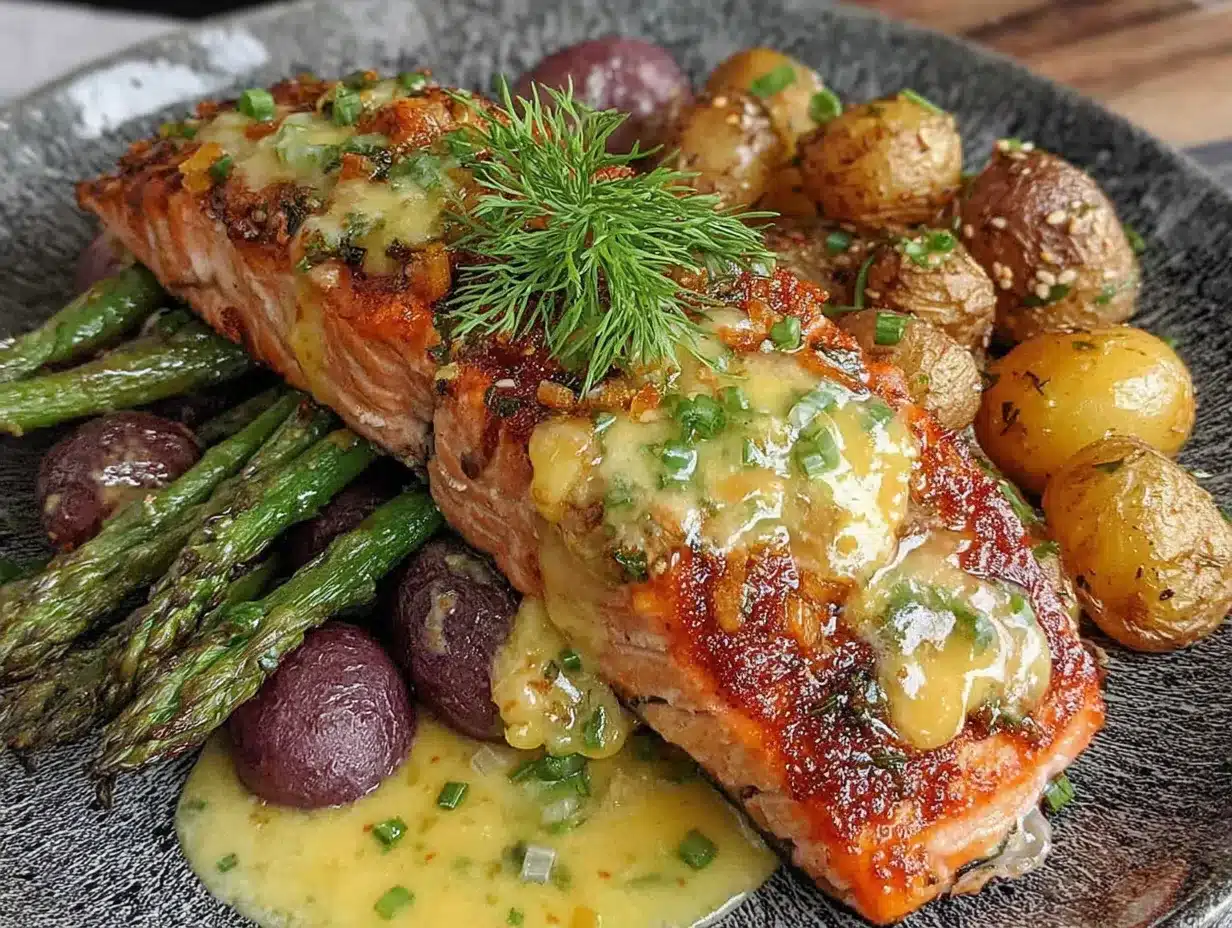
- Preheat and Prep : Preheat your oven to 400°F (200°C). Line a baking sheet with parchment paper or lightly grease it with olive oil. Take your salmon fillets out of the fridge and let them sit at room temperature for 10-15 minutes.
- Make the Lemon Dill Butter Sauce : In a small saucepan over medium-low heat, melt the unsalted butter. Once melted, add the minced garlic and cook for about 30 seconds until fragrant—don’t let it brown. Remove the pan from the heat and stir in the fresh lemon juice, lemon zest, and chopped fresh dill. Season with a pinch of salt and pepper. Set aside. The sauce will look thin now, but it will thicken slightly as it cools.
- Season the Salmon : Pat the salmon fillets dry with paper towels. This step is crucial for getting that nice golden crust. Rub each fillet with olive oil, then season generously with salt and pepper on both sides. Place the fillets on the prepared baking sheet, skin-side down if using skin-on fillets.
- Bake the Salmon : Place the salmon in the preheated oven and bake for 6 minutes. This initial bake gives the salmon a head start before we add the sauce.
- Baste with Butter Sauce : After 6 minutes, remove the baking sheet from the oven. Using a pastry brush or a spoon, generously coat each salmon fillet with the lemon dill butter sauce. Reserve about 2 tablespoons of the sauce for serving. Return the salmon to the oven.
- Finish Baking : Continue baking for another 6-10 minutes, depending on the thickness of your fillets. The salmon is done when it flakes easily with a fork and the internal temperature reaches 125°F (52°C) for medium or 130°F (54°C) for medium-well. The edges should look opaque, and the center should still be slightly translucent.
- Rest and Serve : Remove the salmon from the oven and let it rest for 2-3 minutes. This allows the juices to redistribute. Drizzle the reserved butter sauce over the top, garnish with fresh dill sprigs and lemon slices, and serve immediately.
Pro Tip : If your fillets are on the thinner side (less than 1 inch thick), start checking for doneness at the 4-minute mark after basting. Thin fillets cook fast, and you don’t want dry salmon. I learned this the hard way when I walked away to answer a text and came back to overcooked fish. Oops.
Cooking Tips & Techniques
Getting that perfect baked salmon with lemon dill butter sauce is more about technique than talent. Here are some hard-earned lessons from my kitchen:
Don’t Overcook the Salmon : This is the number one mistake I see. Salmon continues to cook after you take it out of the oven, so pull it when it’s just slightly underdone in the center. The residual heat will finish the job. If you don’t have a thermometer, look for the white protein (albumin) to just start appearing on the surface—that’s your cue.
Room Temperature Matters : Cold salmon straight from the fridge cooks unevenly. The outside will be overdone before the center is warm. Letting it sit out for 10-15 minutes is a game-changer. I know it feels like a small thing, but it makes a real difference.
Pat It Dry : Wet salmon won’t brown properly. Use paper towels to get the surface as dry as possible before seasoning. This is the secret to that beautiful golden crust.
Baste, Don’t Drown : When you add the butter sauce at the halfway point, be generous but not excessive. You want a coating, not a puddle. Too much sauce can make the salmon soggy instead of flaky. That’s why I always reserve some for serving.
Watch Your Garlic : Garlic burns in seconds. When making the sauce, keep the heat low and only cook the garlic until it’s fragrant—about 30 seconds. Burnt garlic tastes bitter and will ruin your beautiful butter sauce. Trust me, I’ve made that mistake more than once.
Variations & Adaptations
One of the best things about this recipe is how adaptable it is. Here are some variations I’ve tried and loved:
- Herb Swap : Not a dill fan? Substitute fresh parsley, tarragon, or chives. Each gives a different character. Tarragon adds a subtle anise flavor that pairs beautifully with salmon.
- Citrus Twist : Replace the lemon with orange or lime juice and zest. Orange and dill is a surprisingly lovely combination—bright and slightly sweet.
- Spicy Kick : Add 1/4 teaspoon of red pepper flakes to the butter sauce for a gentle heat. It cuts through the richness beautifully.
- Garlic Lovers : Roast a whole head of garlic, squeeze out the soft cloves, and mash them into the butter sauce. It becomes sweet, mellow, and absolutely addictive.
- Dietary Adaptations : For a dairy-free version, use a high-quality vegan butter or ghee (if you tolerate it). For a lower-fat option, reduce the butter to 1/4 cup and add 2 tablespoons of olive oil instead. The sauce will be thinner but still flavorful.
- Different Cooking Methods : This works beautifully on the grill. Preheat your grill to medium-high, oil the grates, and cook the salmon for 4-5 minutes per side, basting with the butter sauce during the last 2 minutes of cooking.
I once made a version with smoked paprika and a touch of honey in the butter sauce for a sweet-smoky twist. It was fantastic, though my husband said it tasted “too fancy” for a Tuesday. I took that as a compliment.
Serving & Storage Suggestions
This perfect baked salmon with lemon dill butter sauce is versatile enough for any occasion. Here’s how to make the most of it:
Serving Temperature : Serve the salmon warm, straight from the oven. The butter sauce should be silky and warm, not congealed. If the sauce has thickened while the salmon rested, gently reheat it on the stovetop or in the microwave for 10 seconds.
Presentation Ideas : Place the salmon on a platter, drizzle with the reserved butter sauce, and garnish with fresh dill sprigs and thin lemon slices. A sprinkle of flaky sea salt right before serving adds a lovely pop of texture and flavor.
What to Serve With It : This salmon pairs beautifully with roasted asparagus, a simple green salad, or fluffy rice pilaf. For a low-carb option, serve it over cauliflower rice or zucchini noodles. A crisp white wine like Sauvignon Blanc or Pinot Grigio is a perfect match.
Storage Instructions : Leftover salmon can be stored in an airtight container in the refrigerator for up to 3 days. The butter sauce will solidify, but that’s okay. To reheat, place the salmon in a 300°F (150°C) oven for 5-7 minutes, or until just warmed through. Avoid the microwave—it will overcook the fish and make it rubbery.
Make-Ahead Tip : The lemon dill butter sauce can be made up to 3 days in advance and stored in the refrigerator. Let it come to room temperature before using, or gently reheat it on the stovetop. The flavors actually meld together beautifully overnight.
Nutritional Information & Benefits
This dish is not just delicious—it’s packed with nutrients. Here’s a rough estimate per serving (based on 4 servings):
- Calories : Approximately 420-480
- Protein : 35-40g
- Fat : 30-35g (mostly healthy fats from salmon and butter)
- Carbohydrates : 2-3g
- Omega-3 Fatty Acids : Rich in EPA and DHA, which support heart and brain health
- Vitamin D : Excellent source, especially from wild-caught salmon
- Vitamin B12 : Supports energy metabolism and nerve function
Salmon is one of the best sources of high-quality protein and healthy fats. The lemon and dill add antioxidants and anti-inflammatory properties. This dish is naturally gluten-free, low-carb, and keto-friendly. If you’re watching your sodium, use unsalted butter and reduce the added salt to 1/2 teaspoon.
I love that this recipe feels indulgent but is actually incredibly good for you. It’s the kind of meal that nourishes your body and your soul—no guilt required.
Conclusion
This perfect baked salmon with lemon dill butter sauce is more than just a recipe—it’s a little piece of restaurant magic you can recreate at home. After nine attempts, I finally captured that silky, bright, buttery flavor that haunted me from The Gilded Catch. And honestly? I think my version might be even better.
I encourage you to make this recipe your own. Add a little more dill if you love it, squeeze in extra lemon if you’re feeling zesty, or throw in some capers for a briny twist. The best recipes are the ones you tweak and make your own. Let me know in the comments how yours turns out—did you try a variation? Did your family ask for seconds? I’d love to hear your story.
Thank you for stopping by my little corner of the internet. Now go preheat that oven and make some memories. Your kitchen is about to smell amazing.
Frequently Asked Questions
Can I use frozen salmon for this recipe?
Yes, you can! Just make sure to thaw it completely in the refrigerator overnight. Pat it very dry with paper towels before seasoning, as frozen salmon tends to release more moisture. You may need to add 2-3 minutes to the baking time.
How do I know when the salmon is done without a thermometer?
Look for the salmon to turn from translucent to opaque around the edges. The center should still be slightly translucent. When you gently press the top with a fork, it should flake easily. If it’s still firm and resists flaking, it needs more time.
Can I make the lemon dill butter sauce ahead of time?
Absolutely! You can make the sauce up to 3 days in advance. Store it in an airtight container in the refrigerator. Let it come to room temperature before using, or gently reheat it on the stovetop over low heat. The flavors actually get better after a day in the fridge.
What if I don’t have fresh dill?
Fresh dill really is best for this recipe, but if you’re in a pinch, you can use 1 tablespoon of dried dill instead. Keep in mind that dried dill has a milder flavor. You could also substitute fresh parsley, tarragon, or chives for a different but still delicious result.
Can I grill this salmon instead of baking it?
Yes, this recipe works beautifully on the grill! Preheat your grill to medium-high heat (about 400°F/200°C). Oil the grates well. Grill the salmon for 4-5 minutes per side, basting with the butter sauce during the last 2 minutes of cooking. The smoky char adds another layer of flavor.
Pin This Recipe!
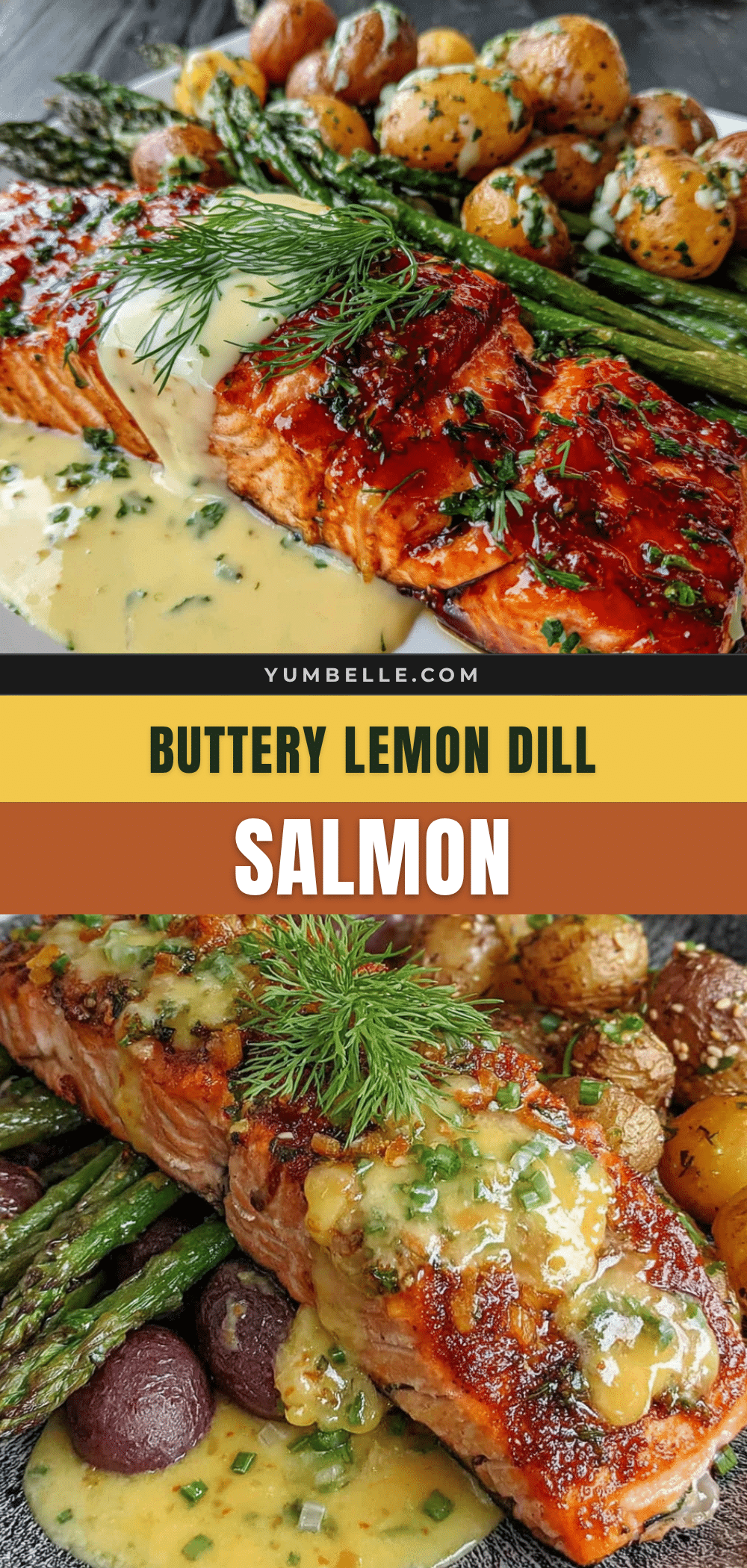
Perfect Baked Salmon with Lemon Dill Butter Sauce
This perfect baked salmon with lemon dill butter sauce is flaky, tender, and infused with bright citrus and herb flavors. It’s simple enough for a weeknight but impressive enough for company, coming together in under 30 minutes.
- Prep Time: 10 minutes
- Cook Time: 12-16 minutes
- Total Time: 22-26 minutes
- Yield: 4 servings 1x
- Category: Main Course
- Cuisine: American
Ingredients
- 4 salmon fillets (about 6 oz / 170g each, skin-on or skinless)
- 1/2 cup (1 stick / 113g) unsalted butter
- 3 tablespoons (45ml) fresh lemon juice
- 1 teaspoon lemon zest (from about 1 lemon)
- 3 tablespoons fresh dill, finely chopped
- 3 cloves garlic, minced
- 1 tablespoon (15ml) olive oil
- 1 teaspoon fine sea salt
- 1/2 teaspoon freshly ground black pepper
- Optional garnish: extra fresh dill sprigs, lemon slices, flaky sea salt
Instructions
- Preheat your oven to 400°F (200°C). Line a baking sheet with parchment paper or lightly grease it with olive oil. Take your salmon fillets out of the fridge and let them sit at room temperature for 10-15 minutes.
- In a small saucepan over medium-low heat, melt the unsalted butter. Once melted, add the minced garlic and cook for about 30 seconds until fragrant—don’t let it brown. Remove the pan from the heat and stir in the fresh lemon juice, lemon zest, and chopped fresh dill. Season with a pinch of salt and pepper. Set aside.
- Pat the salmon fillets dry with paper towels. Rub each fillet with olive oil, then season generously with salt and pepper on both sides. Place the fillets on the prepared baking sheet, skin-side down if using skin-on fillets.
- Place the salmon in the preheated oven and bake for 6 minutes.
- After 6 minutes, remove the baking sheet from the oven. Using a pastry brush or a spoon, generously coat each salmon fillet with the lemon dill butter sauce. Reserve about 2 tablespoons of the sauce for serving. Return the salmon to the oven.
- Continue baking for another 6-10 minutes, depending on the thickness of your fillets. The salmon is done when it flakes easily with a fork and the internal temperature reaches 125°F (52°C) for medium or 130°F (54°C) for medium-well.
- Remove the salmon from the oven and let it rest for 2-3 minutes. Drizzle the reserved butter sauce over the top, garnish with fresh dill sprigs and lemon slices, and serve immediately.
Notes
For best results, let salmon sit at room temperature for 10-15 minutes before cooking. Pat fillets dry for a golden crust. If fillets are thin (less than 1 inch), check for doneness at 4 minutes after basting. The sauce can be made up to 3 days ahead and stored in the refrigerator.
Nutrition
- Serving Size: 1 fillet
- Calories: 420480
- Sugar: 1
- Sodium: 600700
- Fat: 3035
- Saturated Fat: 1518
- Carbohydrates: 23
- Protein: 3540
Keywords: baked salmon, lemon dill butter sauce, salmon recipe, easy salmon, weeknight dinner, healthy dinner, gluten-free, keto-friendly