Love this? Save it for later!
Share the inspiration with your friends
My sister asked why I couldn’t just roast the vegetables on the same pan as the salmon from the start. I started to explain why that wouldn’t work — the salmon would overcook, the vegetables would get soggy, everything would steam instead of caramelize. Then I stopped. Honestly, I had never actually tried it. I had just assumed, the way you do when you’ve been cooking something a certain way for years. So on a random Wednesday night, with a deadline looming and a fridge full of broccoli and bell peppers, I threw caution to the wind and did exactly what she suggested. The vegetables went in first for a head start, then the salmon joined them for the final stretch. The result was a sheet pan situation that had me texting her a photo with the caption “you were right” before we even sat down to eat. That was the birth of this sticky honey garlic salmon with roasted vegetables — a meal that proved I still have plenty to learn from the people I think I’m teaching.
The honey garlic glaze did something magical on that sheet pan. It mingled with the roasted vegetable juices and created this sticky, caramelized coating that made every single bite taste like a reward. I mean, the salmon came out perfectly flaky, the vegetables had those gorgeous charred edges, and the cleanup was almost nonexistent. Let me tell you, that combination is hard to beat on a busy weeknight.
This recipe has become my go-to for those evenings when I want something that feels special but doesn’t require a dozen pots and pans. It’s the kind of meal that makes you feel like you’ve got your life together, even if you’re eating it standing at the counter while scrolling through emails. Maybe you’ve been there too — looking for a dinner that delivers on flavor without demanding your whole evening. This sticky honey garlic salmon with roasted vegetables is exactly that.
Why You’ll Love This Recipe
This isn’t just another salmon recipe that sounds good on paper but falls flat in practice. I’ve tested this one more times than I care to admit, tweaking the glaze ratios and roasting times until everything came together just right. Here’s why this version stands out from the crowd.
- Quick & Easy : From start to table in about 35 minutes, with only 10 minutes of active prep. The oven does most of the heavy lifting here, which means you get to relax while dinner cooks itself.
- Simple Ingredients : You probably have most of these items in your pantry right now. Honey, soy sauce, garlic, and a few spices — no fancy grocery store trips required.
- Perfect for Busy Weeknights : This is the definition of a one-pan meal. Protein and vegetables cook together, which means less cleanup and more time for the things that actually matter.
- Crowd-Pleaser : I’ve served this to picky eaters, seafood skeptics, and vegetable avoiders. Every single person went back for seconds. The sticky glaze has a way of winning people over.
- Unbelievably Delicious : The combination of sweet honey, savory soy sauce, and pungent garlic creates a glaze that caramelizes beautifully in the oven. The salmon stays moist and flaky while the vegetables soak up all that flavor.
What makes this recipe different from the dozens of other salmon recipes out there is the timing. By staggering the vegetables and salmon on the same pan, everything finishes at exactly the same moment. No dry fish, no undercooked potatoes — just perfect results every time. It’s the kind of meal that makes you look like a kitchen pro, even if you’re still figuring things out as you go.
What Ingredients You Will Need
This recipe relies on a handful of pantry staples and fresh produce to create something truly memorable. The ingredients work together to build layers of flavor without any complicated techniques or hard-to-find items.
For the Salmon and Glaze
- Salmon fillets (4 fillets, about 6 ounces each) — Look for fillets that are roughly the same thickness so they cook evenly. I prefer wild-caught when it’s available, but farm-raised works perfectly too. Just make sure the skin is on — it helps protect the fish during roasting and gets delightfully crispy.
- Honey (1/3 cup) — This is the backbone of the glaze. Use a good quality honey that isn’t too runny. Local honey adds a nice floral note, but any variety works. (Adds natural sweetness and helps create that signature stickiness)
- Soy sauce (1/4 cup) — Regular soy sauce provides the perfect salty balance to the honey. Low-sodium works if you’re watching your salt intake. For a gluten-free option, use tamari or coconut aminos.
- Garlic (4 cloves, minced) — Fresh garlic is non-negotiable here. The pre-minced stuff in a jar just doesn’t deliver the same punch. Trust me on this one — I’ve tried both and the difference is noticeable.
- Rice vinegar (2 tablespoons) — This adds a subtle acidity that cuts through the sweetness and keeps the glaze from being cloying. Apple cider vinegar works as a substitute in a pinch.
- Sesame oil (1 tablespoon) — A little goes a long way here. It adds a nutty depth that complements the honey and soy beautifully. Toasted sesame oil is ideal for maximum flavor.
- Cornstarch (1 teaspoon) — This helps thicken the glaze so it clings to the salmon and vegetables instead of pooling at the bottom of the pan.
- Red pepper flakes (1/2 teaspoon, optional) — For a touch of heat. Adjust based on your tolerance — I add a full teaspoon when I’m cooking just for myself.
For the Roasted Vegetables
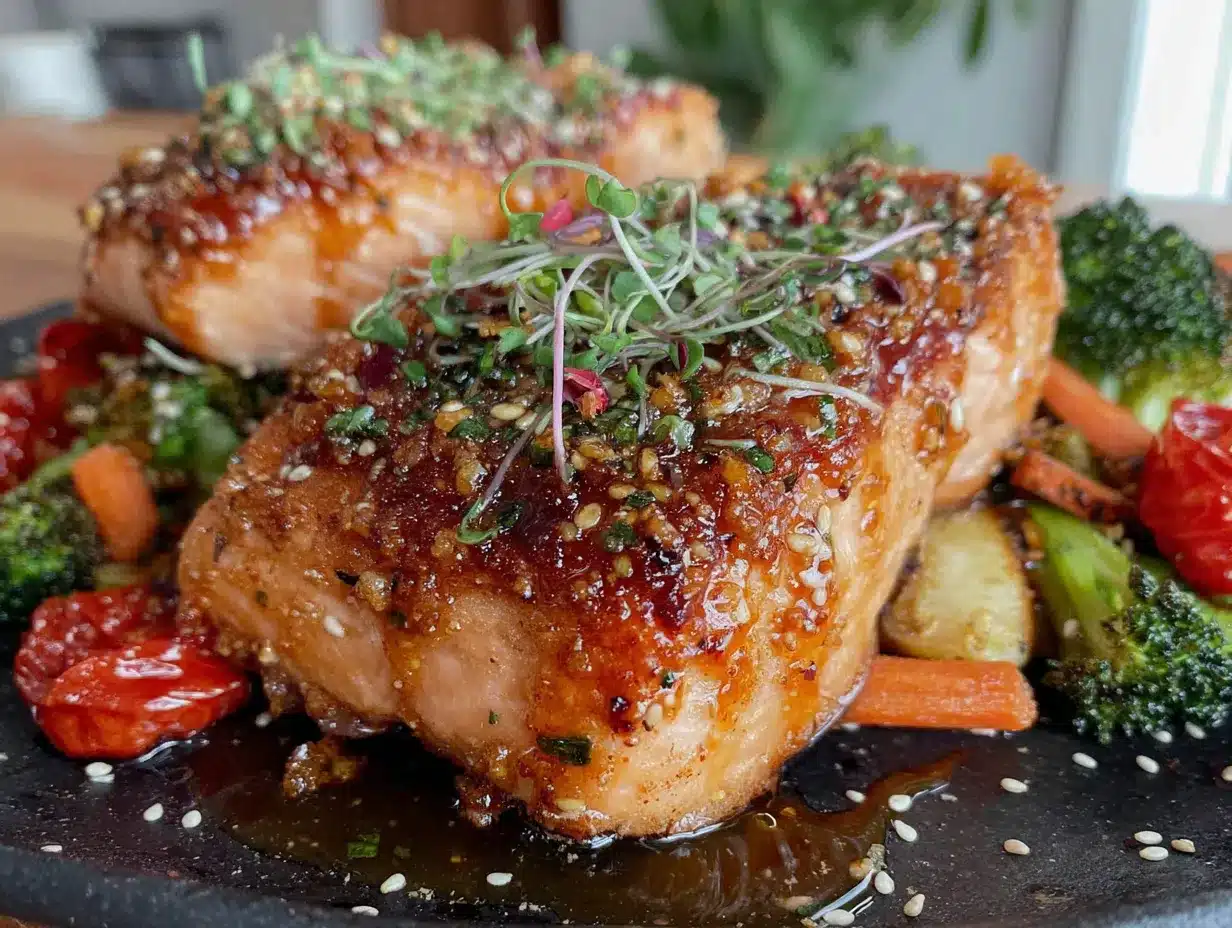
- Broccoli florets (2 cups) — Cut into bite-sized pieces so they cook evenly. The stems are fine to include too — just peel them first for a tender texture.
- Red bell pepper (1 large, cut into 1-inch pieces) — Adds sweetness and color. Any color bell pepper works, but red is the sweetest and roasts beautifully.
- Red onion (1 medium, cut into wedges) — The onion caramelizes in the oven and adds a savory depth that pairs perfectly with the salmon.
- Olive oil (2 tablespoons) — Helps the vegetables roast and caramelize. Avocado oil works too if that’s what you have on hand.
- Salt and black pepper (to taste) — Keep it simple. The glaze will add plenty of flavor, so you don’t need to go overboard with the seasoning here.
I recommend using a brand like Miyoko’s for dairy-free options or San-J for tamari if you need gluten-free alternatives. These small details can make a big difference when you’re cooking for specific dietary needs.
Equipment Needed
You don’t need a professional kitchen to pull off this recipe. Here’s what you’ll want to have on hand:
- Sheet pan (half-sheet size, about 13×18 inches) — A rimmed baking sheet is essential to catch any glaze that drips during roasting. I prefer a heavy-duty aluminum pan that won’t warp in the oven.
- Parchment paper or aluminum foil — Lining the pan makes cleanup almost effortless. Parchment is my preference because nothing sticks to it.
- Small bowl — For whisking together the glaze ingredients.
- Whisk — A small whisk works perfectly for combining the glaze ingredients smoothly.
- Chef’s knife and cutting board — For prepping the vegetables and mincing the garlic.
- Measuring cups and spoons — Precision matters with the glaze ingredients to get the balance right.
- Instant-read thermometer (optional but recommended) — Salmon is perfectly cooked at 145°F in the center. This tool takes the guesswork out of the equation.
If you don’t have a sheet pan, a large baking dish works fine — just make sure the salmon and vegetables have enough room to spread out in a single layer. Overcrowding leads to steaming instead of roasting, and you’ll miss out on those beautiful caramelized edges.
Preparation Method
- Preheat your oven to 425°F (220°C). Position the rack in the center of the oven. While it’s heating up, line your sheet pan with parchment paper or aluminum foil for easy cleanup.
- Prepare the vegetables. Wash and cut the broccoli into florets, slice the bell pepper into 1-inch pieces, and cut the red onion into wedges. Toss them in a large bowl with the olive oil, salt, and pepper until evenly coated. Spread them in a single layer on one half of the prepared sheet pan. Leave the other half empty for the salmon — trust me, you’ll thank me later.
- Start roasting the vegetables. Place the sheet pan in the preheated oven and roast for 10 minutes. This head start ensures the vegetables will be tender and caramelized by the time the salmon is done. While they’re roasting, move on to the glaze.
- Make the honey garlic glaze. In a small bowl, whisk together the honey, soy sauce, minced garlic, rice vinegar, sesame oil, cornstarch, and red pepper flakes (if using). Whisk until the cornstarch is fully dissolved — you don’t want any lumps. The mixture should be smooth and slightly thick.
- Prepare the salmon. Pat the salmon fillets dry with paper towels. This step is important because it helps the glaze adhere better and promotes even cooking. Place the fillets skin-side down on the empty half of the sheet pan, leaving a little space between each one.
- Brush the glaze on the salmon. Using a pastry brush or the back of a spoon, generously coat each salmon fillet with the honey garlic glaze. Reserve about 2 tablespoons of the glaze for later — you’ll want it for serving. Don’t skip this step, because that final drizzle makes a difference.
- Return to the oven. Carefully place the sheet pan back in the oven and roast for 12 to 15 minutes, depending on the thickness of your salmon fillets. The salmon should be opaque in the center and flake easily with a fork. If you’re using an instant-read thermometer, look for 145°F at the thickest part.
- Optional: Broil for extra caramelization. If you want that gorgeous sticky finish, switch the oven to broil for the last 1 to 2 minutes of cooking. Watch it closely — the glaze can burn quickly under the broiler. You’re looking for bubbling, golden-brown edges.
- Rest and serve. Remove the sheet pan from the oven and let it rest for 2 to 3 minutes. This allows the juices to redistribute and makes the salmon even more tender. Drizzle the reserved glaze over the top before serving.
A quick note on timing: If your salmon fillets are on the thinner side (1 inch or less), start checking at the 10-minute mark. Thicker fillets (1.5 inches or more) may need the full 15 minutes. I’ve learned this the hard way after serving a few dry pieces of fish to dinner guests.
Cooking Tips & Techniques
After making this sticky honey garlic salmon with roasted vegetables more times than I can count, I’ve picked up a few tricks that make a real difference.
Pat the salmon dry. This seems like a small step, but it’s actually crucial. Moisture on the surface of the fish will steam instead of caramelize, and you’ll end up with a pale, sad-looking fillet. Take the extra 30 seconds to blot it dry with paper towels before applying the glaze.
Don’t overcrowd the pan. I made this mistake the first time I tried cooking for a crowd. Everything was crammed together, and instead of roasting, the vegetables steamed in their own moisture. Give everything room to breathe. If you’re doubling the recipe, use two sheet pans.
Watch the broiler like a hawk. I cannot stress this enough. The honey in the glaze is basically sugar, and sugar burns fast under high heat. I once got distracted by a phone call and ended up with charcoal salmon. It was a sad dinner. Set a timer and keep an eye on it.
Cut vegetables uniformly. This is one of those tips that sounds fussy but actually matters. If your broccoli florets are wildly different sizes, the small ones will burn while the large ones stay crunchy. Take an extra minute to make them roughly the same size.
Make extra glaze. I always double the glaze recipe and keep half aside before brushing it on the raw salmon. This gives me plenty to drizzle over the finished dish without worrying about cross-contamination from the raw fish. It’s a simple trick that makes the final presentation look restaurant-worthy.
Room temperature salmon cooks more evenly. Take the salmon out of the refrigerator about 15 minutes before you’re ready to cook. This takes the chill off and helps it cook through more uniformly. Cold salmon straight from the fridge tends to cook unevenly, with the outside drying out before the center is done.
Variations & Adaptations
One of the best things about this sticky honey garlic salmon with roasted vegetables is how adaptable it is. Here are some variations I’ve tried and loved.
Vegetable swaps. The broccoli, bell pepper, and red onion combination is great, but don’t feel limited. Asparagus works beautifully and roasts faster, so add it at the same time as the salmon. Green beans, zucchini, and snap peas are also excellent options. Just adjust the roasting time based on the vegetable’s density — heartier vegetables like carrots or sweet potatoes need the full head start, while tender vegetables like zucchini can go in with the salmon.
Spicy version. If you like heat, double the red pepper flakes or add a teaspoon of sriracha to the glaze. I sometimes add a finely chopped Thai chili for an extra kick. The honey balances the heat beautifully, so don’t be afraid to turn up the spice.
Citrus twist. Add the zest of one orange or lemon to the glaze for a bright, fresh note. The citrus cuts through the richness of the salmon and adds a layer of complexity that’s really lovely. I tried this on a whim one Sunday and it’s become one of my favorite variations.
Garlic and herb version. Add a teaspoon of dried thyme or rosemary to the vegetable mix before roasting. The herbs infuse the vegetables with an earthy aroma that pairs beautifully with the honey garlic glaze. Fresh herbs work even better if you have them on hand.
Low-carb adaptation. This recipe is already fairly low-carb, but if you’re watching your sugar intake, substitute the honey with a sugar-free honey alternative or reduce it to 2 tablespoons and add an extra tablespoon of soy sauce. The flavor profile shifts a bit, but it’s still delicious.
Sheet pan salmon bowls. Leftovers (if you have any) are amazing over rice or quinoa with a drizzle of the reserved glaze. I’ve also served this over a bed of greens for a hearty salad that feels indulgent but is actually pretty healthy.
Serving & Storage Suggestions
This sticky honey garlic salmon with roasted vegetables is best served immediately, right off the sheet pan, with the reserved glaze drizzled over the top. The contrast between the warm, flaky salmon and the caramelized vegetables is pure comfort food magic.
For a complete meal, serve it alongside steamed rice, quinoa, or couscous to soak up any extra glaze. A simple side of crusty bread works wonders too — perfect for wiping the plate clean. If you’re feeling fancy, a sprinkle of sesame seeds and sliced green onions on top adds a beautiful finishing touch.
Storing leftovers. Store any leftover salmon and vegetables in an airtight container in the refrigerator for up to 3 days. The salmon will lose some of its crispy edges, but the flavor actually deepens overnight as the glaze continues to penetrate the fish.
Reheating. The best way to reheat this is in a 350°F oven for about 10 minutes. This helps restore some of the caramelization without drying out the salmon. The microwave works in a pinch, but it will steam the fish and make it less flaky. I’ve definitely microwaved leftovers on busy nights, and it’s still good — just not quite as magical as fresh from the oven.
Freezing. You can freeze the cooked salmon and vegetables for up to 2 months. Wrap them tightly in plastic wrap and then foil to prevent freezer burn. Thaw overnight in the refrigerator before reheating. The texture won’t be quite as perfect as fresh, but it’s a great option for meal prep.
The flavors continue to develop as they sit, so don’t be surprised if the leftovers taste even better the next day. The glaze seeps into the salmon and vegetables, creating an even more cohesive dish. I’ve been known to make a double batch just for the leftovers.
Nutritional Information & Benefits
This recipe is packed with nutrients that make it as good for your body as it is for your taste buds. Here’s a rough breakdown per serving (one fillet plus vegetables):
- Calories: Approximately 420-450
- Protein: 38-40 grams
- Carbohydrates: 28-32 grams
- Fat: 18-20 grams
- Fiber: 4-5 grams
- Sugar: 18-20 grams (mostly from honey and vegetables)
Salmon is an excellent source of omega-3 fatty acids, which support heart and brain health. It’s also packed with high-quality protein, vitamin D, and B vitamins. The broccoli and bell peppers add a healthy dose of vitamin C, fiber, and antioxidants. This is one of those meals that feels indulgent but is genuinely good for you.
Dietary considerations: This recipe is naturally dairy-free and can be made gluten-free by using tamari or coconut aminos instead of soy sauce. It’s relatively low in carbohydrates, making it suitable for low-carb and keto-friendly diets with minor adjustments. The main allergens are fish and soy, so keep that in mind when serving guests.
I love that this recipe lets me enjoy a satisfying, flavorful dinner without any guilt. It’s the kind of meal that makes healthy eating feel effortless — and honestly, that’s the best kind of cooking.
Conclusion
This sticky honey garlic salmon with roasted vegetables has earned a permanent spot in my weekly dinner rotation. It’s the recipe I turn to when I want something that feels special but doesn’t require hours in the kitchen. The combination of tender, flaky salmon and caramelized vegetables coated in that sweet and savory glaze is honestly hard to beat.
What I love most about this recipe is how forgiving it is. You can swap in whatever vegetables you have on hand, adjust the spice level to your preference, and it still turns out beautifully every time. It’s the kind of meal that builds confidence in the kitchen, whether you’re a seasoned cook or someone who’s still figuring out how to boil water without burning it.
I’d love to hear how this turns out for you. Did you try any fun variations? Did your family go back for seconds? Drop a comment below and let me know — I read every single one and I love hearing about your kitchen adventures. And if you enjoyed this recipe, share it with a friend who needs a reliable weeknight dinner in their back pocket. Happy cooking!
Frequently Asked Questions
Can I use frozen salmon for this recipe?
Yes, you can use frozen salmon, but make sure to thaw it completely in the refrigerator overnight before cooking. Pat it dry thoroughly to remove excess moisture — frozen salmon tends to release more water as it thaws, which can interfere with the glaze. Avoid cooking it from frozen, as it will cook unevenly and likely end up dry on the outside and raw in the center.
How do I know when the salmon is fully cooked?
The easiest way to tell is with an instant-read thermometer — salmon is done at 145°F in the thickest part. If you don’t have a thermometer, look for the salmon to turn opaque and flake easily when you gently press it with a fork. The flesh should separate into clean flakes, not look translucent or raw in the center.
Can I make the glaze ahead of time?
Absolutely. You can whisk together the glaze ingredients up to 3 days in advance and store it in an airtight container in the refrigerator. Give it a good stir before using, as the cornstarch may settle at the bottom. This is a great time-saver if you’re meal prepping for the week.
What if I don’t have a sheet pan?
No problem! A large baking dish or even a cast iron skillet works perfectly. Just make sure the salmon and vegetables have enough room to spread out in a single layer. If they’re crowded, they’ll steam instead of roast, and you’ll miss out on that beautiful caramelization. Use two smaller pans if needed.
Can I make this recipe with other types of fish?
Yes, this glaze works wonderfully with other firm fish like cod, halibut, or sea bass. Adjust the cooking time based on the thickness of the fillet — thinner fish will cook faster. I’ve even used this glaze on chicken thighs with great results, though the cooking time will be longer. The honey garlic combination is pretty versatile.
Pin This Recipe!
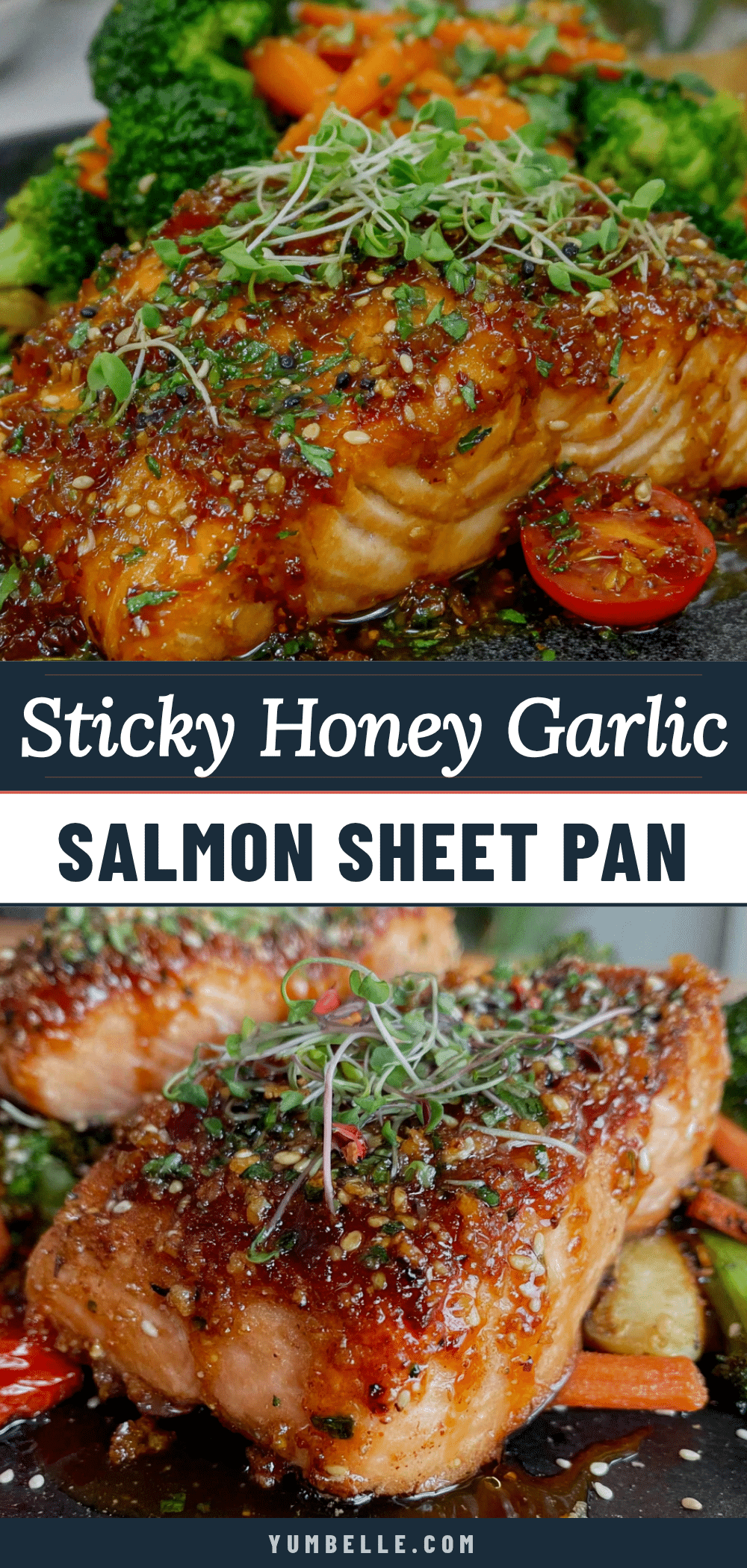
Best Sticky Honey Garlic Salmon with Roasted Vegetables
A quick and easy one-pan meal featuring perfectly flaky salmon coated in a sweet and savory honey garlic glaze, roasted alongside caramelized broccoli, bell peppers, and red onions. Ready in about 35 minutes with minimal cleanup, this crowd-pleasing recipe is perfect for busy weeknights.
- Prep Time: 10 minutes
- Cook Time: 25 minutes
- Total Time: 35 minutes
- Yield: 4 servings 1x
- Category: Main Course
- Cuisine: Asian-inspired
Ingredients
- 4 salmon fillets (about 6 ounces each), skin on
- 1/3 cup honey
- 1/4 cup soy sauce (or tamari/coconut aminos for gluten-free)
- 4 cloves garlic, minced
- 2 tablespoons rice vinegar (or apple cider vinegar)
- 1 tablespoon toasted sesame oil
- 1 teaspoon cornstarch
- 1/2 teaspoon red pepper flakes (optional, or to taste)
- 2 cups broccoli florets, cut into bite-sized pieces
- 1 large red bell pepper, cut into 1-inch pieces
- 1 medium red onion, cut into wedges
- 2 tablespoons olive oil
- Salt and black pepper to taste
Instructions
- Preheat oven to 425°F (220°C). Line a half-sheet pan (13×18 inches) with parchment paper or aluminum foil.
- In a large bowl, toss broccoli florets, bell pepper pieces, and red onion wedges with olive oil, salt, and pepper until evenly coated. Spread vegetables in a single layer on one half of the prepared sheet pan, leaving the other half empty for the salmon.
- Roast vegetables for 10 minutes.
- Meanwhile, in a small bowl, whisk together honey, soy sauce, minced garlic, rice vinegar, sesame oil, cornstarch, and red pepper flakes (if using) until cornstarch is fully dissolved. Set aside about 2 tablespoons of the glaze for serving.
- Pat salmon fillets dry with paper towels. Place them skin-side down on the empty half of the sheet pan, spacing them slightly apart.
- Brush the remaining glaze generously over each salmon fillet.
- Return the sheet pan to the oven and roast for 12 to 15 minutes, until salmon is opaque and flakes easily with a fork (internal temperature of 145°F at the thickest part). For extra caramelization, switch to broil for the last 1 to 2 minutes, watching closely to prevent burning.
- Remove from oven and let rest for 2 to 3 minutes. Drizzle reserved glaze over the top before serving.
Notes
Pat salmon dry for better caramelization. Don’t overcrowd the pan; use two sheet pans if doubling. Watch the broiler closely to prevent burning. For even cooking, let salmon sit at room temperature for 15 minutes before roasting. Cut vegetables uniformly for consistent roasting. Make extra glaze to drizzle over the finished dish.
Nutrition
- Serving Size: 1 fillet plus vegeta
- Calories: 435
- Sugar: 19
- Sodium: 780
- Fat: 19
- Saturated Fat: 3
- Carbohydrates: 30
- Fiber: 5
- Protein: 39
Keywords: honey garlic salmon, sheet pan salmon, roasted vegetables, one-pan meal, quick dinner, healthy salmon recipe, sticky salmon, weeknight dinner