Love this? Save it for later!
Share the inspiration with your friends
Introduction
“You have to try this,” said my cab driver last summer as we sat stuck in traffic near Bangkok’s bustling Chatuchak Market. I wasn’t expecting a food tip from a stranger navigating the chaos of scooters and tuk-tuks, but there I was, scribbling down a recipe on a crumpled receipt while sticky rice steamed in my mind. That’s how my journey with Easy Creamy Thai Mango Sticky Rice with Coconut Cream began — a humble street dessert that quickly became my obsession.
The first time I tasted this dish was at a tiny stall tucked between colorful textiles and fragrant spice vendors. The way the silky coconut cream soaked into the sweet, chewy sticky rice, paired with perfectly ripe mango slices, was honestly unforgettable. I tried to recreate it later in my tiny apartment kitchen, but of course, things got a little messy. (I spilled half the coconut cream down the counter, don’t ask.)
Maybe you’ve been there — craving something exotic and comforting, but intimidated by the idea of making it yourself. This recipe cuts through that worry with simple ingredients and straightforward steps, delivering that luscious, creamy texture and tropical flavor you remember from Thailand. Let me tell you, this isn’t just any sticky rice; it’s the kind of dessert that makes you close your eyes and smile after the first bite.
Why You’ll Love This Recipe
After testing countless variations and tweaking every detail, this Easy Creamy Thai Mango Sticky Rice with Coconut Cream recipe stands out for so many reasons:
- Quick & Easy: Ready in under 45 minutes, perfect for those sudden sweet tooth moments or last-minute dinner parties.
- Simple Ingredients: No exotic shopping spree needed — sticky rice, coconut milk, sugar, and mango are all you need (plus a pinch of salt).
- Perfect for Summer: Light, refreshing, and naturally gluten-free, this dessert is ideal for warm-weather gatherings or a tropical-themed meal.
- Crowd-Pleaser: Kids, adults, even picky eaters love it — it’s a guaranteed hit whether you’re serving friends or family.
- Unbelievably Delicious: The creamy coconut cream balances the sweetness of mango and sticky rice flawlessly, making each spoonful a little moment of happiness.
What makes this recipe different? I’ve found that soaking the sticky rice overnight and gently simmering the coconut cream with a touch of salt and pandan leaf really brings out that authentic Thai vibe. Plus, blending in just the right amount of sugar keeps it perfectly balanced — not too sweet, never bland. Honestly, this recipe has become a staple in my kitchen, and I’m betting it will be in yours too.
What Ingredients You Will Need
This recipe uses simple, wholesome ingredients to deliver bold flavor and satisfying texture without the fuss. Most are pantry staples or easy to find at your local market.
- Glutinous (Sticky) Rice: 1 cup (200 g), soaked overnight (this is the star for that chewy texture)
- Coconut Milk: 1 ½ cups (360 ml), full-fat for richness (I prefer Thai Kitchen brand for authenticity)
- Granulated Sugar: ⅓ cup (65 g), adjust to taste
- Salt: ½ teaspoon, balances the sweetness
- Ripe Mangoes: 2 large (about 500 g), peeled and sliced — Ataulfo or Nam Dok Mai varieties work best for sweetness and texture
- Pandan Leaf: 1 stalk (optional but recommended for fragrance; you can find it frozen or fresh at Asian markets)
- Water: For steaming the rice
- Toasted Sesame Seeds or Mung Beans: Optional garnish for crunch
Ingredient tips: Use fresh, ripe mango for the best flavor; underripe ones won’t have the same natural sweetness. If you can’t find pandan leaves, a few drops of vanilla extract can substitute, though it won’t be quite the same. For a dairy-free twist, this recipe is naturally vegan as is, so no worries there!
Equipment Needed
- Steamer or Bamboo Steamer: Essential for cooking sticky rice evenly without it turning mushy. If you don’t have one, a metal steaming basket over a pot works too.
- Mixing Bowls: For soaking rice and mixing coconut cream sauce.
- Saucepan: To gently heat the coconut milk and sugar mixture.
- Measuring Cups and Spoons: Accuracy helps with consistent sweetness and texture.
- Wooden Spoon or Spatula: For stirring the coconut cream without scratching your pan.
- Knife and Cutting Board: For peeling and slicing mangoes.
If you’re on a budget, a simple metal sieve over a pot can substitute for a steamer. I’ve also found that using a non-stick saucepan helps prevent the coconut milk from scorching, which can happen if you’re rushing or get distracted mid-cooking (been there!).
Preparation Method
- Soak the Sticky Rice: Rinse 1 cup (200 g) of glutinous rice under cold water until the water runs clear. Soak it in fresh water overnight or at least 6 hours. This step is crucial to get that sticky, chewy texture.
- Prepare the Steamer: Fill the bottom of your steamer with water and bring it to a gentle boil. Line the steamer basket with a clean cheesecloth or a thin kitchen towel to prevent rice from falling through.
- Steam the Rice: Drain the soaked rice and spread it evenly on the lined steamer basket. Cover and steam for 20-25 minutes. Halfway through, gently fluff the rice with a fork or spatula to ensure even cooking.
- Make the Coconut Sauce: While the rice cooks, combine 1 ½ cups (360 ml) coconut milk, ⅓ cup (65 g) sugar, ½ teaspoon salt, and a pandan leaf in a saucepan. Warm over low heat, stirring occasionally until sugar dissolves. Do not boil — just heat gently for about 5-7 minutes to infuse flavors.
- Mix the Coconut Cream with Rice: Once the rice is tender (it should be sticky but not mushy), transfer it to a large bowl. Remove the pandan leaf from the coconut sauce, then pour about ¾ of the hot coconut mixture over the rice. Stir gently but thoroughly to combine. Cover and let it sit for 15-20 minutes to absorb the sauce.
- Prepare the Mangoes: While waiting, peel and slice 2 ripe mangoes into thin, even pieces. Set aside.
- Make the Drizzle: Warm the remaining coconut sauce on low heat until thickened slightly (about 5 minutes). This will be your luscious topping.
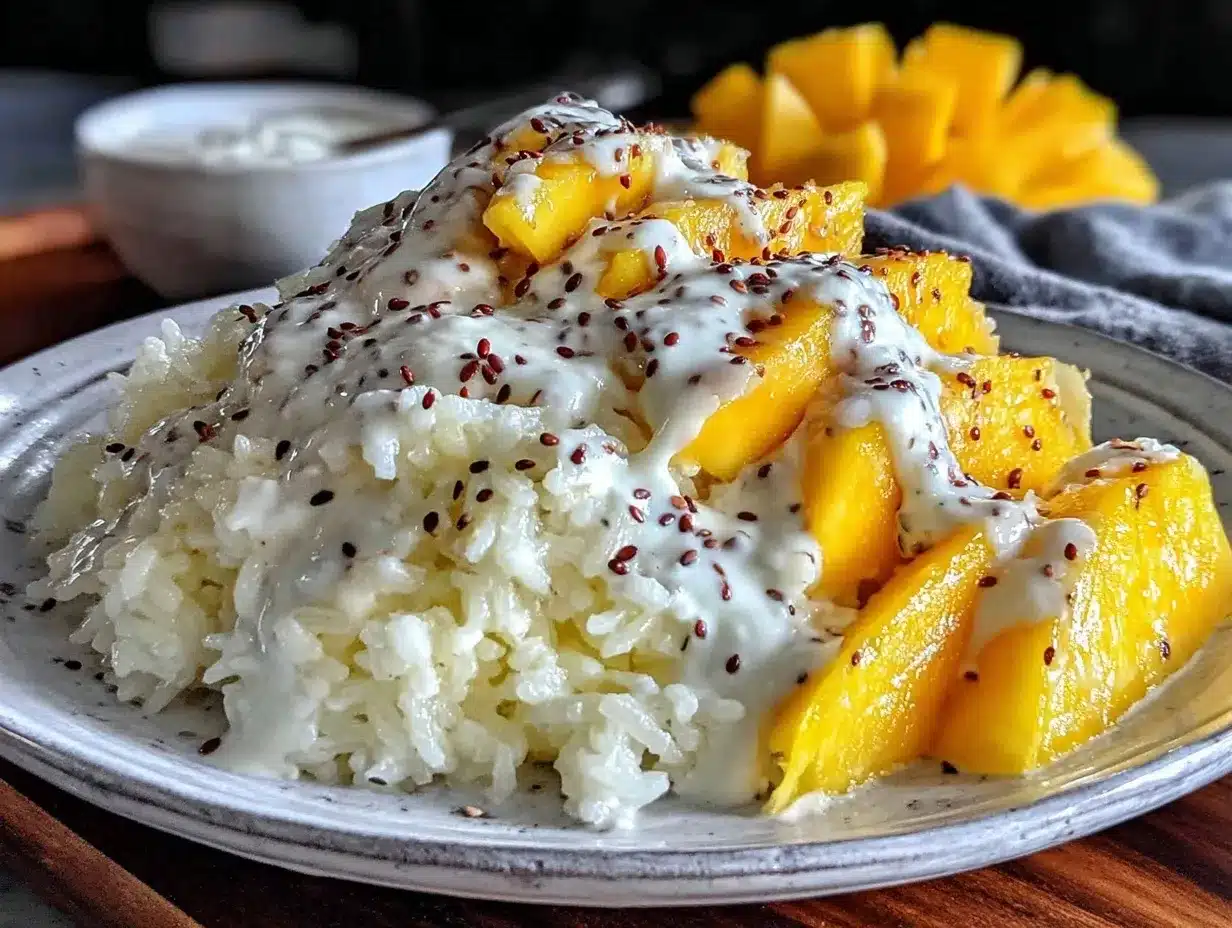
- Assemble and Serve: Spoon sticky rice onto plates, arrange mango slices alongside, and drizzle with the thickened coconut cream. Sprinkle with toasted sesame seeds or crispy mung beans for a delightful crunch if you like.
Pro tip: If your coconut milk separates or looks grainy, just whisk it vigorously before using — it smooths out easily. Also, remember to keep an eye on the water level in your steamer to avoid drying out the rice.
Cooking Tips & Techniques
Making perfect sticky rice can feel a little intimidating at first, but a few tricks make all the difference:
- Soaking is key: The longer you soak the rice, the softer and stickier it will become. Don’t skip this step or rush it.
- Gentle steaming: Avoid boiling the rice directly — steaming preserves the texture and prevents it from becoming gluey.
- Temperature control: When heating coconut milk, always keep it low and slow. Boiling can cause it to curdle or separate, ruining that creamy texture.
- Patience with absorption: Let the rice rest with the coconut sauce so it soaks in fully. Rushing this step means missing out on that rich flavor.
- Fresh mangoes matter: Overripe mangoes turn mushy and lose that fresh bite; underripe ones are too tart. Look for a slight give when you press them gently.
Honestly, my first few attempts were a bit of a mess — I overcooked the rice, and one time I forgot the salt in the coconut sauce. But once I dialed in these details, every bite felt like a little vacation.
Variations & Adaptations
Feel free to tailor this Easy Creamy Thai Mango Sticky Rice with Coconut Cream recipe to your taste or dietary needs:
- Vegan & dairy-free: This recipe is naturally dairy-free, but for nutty flavor, try adding a sprinkle of toasted shredded coconut on top.
- Fruit swaps: In winter months, swap mango for fresh kiwi, ripe papaya, or even strawberries for a different twist.
- Brown sticky rice: For a nuttier, healthier option, try brown glutinous rice — just soak longer and steam a bit extra.
- Infused coconut cream: Add a small piece of ginger or lemongrass to the coconut milk while warming for a subtle aromatic note.
- Personal favorite: I once added a pinch of toasted coconut flakes and a drizzle of palm sugar syrup for a caramel-like finish. It was a hit at a summer potluck!
Serving & Storage Suggestions
Serve this dish slightly warm or at room temperature for the best texture — the sticky rice is more tender, and the mango shines when it’s not too cold. I like to plate it on a simple white dish so the vibrant mango color really pops.
This dessert pairs beautifully with a light jasmine tea or a refreshing iced lemongrass drink. If you want to add a little something savory, try it alongside grilled chicken satay or a fresh cucumber salad.
Store any leftovers in an airtight container in the refrigerator for up to 2 days. When reheating, steam gently or microwave with a splash of coconut milk to keep the rice moist. Keep mango slices separate and add fresh when serving to avoid mushiness.
Flavor actually deepens with a little resting time — the coconut cream seeps deeper into the rice, making it even more luscious the next day.
Nutritional Information & Benefits
This recipe offers a naturally gluten-free, vegetarian, and dairy-free dessert option. One serving (about 1 cup sticky rice with mango and coconut cream) contains approximately:
| Nutrient | Amount |
|---|---|
| Calories | 350-400 kcal |
| Carbohydrates | 60-65 g |
| Fat | 10-12 g (mostly from coconut milk) |
| Protein | 3-4 g |
| Fiber | 2-3 g |
Coconut milk is rich in medium-chain triglycerides (MCTs), which some studies suggest may support energy and metabolism. Mangoes add a boost of vitamin C and antioxidants. This dessert satisfies sweet cravings with natural sugars and wholesome ingredients rather than processed alternatives.
Conclusion
If you’re looking for a dessert that’s both simple and impressively flavorful, this Easy Creamy Thai Mango Sticky Rice with Coconut Cream recipe fits the bill perfectly. It brings a little tropical sunshine to your kitchen and tastes like a special treat, even on an ordinary day.
I love this recipe because it’s approachable yet authentic — a sweet reminder of a moment in Bangkok that I keep coming back to, over and over. I hope it brings you the same joy and warmth.
Give it a try, tweak it to your liking, and please share your experiences or favorite twists in the comments. Cooking should be fun, after all, and this recipe makes it deliciously easy.
Frequently Asked Questions
Can I use regular jasmine rice instead of sticky rice?
Regular jasmine rice won’t give the same chewy texture that sticky rice provides. It’s best to use glutinous rice for this recipe.
How do I know when the sticky rice is cooked perfectly?
The rice should be tender but still hold its shape, sticky enough to clump together but not mushy or watery.
Can I prepare the sticky rice ahead of time?
You can cook the sticky rice a few hours ahead and keep it covered at room temperature. Just reheat gently with a bit of coconut milk before serving.
Is this recipe gluten-free?
Yes! All ingredients used here are naturally gluten-free.
What can I use if I can’t find pandan leaves?
If pandan leaves aren’t available, you can omit them or add a drop of vanilla extract to the coconut milk for a subtle flavor.
Pin This Recipe!
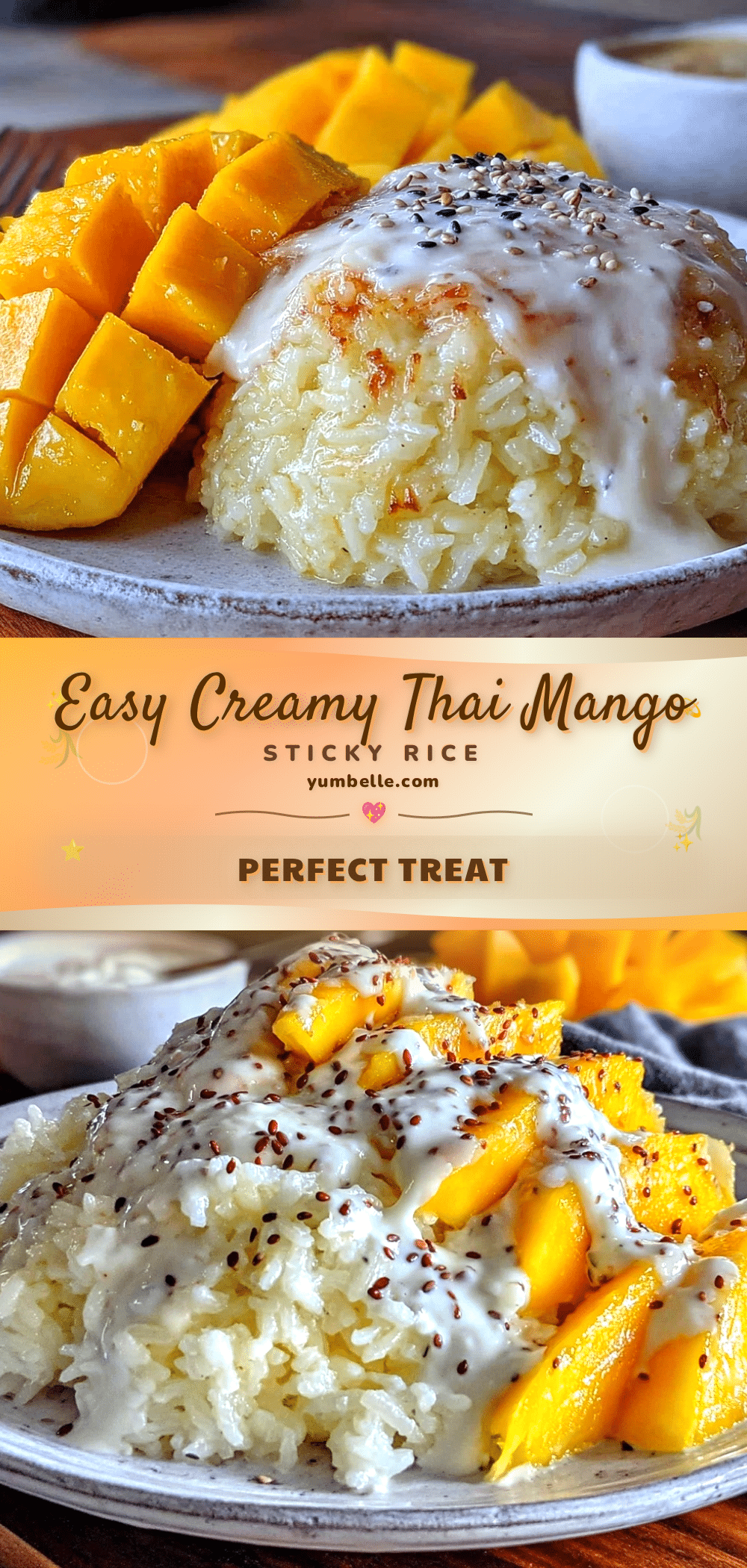
Easy Creamy Thai Mango Sticky Rice Recipe with Coconut Cream

A simple and authentic Thai dessert featuring chewy glutinous rice soaked in creamy coconut milk, paired with ripe mango slices and a luscious coconut cream drizzle.
- Prep Time: 8 hours (including soaking)
- Cook Time: 30 minutes
- Total Time: 8 hours 30 minutes
- Yield: 4 servings 1x
- Category: Dessert
- Cuisine: Thai
Ingredients
- 1 cup (200 g) glutinous (sticky) rice, soaked overnight
- 1 ½ cups (360 ml) full-fat coconut milk
- ⅓ cup (65 g) granulated sugar, adjust to taste
- ½ teaspoon salt
- 2 large ripe mangoes (about 500 g), peeled and sliced
- 1 pandan leaf stalk (optional)
- Water for steaming the rice
- Toasted sesame seeds or mung beans (optional garnish)
Instructions
- Rinse 1 cup (200 g) of glutinous rice under cold water until the water runs clear. Soak it in fresh water overnight or at least 6 hours.
- Fill the bottom of your steamer with water and bring it to a gentle boil. Line the steamer basket with a clean cheesecloth or a thin kitchen towel.
- Drain the soaked rice and spread it evenly on the lined steamer basket. Cover and steam for 20-25 minutes, fluffing halfway through.
- Combine 1 ½ cups (360 ml) coconut milk, ⅓ cup (65 g) sugar, ½ teaspoon salt, and a pandan leaf in a saucepan. Warm over low heat for 5-7 minutes until sugar dissolves, do not boil.
- Transfer the steamed rice to a large bowl. Remove pandan leaf from coconut sauce, pour about ¾ of the hot coconut mixture over the rice, stir gently, cover and let sit for 15-20 minutes.
- Peel and slice 2 ripe mangoes into thin pieces and set aside.
- Warm the remaining coconut sauce on low heat until slightly thickened, about 5 minutes.
- Spoon sticky rice onto plates, arrange mango slices alongside, drizzle with thickened coconut cream, and sprinkle with toasted sesame seeds or mung beans if desired.
Notes
Soaking the sticky rice overnight is crucial for the perfect chewy texture. Use fresh ripe mangoes for best flavor. Keep the heat low when warming coconut milk to avoid curdling. Let the rice absorb the coconut sauce fully for rich flavor. If pandan leaf is unavailable, vanilla extract can be used as a substitute.
Nutrition
- Serving Size: About 1 cup sticky r
- Calories: 375
- Sugar: 30
- Sodium: 200
- Fat: 11
- Saturated Fat: 9
- Carbohydrates: 62
- Fiber: 2.5
- Protein: 3.5
Keywords: Thai mango sticky rice, coconut cream dessert, glutinous rice recipe, Thai dessert, mango sticky rice, gluten-free dessert, vegan dessert