Love this? Save it for later!
Share the inspiration with your friends
“You know that moment when you slice into a watermelon, expecting juicy sweetness, only to be met with a bland, watery mess? Yeah, I’ve been there more times than I care to admit.” Last summer, I found myself standing in the bustling aisle of my local farmers market, eyeing the towering stacks of watermelons like I was about to solve a mystery. The vendor, a cheerful woman named Marcy, noticed my hesitation and casually dropped a nugget of wisdom that completely changed my watermelon game.
Turns out, picking the perfect watermelon isn’t just luck—or a guessing game based on size or color. There are subtle signs, little tricks that anyone can learn to spot the sweetest, juiciest watermelon every single time. I remember trying Marcy’s tips that afternoon, cutting into the melon right there on a park bench, the juice dripping down my chin, and thinking, “Why didn’t someone tell me this before?”
Honestly, it’s become a bit of a summer ritual now: scanning watermelons with a practiced eye, hearing that satisfying hollow thump when you tap the rind, and enjoying that first bite that’s cool, crisp, and bursting with flavor. Maybe you’ve been there too—tempted by a watermelon that looked great on the outside but turned out disappointing.
So, let me tell you about the five easy signs that make all the difference. These tips aren’t just theory—they come straight from a market conversation, a few trial-and-error moments, and a lot of happy watermelon summers. By the end of this post, you’ll be confidently choosing melons that make your taste buds do a little happy dance.
Why You’ll Love This Recipe
Picking the perfect juicy watermelon every time has honestly changed how I enjoy this classic summer fruit. No more second-guessing or disappointing slices—just delicious, sweet bites ready whenever you are. Here’s why these five easy signs are a game-changer:
- Quick & Easy: Learning these tips takes just minutes at the store or market, saving you from wasting money on a dud.
- Simple Ingredients: Since it’s just watermelon, knowing how to pick the best one means you can enjoy nature’s candy in its purest form.
- Perfect for Summer Gatherings: Whether it’s a picnic, barbecue, or a casual snack, a ripe watermelon is always a crowd-pleaser.
- Crowd-Pleaser: Kids and adults alike love a watermelon that’s perfectly sweet and juicy—no one wants a bland slice.
- Unbelievably Delicious: These signs help you find melons with that ideal balance of sugar and freshness, making every bite a little celebration.
This isn’t just another list of random tips; it’s based on real market wisdom and my own sometimes messy, always honest attempts to find a watermelon that truly delights. The secret lies in understanding the fruit’s story—the color, weight, texture, and even the shape all tell you something. And trust me, once you get the hang of it, you’ll wonder how you ever picked watermelons any other way.
What Ingredients You Will Need
Well, the main star here is obviously the watermelon itself! But to help you identify the perfect one, it’s important to understand the key features that make a watermelon sweet and juicy. These features act like ingredients in your selection process:
- Watermelon – Look for a medium to large-sized fruit that feels heavy for its size (indicating high water content).
- Field Spot (Yellow Patch) – This creamy yellow or orange spot on the rind shows where the melon rested on the ground and ripened naturally in the sun.
- Rind Color – The watermelon’s rind should be a deep green with contrasting dark stripes; dullness can indicate overripeness.
- Shape – Round or oval, but uniform shape means consistent ripening; odd bumps or irregular shapes might mean uneven growth.
- Surface Texture – Look for a slightly rough or webbed texture; this often means more sugar development inside.
Since watermelon is a seasonal fruit, these selection tips help you avoid disappointment no matter when you shop. If you’re at a farmers market, sometimes you’ll find heirloom varieties with unique colors—don’t be afraid to try those once you know the signs for ripeness and sweetness.
And if you’re curious about substitutions or alternatives, a ripe cantaloupe or honeydew melon can also offer refreshing sweetness, but the cues for ripeness differ quite a bit. For watermelon, these five signs are your best friends.
Equipment Needed
When it comes to enjoying your perfect juicy watermelon, the equipment is pretty straightforward—but having the right tools can make a big difference in the experience.
- Sharp Chef’s Knife: Essential for slicing through that thick rind cleanly without squashing the fruit.
- Cutting Board: A sturdy, large cutting board gives you plenty of space to work and keeps your kitchen mess-free.
- Melon Baller (Optional): Great for scooping fun, bite-sized pieces if you want a pretty presentation or easy snacking.
- Large Bowl or Platter: For serving your watermelon slices or chunks, especially if you’re sharing with guests.
If you don’t have a melon baller, no worries! Just cutting into wedges or cubes works perfectly fine. I’ve personally tried everything from serrated knives (too messy) to electric slicers (overkill for most kitchens), but a good sharp chef’s knife and a firm cutting board are all you really need. Oh, and don’t forget a towel nearby—watermelon juice can get slippery!
Preparation Method
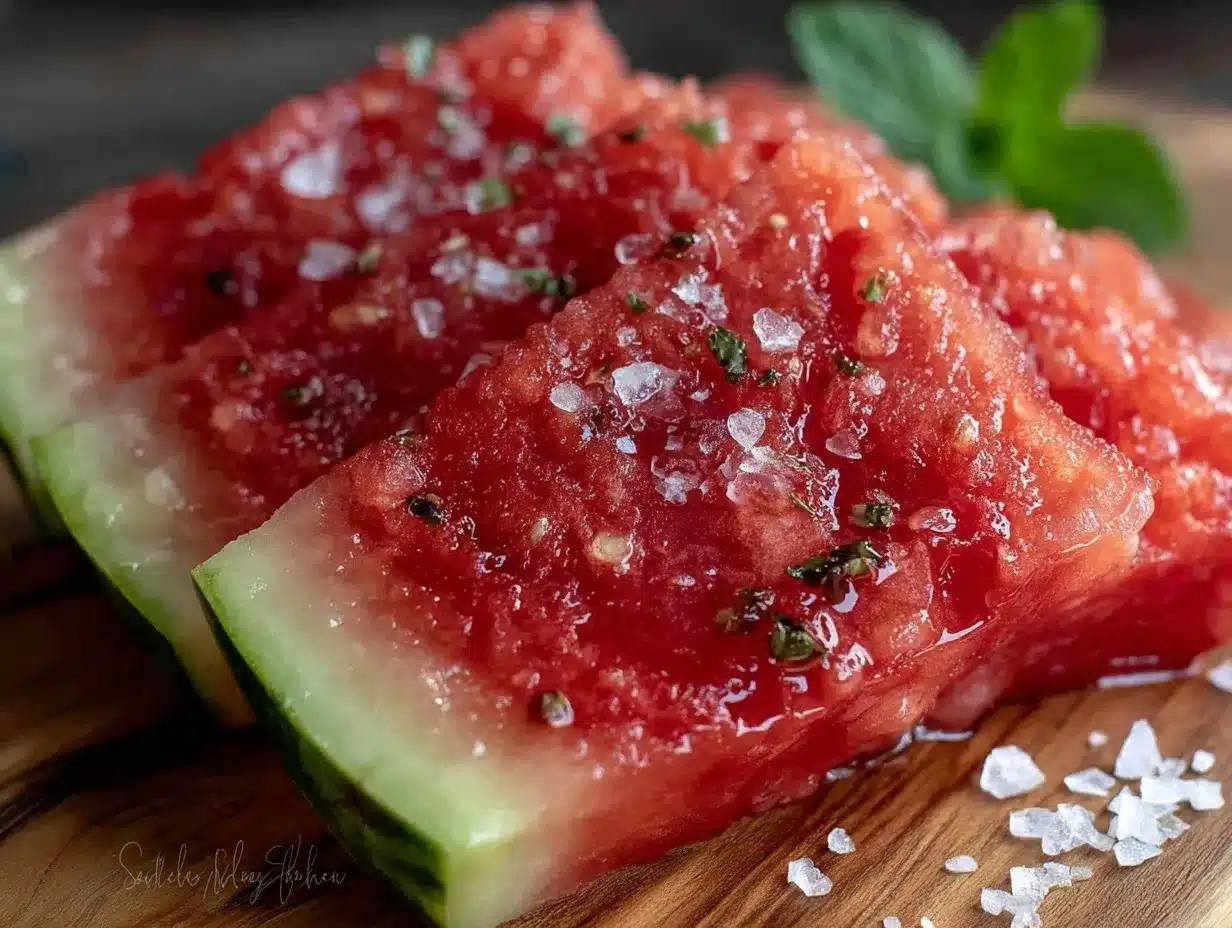
- Choose Your Watermelon: Start by using the five easy signs to pick out the perfect watermelon: check for a creamy yellow field spot, a uniform shape, a deep green rind with contrasting stripes, a slightly rough texture, and a heavy weight for its size.
- Wash the Rind: Rinse the outside of the watermelon under cool running water. This helps remove any dirt or bacteria that might transfer to the flesh when cutting.
- Slice Off Both Ends: Place the watermelon on your cutting board and carefully slice about ½ inch (1.3 cm) off each end to create flat surfaces. This gives you a stable base for cutting.
- Cut the Watermelon in Half: Stand the melon upright on one of the flat ends and slice straight down the middle to create two halves.
- Quarter the Halves: Lay each half flat-side down and slice into two equal quarters. This makes handling easier and prepping bite-sized pieces simpler.
- Remove the Rind: Take a quarter piece and carefully run your knife between the red flesh and the green rind, cutting away the rind. Aim to keep most of the juicy flesh intact. Repeat for all quarters.
- Cut Into Desired Shapes: Slice the watermelon flesh into wedges, cubes, or use a melon baller for fun spheres. The size is up to you—just remember bigger pieces hold juice better, but smaller ones are easier to snack on.
- Serve Immediately or Chill: Watermelon is best enjoyed fresh, but you can refrigerate the cut pieces in an airtight container for up to 2 days. Chill for at least 30 minutes before serving for that refreshing coolness.
Pro tip: When slicing, use a gentle sawing motion instead of pressing down hard to keep the fruit from getting mushy. Also, if you hear a hollow sound when tapping the rind, that usually means the watermelon is ripe and ready to enjoy.
Cooking Tips & Techniques
Okay, so watermelon isn’t exactly something you “cook,” but treating it right during prep makes all the difference. Here are a few tips I’ve picked up from my own watermelon adventures:
- Tap Test: Before buying, gently tap the watermelon with your knuckles. A ripe melon often has a deep, hollow sound, while a dull thud can mean underripe or overripe.
- Weight Check: Pick up a few melons of similar size; the heavier one usually has more water content and juiciness.
- Look for the Field Spot: That creamy yellow patch isn’t just a mark—it’s a sweet spot where the melon soaked up sun and ripened properly.
- Keep It Cool: Watermelon tastes best chilled but avoid freezing it whole or uncut as the texture will get mushy.
- Handle With Care: When cutting, a sharp knife and steady hand prevent juice loss and messy cleanup.
One time, I accidentally dropped a watermelon wedge on the floor mid-prep (classic kitchen chaos), and I realized the juice had already started to seep out—it reminded me how important it is to cut just before serving for maximum freshness. Also, if you’re prepping watermelon for a party, slice it a few hours ahead but keep it covered tightly to lock in moisture.
Variations & Adaptations
While the classic juicy watermelon is amazing on its own, mixing things up can bring a whole new level of fun and flavor to your summer fruit experience. Here are some ideas I’ve tried or heard about:
- Watermelon Salad: Toss juicy watermelon cubes with fresh mint, feta cheese, and a drizzle of balsamic glaze. It’s a refreshing twist perfect for potlucks.
- Grilled Watermelon: Lightly brush watermelon slices with olive oil and grill for a few minutes on each side. The smoky char adds depth and sweetness.
- Spicy Kick: Sprinkle watermelon cubes with chili powder and a squeeze of lime juice for a tantalizing sweet and spicy combo.
- Frozen Treats: Puree watermelon and freeze in popsicle molds for a naturally sweet, hydrating summer snack.
- Juice or Smoothie: Blend watermelon with fresh lime juice and a handful of mint for a cooling drink. Add cucumber for extra hydration.
For dietary considerations, watermelon is naturally gluten-free and vegan, making it a versatile fruit for many. If you want to reduce sugar intake, watermelon’s natural sugars are balanced with high water content, so it’s a guilt-free indulgence. I once made a watermelon and cucumber salad with a friend who prefers low-carb options, and it was a hit—refreshing and light without feeling heavy.
Serving & Storage Suggestions
Watermelon is best enjoyed chilled, so refrigerate your cut pieces for at least 30 minutes before serving. I like to serve mine on a large platter, garnished with fresh mint leaves for a pop of color and aroma. If you’re bringing watermelon to an outdoor gathering, pack it in a cooler with ice packs to keep it fresh.
Leftover watermelon should be stored in an airtight container in the refrigerator and consumed within 2 days for best texture and flavor. When reheating watermelon isn’t really a thing, but you can add leftover cubes to smoothies or cold fruit salads to avoid waste.
One neat trick: watermelon flavors actually deepen a bit if you let it sit covered in the fridge overnight, so prepping a day in advance can sometimes make it taste even sweeter. Just be sure to keep it sealed to prevent it from absorbing other fridge odors.
Nutritional Information & Benefits
Watermelon is a low-calorie fruit packed with hydration—about 92% water—making it perfect for hot days. A typical serving (1 cup or 152 grams) provides roughly:
- 46 calories
- 11.6 grams of natural sugars
- 0.9 grams of protein
- 0.2 grams of fat
- 1 gram of fiber
- Vitamins C and A, plus antioxidants like lycopene
These nutrients support immune health, skin vitality, and heart health. Lycopene, in particular, is known for its antioxidant properties. Plus, watermelon is naturally gluten-free, dairy-free, and vegan-friendly—great news for various dietary needs.
From my experience, enjoying watermelon regularly feels like a simple, delicious way to add hydration and nutrients without any fuss. It’s comfort food that’s also good for you—win-win!
Conclusion
Choosing the perfect juicy watermelon every time doesn’t have to be a guessing game. With these five easy signs, you can shop confidently and enjoy sweet, refreshing slices all summer long. I love this because it turns a simple fruit into a little moment of joy—no more disappointment or wasted slices.
Feel free to experiment with the variations and serving ideas I shared, or just enjoy it plain and cold after a long day. Remember, the best watermelon is the one you picked with a little care and a little knowledge. If you try these tips, let me know how it goes—and share your favorite ways to enjoy watermelon, too!
Here’s to juicy bites and sweet summer memories!
FAQs
How can I tell if a watermelon is ripe?
Look for a creamy yellow field spot, a deep hollow sound when tapped, a heavy weight for its size, and a uniform shape with contrasting dark green stripes.
Why does my watermelon sometimes taste bland?
It might be underripe, overripe, or not have developed enough sugar. Using the five signs for picking watermelons helps avoid this issue.
Can I store cut watermelon in the fridge?
Yes, keep cut watermelon in an airtight container and consume within 2 days for best freshness and flavor.
Is watermelon healthy for everyone?
Generally yes—it’s hydrating, low in calories, and packed with vitamins. However, those monitoring sugar intake should eat it in moderation due to natural sugars.
What’s the best way to serve watermelon?
Serve chilled, either sliced, cubed, or as part of salads and refreshing beverages. Adding fresh herbs or a sprinkle of chili can add exciting flavor twists.
Pin This Recipe!
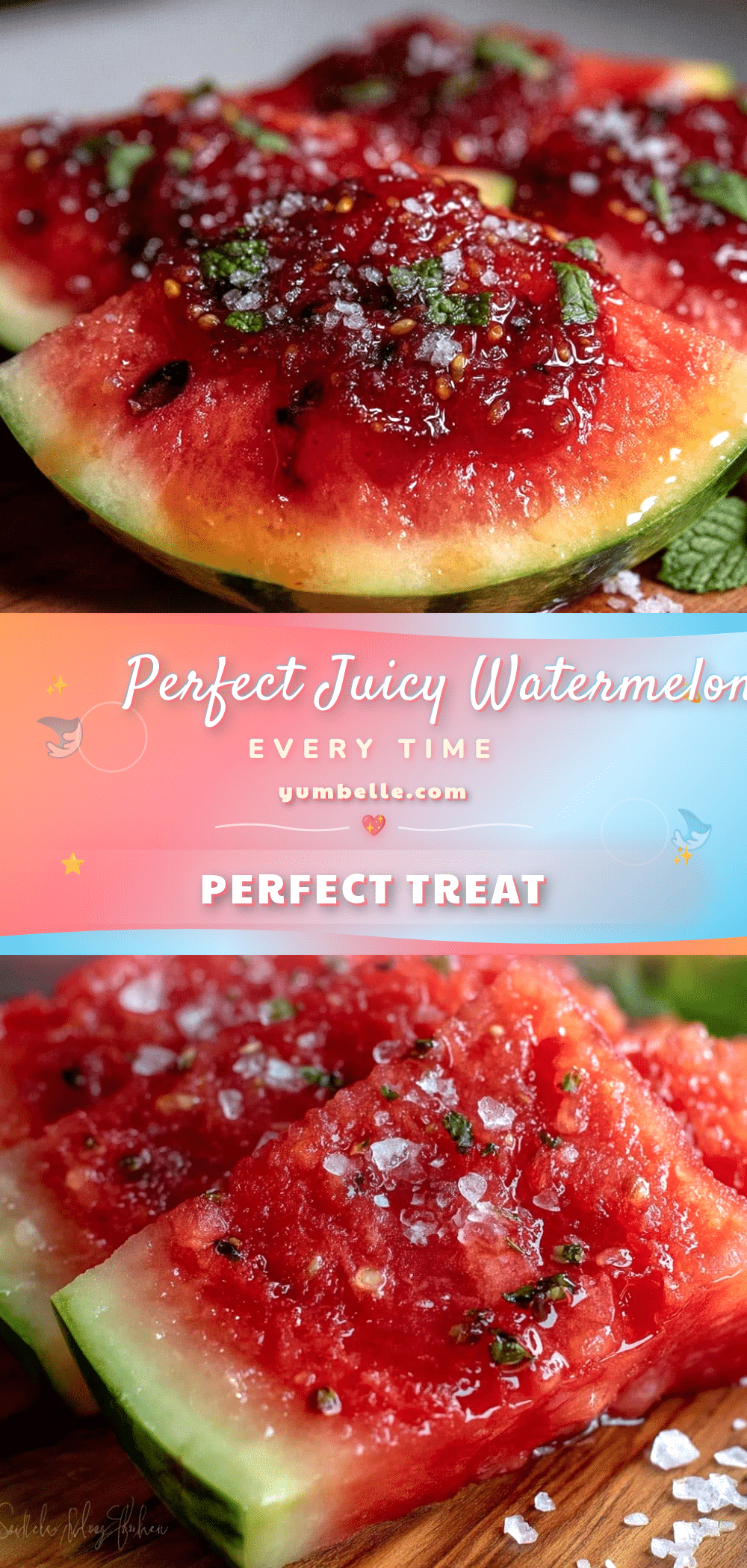
Perfect Juicy Watermelon Every Time: 5 Easy Tips for Sweetest Fruit

Learn how to pick the sweetest, juiciest watermelon every time with five easy signs. Enjoy perfectly ripe watermelon slices that are cool, crisp, and bursting with flavor.
- Prep Time: 10 minutes
- Cook Time: 0 minutes
- Total Time: 10 minutes
- Yield: 6 servings
- Category: Snack
- Cuisine: American
Ingredients
- Watermelon – medium to large-sized, heavy for its size
- Field Spot (Yellow Patch) – creamy yellow or orange spot on the rind
- Rind Color – deep green with contrasting dark stripes
- Shape – uniform round or oval shape
- Surface Texture – slightly rough or webbed texture
Instructions
- Choose Your Watermelon: Use the five easy signs to pick the perfect watermelon: check for a creamy yellow field spot, a uniform shape, a deep green rind with contrasting stripes, a slightly rough texture, and a heavy weight for its size.
- Wash the Rind: Rinse the outside of the watermelon under cool running water to remove dirt or bacteria.
- Slice Off Both Ends: Place the watermelon on a cutting board and slice about ½ inch (1.3 cm) off each end to create flat surfaces.
- Cut the Watermelon in Half: Stand the melon upright on one flat end and slice straight down the middle to create two halves.
- Quarter the Halves: Lay each half flat-side down and slice into two equal quarters.
- Remove the Rind: Run a knife between the red flesh and green rind to cut away the rind, keeping most of the flesh intact. Repeat for all quarters.
- Cut Into Desired Shapes: Slice the watermelon flesh into wedges, cubes, or use a melon baller for spheres.
- Serve Immediately or Chill: Enjoy fresh or refrigerate cut pieces in an airtight container for up to 2 days. Chill for at least 30 minutes before serving.
Notes
Use a gentle sawing motion when slicing to avoid mushy fruit. Tap the rind to listen for a hollow sound indicating ripeness. Keep cut watermelon refrigerated in an airtight container and consume within 2 days. Watermelon flavors deepen if chilled overnight.
Nutrition
- Serving Size: 1 cup (152 grams)
- Calories: 46
- Sugar: 11.6
- Sodium: 2
- Fat: 0.2
- Carbohydrates: 11.6
- Fiber: 1
- Protein: 0.9
Keywords: watermelon, juicy watermelon, how to pick watermelon, summer fruit, sweet watermelon, watermelon tips